


Quick Summary
The best fabrics for humid coastal weather are linen and lightweight cotton weaves, which breathe and dry quickly. Seersucker, rayon-based knits and some bamboo-derived fabrics are strong second choices. Tight knits and synthetics tend to trap moisture against the body and feel worst in humid heat.
- Linen's loose weave lets air pass through and releases moisture quickly.
- Lightweight cotton weaves like voile, muslin and poplin work well; heavy denim holds moisture.
- Rayon and viscose absorb sweat well but lose strength when wet, so lay them flat to dry.
- Tight synthetic knits block airflow and hold moisture against the skin in humid air.
- Rinse salt-exposed garments in cool fresh water and let them air dry instead of using a dryer.
Table of Contents
- Why Humid Coastal Air Changes What You Should Wear
- How We Chose These Fabrics
- 1. Linen: The Best Breathable Fabric for Humid Heat
- 2. Cotton: Is Cotton Good for Humid Weather?
- 3. Rayon, Viscose and Bamboo-Derived Fabrics
- 4. Synthetics and Knits: Where They Fail in Humidity
- Best T-Shirts for Hot, Humid Weather
- Choosing Your Coastal Wardrobe at Boutique Bella Bella
- Frequently Asked Questions
Last Updated: November 6, 2026
Humid coastal air changes what you should wear. Salt, sea spray and sticky heat all work against fabric that traps moisture, so the best fabrics for humid coastal weather are the ones that breathe, dry fast and let air move across the skin. At Boutique Bella Bella, we've built our summer edit around that idea, and this guide walks through the fabrics that hold up best and the pieces from our own racks that use them.
Here's the quick answer: linen and lightweight cotton weaves do the most for humid heat, while seersucker, rayon-based knits and some bamboo-derived fabrics are strong second choices. Synthetics and tight knits tend to trap moisture against the body, which is why they feel worst on a muggy afternoon by the water.
Why Humid Coastal Air Changes What You Should Wear
Humid coastal weather is different from dry heat. When the air is already saturated, sweat evaporates slowly, so fabric has to move moisture away from the body rather than hold it. That's the core job a summer fabric needs to do.
Coastal exposure adds two complications. Salt air leaves residue that can stiffen certain fibers over time, and damp conditions mean garments take longer to dry after a beach walk or an afternoon shower. Fabric choice affects both comfort and how well a piece holds up season after season.
How We Chose These Fabrics
We looked at how each fabric handles three things: breathability, moisture handling and drying speed. We also weighed how it feels against the skin in heavy air and how it cares for itself in a damp coastal closet. We focused on fabrics that appear across our own collection, so every recommendation below points to pieces you can see in store or online.
1. Linen: The Best Breathable Fabric for Humid Heat
Linen is the first choice for humid weather. Its loose weave lets air pass through, and it releases moisture quickly, so it tends to feel cooler than many alternatives on a sticky day. It also dries faster than most cottons, which helps after a beach visit.
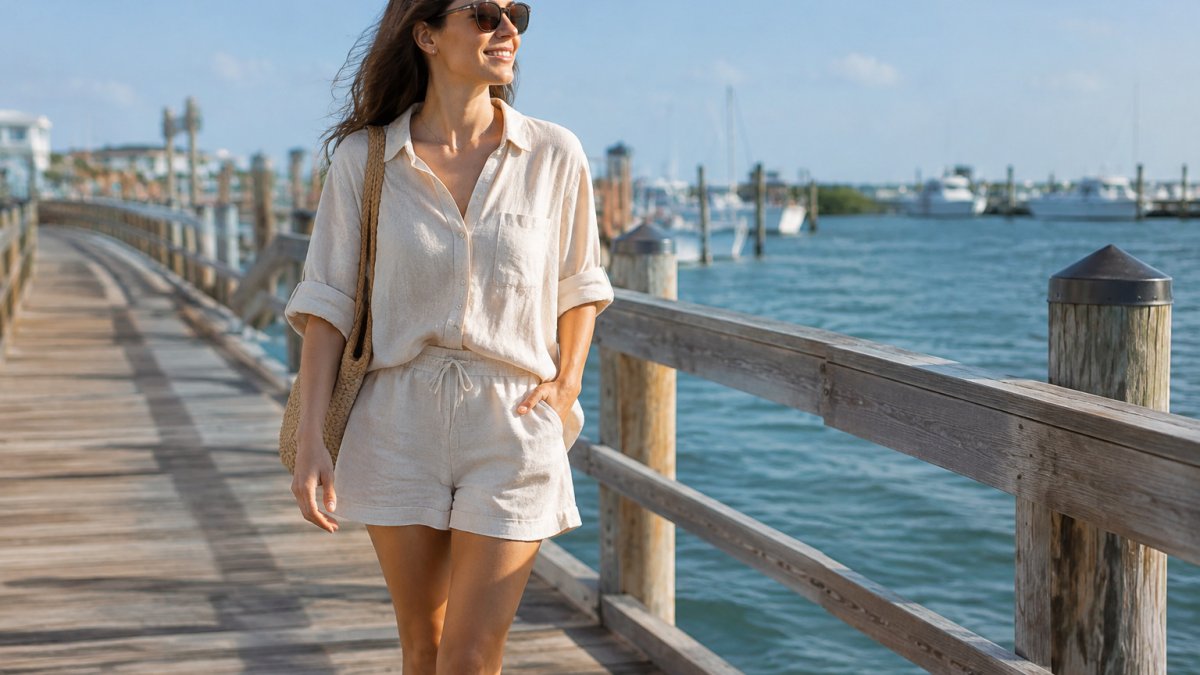
Linen wrinkles, and that's the trade-off. Many people see that texture as part of its relaxed charm, but if you need crisp lines, look for a linen blend. Our Coastal Linen Tailored Vest Set ($110.99) is a lightweight, breathable linen co-ord. Shop the Coastal Linen Tailored Vest Set if you want structure without sacrificing airflow.

For a looser option, the Salty Airflow Dress ($192.99) is a breezy tie-waist design with a lightweight fabric. Browse the Salty Airflow Dress to see the full fit and fabric details.

2. Cotton: Is Cotton Good for Humid Weather?
Yes, but the weave matters more than the fiber. Lightweight cotton weaves such as voile, muslin and poplin let air pass through and are comfortable in humid heat. Heavy, dense cotton, like thick denim, holds moisture and stays damp longer, which makes it a poor choice for muggy coastal days.
Seersucker is a useful cotton-based option. Our Coastal Escape Seersucker Blouse ($50.99) uses lightweight striped seersucker, and the Coastal Sunset Relaxed Stripe Shorts ($46.99) use textured seersucker fabric. See the Coastal Escape Seersucker Blouse for a top that lifts away from the skin.

For casual days, the High Rise Destressed Shorts ($52.99) are made from 100% cotton, which gives breathable comfort for warm-weather wear.
3. Rayon, Viscose and Bamboo-Derived Fabrics
Rayon and viscose are regenerated cellulose fibers: wood pulp is chemically dissolved and extruded into filaments, then woven or knit into fabric. That processing is why they feel smoother and drapier than cotton while still absorbing moisture readily. In humid air, the practical result is a fabric that takes up sweat well but releases it slowly, so a rayon top feels cool at first and then clammy if air isn't moving. It also loses strength when wet, a wet rayon garment can stretch out of shape if you hang it, so hand-wash or use a gentle cycle and lay it flat to dry rather than line-drying it heavy and dripping.
Bamboo-derived fabrics sit in the same family, but the label is not a reliable guide to performance. "Bamboo" can mean bamboo viscose (chemically processed, similar to rayon), bamboo lyocell (a closed-loop solvent process that recovers most of the chemical), or mechanically crushed bamboo fiber (rare in apparel). Two garments both labeled "bamboo" can behave very differently in humidity and have very different environmental footprints. Read the fiber content and the process name, not just the word on the tag.
The trade-off is care: they are less forgiving of heat and agitation than cotton, and in a damp coastal closet they need airflow to dry fully. A common pattern is to wash them last and dry them first, on a rack with space around the garment rather than bunched on a hook.
Our Sea Glass Swirl Knit Midi Dress ($44.99) is a soft knit with a bodycon silhouette and delicate spaghetti straps. If you are choosing between a rayon knit and a bamboo-labeled knit, feel the weight and stretch in person: a lighter, looser knit dries faster and clings less than a dense one, regardless of which cellulose fiber it is made from.
4. Synthetics and Knits: Where They Fail in Humidity
Most synthetics, polyester, nylon, acrylic, are hydrophobic: they absorb almost no water. That sounds like an advantage until you realize sweat has nowhere to go. In dry heat, a polyester shirt can feel fine because the moisture sits on the surface and evaporates quickly. In saturated coastal air, evaporation is slow, so the same shirt holds a film of moisture against your skin and feels clammy and heavy. The fiber isn't trapping heat so much as it is failing to move moisture away from the body.
Knits add a second variable: contact. A tight knit presses fabric against the skin across a large area, which blocks the air gap that lets moisture escape. A loose knit with an open stitch creates that gap and performs far better, even in a synthetic. This is why "synthetic" and "knit" are not automatically bad, a loose, lightweight synthetic knit can dry faster than a heavy cotton one, but a snug synthetic knit is usually the least comfortable choice on a muggy afternoon by the water.
Compare the fibers on the measures that actually matter in humidity:
- Absorption: cotton and linen take up moisture; polyester and nylon take up almost none.
- Wicking: the ability to pull moisture along the fiber and spread it out to evaporate. Synthetics can be engineered to wick, but an ordinary polyester tee usually doesn't.
- Drying time: thin synthetics dry fastest, linen next, cotton slower, and thick cotton or dense knits slowest.
- Cling: static and tight knits make synthetics cling; loose weaves and natural fibers cling less.
Salt exposure adds a wrinkle competitors tend to skip. Sea spray leaves salt residue that can stiffen synthetic knits and dull their color over time, and because synthetics hold odors more readily than cellulose fibers, a rinse-and-hang routine matters more than a full wash after a beach walk. Rinse in cool fresh water, skip the dryer, and let the garment dry with air moving around it.
The Island Escape Strapless Jumpsuit ($79.99) features a wide-leg silhouette and a lightweight, crinkled fabric. The Ocean Breeze Halter Jumpsuit ($82.99) features a halter neckline, cascading ruffles and an adjustable drawstring waist. Both are examples of the principle: looseness and light weight do more for humid comfort than the fiber name alone.
The article compares how common fabrics perform in humid coastal air on the measures that matter most.
| Fabric type | Absorbs moisture? | Drying behavior |
|---|---|---|
| Cotton and linen | Yes | Linen dries faster than cotton |
| Polyester and nylon | Almost none | Sweat sits on the skin and evaporates slowly |
| Tight knits | Varies | Press against skin and block airflow |
| Loose open knits | Varies | Create an air gap and dry faster |
Best T-Shirts for Hot, Humid Weather
For t-shirts, look for loose, lightweight cotton jersey or a soft cotton-blend knit with an open feel. Avoid heavy, tightly fitted tees, which hold heat and moisture. A relaxed fit lets air circulate, and a lighter knit dries noticeably faster after you've been out in the sun.
Choosing Your Coastal Wardrobe at Boutique Bella Bella
Start with fabric, then fit. Read our complete guide to styling Queen of Sparkles for more outfit ideas. Linen and lightweight cotton handle humidity best, rayon and viscose add drape and softness, and loose, airy silhouettes beat anything tight. Pair a breathable top with a relaxed bottom, keep a seersucker or linen layer for breezy evenings, and choose pieces you can rinse and hang to dry.
Stop in today and find pieces that make you shine.
Frequently Asked Questions
What is the coolest fabric for hot, humid weather?
Linen is generally the coolest option for hot, humid weather. Its loose, open weave lets air move across the skin, and it handles moisture well, pulling sweat away so it dries faster than most cotton. Lightweight linen dresses and co-ord sets, such as the Coastal Linen Tailored Vest Set at $110.99, are a practical choice for warm days. Cotton voile and lightweight cotton weaves are close alternatives if you prefer a softer hand.
Is cotton good for humid weather?
Cotton is a solid choice for humid weather when the weave is light. It breathes well and feels comfortable against the skin. The drawback is that cotton absorbs moisture and dries slowly in damp air, so heavy cotton can feel clammy. Choose lightweight, open-weave cotton, and consider the High Rise Destressed Shorts at $52.99, which are made from 100% cotton.
What are the worst fabrics for hot, humid weather?
Heavy synthetics such as polyester in tightly woven or non-breathable constructions tend to trap heat and moisture against the body. Thick knits and dense fabrics also hold sweat and dry slowly in humid coastal air, which can cause cling and discomfort. For hot, humid days, avoid heavy woven synthetics and choose lightweight natural or cellulose-based fabrics with an open weave instead.
How should you dress for humid coastal weather?
Choose loose, lightweight pieces in breathable fabrics such as linen, lightweight cotton or viscose. A looser fit lets air circulate, which helps sweat evaporate. Lighter colors reflect more sun. For coastal settings, also consider salt air and damp conditions, since fabrics that dry quickly are easier to care for. Pieces like the Ocean Breeze Halter Jumpsuit at $82.99 suit beach days and warm evenings alike.
