


Table of Contents
- What Makes a Western Hat High Quality?
- Cowboy Hat Felt Quality Guide: Fur vs. Wool
- The Best Western Hat Styles for 2026
- Western Hat Sizing Guide: Getting the Perfect Fit
- How to Clean a Felt Western Hat and Keep Its Shape
- Where to Buy Quality Western Hats
- Conclusion: Invest in a Hat That Lasts
- Frequently Asked Questions
Last Updated: September 6, 2026
Finding the best quality western hats 2026 has to offer starts with understanding that not all felt is created equal. A truly great cowboy hat is an investment that can last decades, while a cheap one might lose its shape after a single humid Texas summer. In this guide from Boutique Bella Bella, we break down the technical differences in felt quality, show you which styles are trending this year, and share the exact care routines that keep a hat looking sharp. We carry classic Stetson hats in our Port Aransas shop, so we know firsthand what separates a lifetime piece from a novelty item.
The gap between a $50 hat and a $300 hat isn't just markup. It comes down to materials, construction, and how the hat was blocked and shaped. But first, here's what most guides get wrong: the "X-factor" in a hat's quality has less to do with the brand name on the sweatband and more to do with the fur content and the density of the felt itself.

What Makes a Western Hat High Quality?
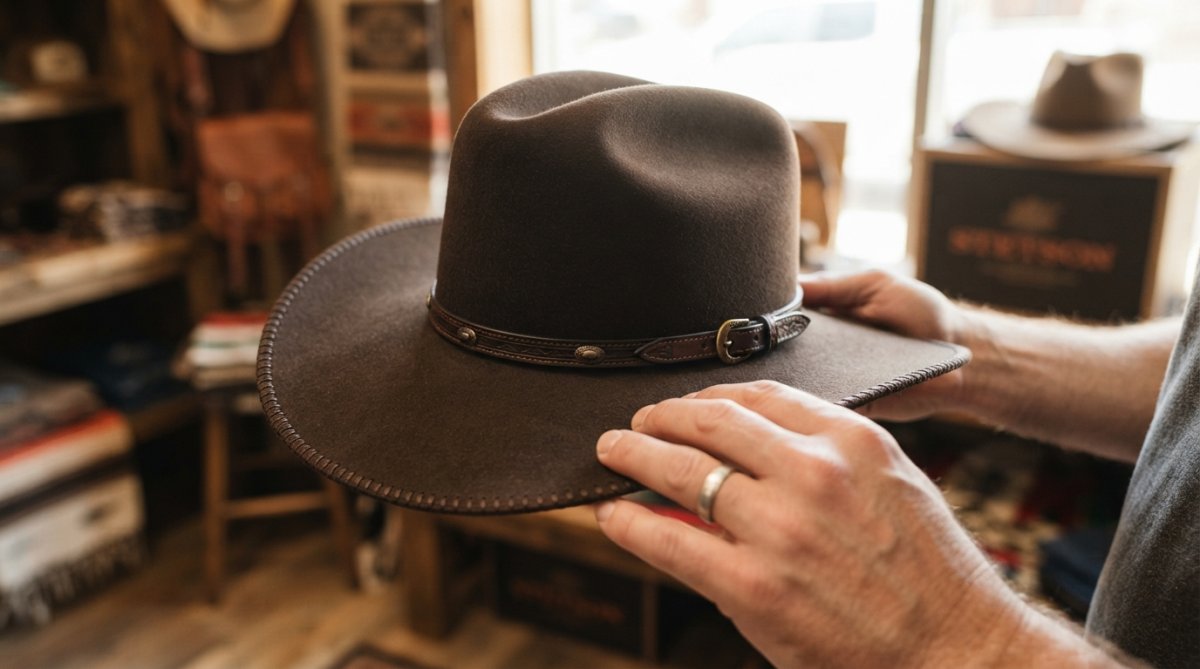
A high-quality western hat is defined by its felt density, fur content, and hand-finishing rather than just its brand label. When you pick up a premium hat, the felt should feel firm yet supple, with a smooth surface that doesn't pill or fuzz. The brim should hold its shape when you bend it, and the crown should feel substantial without being stiff or cardboard-like.
Construction details matter just as much as the felt. Look for a leather sweatband that is sewn in, not glued, and a liner that sits flush against the crown. A common mistake is buying a hat that feels light and hollow; quality felt has weight to it because the fibers are densely packed during the hatting process.
The Anatomy of a Quality Hat: What to Inspect
Most buyers focus on the felt, but the true test of a hat's longevity lies in its internal construction. Here is what separates a $300 hat from a $600 hat once you look past the brand label:
The Sweatband: On a quality hat, this should be a full-grain, vegetable-tanned leather at least 1.5 to 2 millimeters thick, sewn in with a lockstitch, not glued. A glued sweatband will peel away within a year of daily wear. Look for a reed, a thin cord sewn into the base of the sweatband, which helps the hat conform to your head shape.
The Liner: A quality liner is made of woven fabric and tacked in place at the crown tip. Cheap hats use a printed polypropylene liner that traps heat. Lift the liner and check the crown seam: a quality hat will have a smooth, rounded crown tip with no visible puckering.
The Hat Band: A quality band is either hand-sewn or secured with a hidden wire that allows it to be removed and replaced without damaging the felt. Avoid hats where the band is glued directly to the felt, as this will leave a residue ring.
The Brim Edge: A bound edge uses a ribbon hand-sewn around the entire brim circumference, a process that takes a skilled worker 20 to 30 minutes per hat. The highest-end hats feature a "pencil roll" edge, where the felt is rolled and stitched to create a thin, rounded border. Run your finger along the edge: any roughness or visible glue is a red flag.
Felt Density: The Metric Nobody Talks About
Felt quality is not just about fur type, it is about how densely the fibers are packed. A premium hat uses a felt that is approximately 3 to 4 millimeters thick at the crown and weighs between 4.5 and 6 ounces for a standard 4-inch brim hat. Cheaper hats often use thinner felt (2 to 2.5 millimeters) to cut costs, which is why they feel flimsy and lose their crease.
You can test density at home: hold the hat by the brim edge and gently press your thumb into the crown. A dense felt will resist your thumb and spring back instantly. This "snap-back" test is the single most reliable indicator of felt quality that does not require a brand label.
The Custom Shaping Advantage
Here is an angle most guides miss: the best quality hat is not the one that leaves the factory with a perfect crease, it is the one that can be reshaped to your face. Premium fur felt (especially 100% beaver or a high beaver blend) can be re-blocked and re-shaped multiple times over its life. Wool felt cannot be reshaped; once it is crushed, it stays crushed. When you buy from a shop that offers in-house shaping, you are buying the ability to customize the crown height, brim curl, and crease profile to suit your face shape and wardrobe.
For example, a classic cattleman crease with a 4-inch brim suits most oval faces, but if you have a round face, a taller crown with a telescope crease and a 4.25-inch brim will elongate your profile. These are the decisions that turn a good hat into a great one, and they require a felt that can take repeated steaming and shaping without losing its integrity.
Cowboy Hat Felt Quality Guide: Fur vs. Wool
The cowboy hat felt quality guide starts with one simple rule: fur felt outperforms wool felt in nearly every category. Fur felt, made from rabbit, beaver, or a blend, is denser, more water-resistant, and holds its shape far longer. Wool felt is cheaper and softer initially, but it tends to sag, lose its crease, and absorb moisture, which leads to a floppy, misshapen hat after a few seasons.
Within fur felt, the grade is determined by the percentage of beaver fur. A 100% beaver hat is the gold standard, offering the best water resistance and the ability to be re-blocked multiple times. A 50% beaver and 50% rabbit blend is a popular sweet spot, balancing cost with durability.
| Felt Type | Durability | Water Resistance | Shape Retention | Typical Price Range |
|---|---|---|---|---|
| Wool Felt | Low | Poor | Weak | Entry level |
| Rabbit Fur Felt | Medium | Moderate | Good | Mid range |
| Beaver Blend (50/50) | High | High | Excellent | Premium |
| 100% Beaver Fur | Very High | Excellent | Superior | High investment |
For most people, a beaver blend is the smartest purchase because it performs like a luxury hat without the full beaver price tag. If you live in a rainy climate or plan to wear your hat daily for years, saving up for a higher beaver content hat is worth it.
The Best Western Hat Styles for 2026
The best western hat styles for 2026 lean toward classic silhouettes with a modern twist, favoring mid-to-wide brims and versatile crown shapes. The cattleman crease remains the default choice for its timeless look, but the open crown style is gaining serious traction among younger buyers who want a hat they can shape themselves. For a contemporary edge, look for hats with a slight brim curl and a pencil-rolled edge.
Brim width is a personal choice, but the current sweet spot is between 3.5 and 4.25 inches. A wider brim, around 4.5 inches, offers more sun protection and reads as more traditional, while a shorter brim feels more modern and urban. If you're pairing the hat with denim and a midi dress from our On the Ranch Midi Dress collection, a medium brim with a cattleman crease is the safest bet.
Western Hat Sizing Guide: Getting the Perfect Fit
A proper western hat sizing guide always starts with measuring your head, not guessing your size. Use a soft measuring tape and wrap it around your head about one inch above your eyebrows and ears. Compare that measurement in inches to the hat's size chart. Most hats range from 6 3/4 to 7 5/8, and getting the right one is critical because a hat that is too loose will blow off, and one that is too tight will cause headaches.
Beyond the circumference, pay attention to your head shape. Most people have a regular oval shape, but some have a long oval or a round oval. If you consistently find that hats feel tight on the sides of your head but loose at the front and back, you likely need a long oval fit. Many premium hat brands offer specific oval shapes, and a good hat shop can stretch or shape the hat to your head using a hat block.
A snug fit is the goal. The hat should stay on your head when you lean forward, but you should be able to slip a finger between the sweatband and your forehead. If you are between sizes, always size up, since a professional can add a sizing strip to take up the slack.
How to Clean a Felt Western Hat and Keep Its Shape
Learning how to clean a felt western hat properly is the single best way to protect your investment. The first rule is to avoid water. Felt is porous, and getting it wet can cause the fibers to shrink and the hat to lose its shape. For dust and surface dirt, use a soft-bristled hat brush and brush in a counterclockwise direction, which follows the nap of the felt.
For tougher spots or stains, a hat sponge, sometimes called a "hat eraser," can lift marks without damaging the felt. For sweat stains on the hat band area, use a small amount of rubbing alcohol on a clean cloth and dab gently, never scrub. If your hat gets rained on, let it air dry naturally on a hat form or an upside-down hat, never near a heat source, as heat will shrink the felt.
For storage, keep the hat in a cool, dry place away from direct sunlight, which can fade the color. A hat box is ideal for long-term storage, but make sure the hat is not crushed. If the brim loses its curl or the crown gets a dent you don't want, take it to a professional for reshaping. Steam shaping is best left to the experts, as too much steam can ruin the felt's finish.
Where to Buy Quality Western Hats
The best place to buy quality western hats is a specialty shop where you can try on multiple sizes and styles and get expert advice on fit and shaping. Buying a hat online without trying it on is risky because the fit depends on your head shape, not just the circumference. When you shop at a boutique that carries brands like Stetson, you get the benefit of trying on different crown heights and brim widths to see what actually flatters your face.
At Boutique Bella Bella, we carry a curated selection of Stetson hats and western accessories, and our staff can help you find the right size and style. Whether you are looking for a classic felt hat for daily wear or a lighter option for the beach, we offer a size-inclusive shopping experience that makes finding your perfect hat easy. Pair your new hat with a Western Bandana or a pair of Pamela Fold Over Boots to complete the look.


Climate Matters: Matching the Hat to Your Region
Most buying guides ignore this, but your local climate should dictate your felt choice just as much as your style. Here is how to match your hat to where you live:
Humid Climates (Gulf Coast, Southeast): Humidity is the enemy of felt. Wool felt absorbs moisture from the air, causing it to sag and lose its crease within weeks (fabriclink.com). Even rabbit fur felt will soften and droop in sustained 80%+ humidity. If you live in a humid region, prioritize a 100% beaver or a 70/30 beaver blend. Beaver fur has natural water-repellent properties and a tighter fiber structure that resists moisture absorption. You should also look for a hat with a wider brim (4.25 inches or more) to provide shade and keep sweat off your face.
Arid Climates (Desert Southwest, West Texas): Dry heat is actually forgiving on felt, but it wreaks havoc on the leather sweatband. In low-humidity environments, leather dries out, cracks, and shrinks. If you are in an arid region, look for a hat with a thicker, oil-tanned sweatband that retains moisture. You should also condition the sweatband every 3 to 4 months with a leather conditioner (not mink oil, which can stain the felt). A lighter color hat, silver belly, natural, or light sand, will reflect sunlight and keep your head cooler than a dark hat.
Cold and Wet Climates (Pacific Northwest, Northeast, Mountain West): If you are wearing a western hat in rain, snow, or freezing temperatures, you need a hat that can take a beating. 100% beaver is the only felt that can handle repeated wetting and drying without losing its shape. Wool felt will absorb rain, become heavy, and stretch out of shape. For winter wear, consider a hat with a 4.5-inch brim to shed rain and snow away from your collar, and look for a liner made of wool or fleece rather than thin cotton.
Temperate Climates (Midwest, Mid-Atlantic): If you experience all four seasons, a 50/50 beaver blend is your best all-around choice. It handles moderate humidity, occasional rain, and cold snaps without the premium price of full beaver. You will need to be more careful about storage, always keep it on a hat stand or in a box when not in use, and never leave it in a car where temperature swings can cause the felt to expand and contract.
The Restoration Question: When to Repair vs. Replace
A premium hat is not disposable. If your hat has lost its crease, the brim has gone limp, or the sweatband has worn through, do not throw it away. Professional hat restoration services can bring a quality felt hat back to life. A full re-blocking, where the hat is steamed and reshaped over a wooden block, typically costs $40 to $80 and is worth it if the felt itself is still dense and intact. Replacing a sweatband runs $25 to $50. If the felt has developed thin spots, holes, or severe water damage, however, restoration may cost more than a new hat, and replacement is the smarter financial choice.
Most specialty western wear shops either offer in-house restoration or can recommend a trusted hatter. Ask your retailer about their restoration services before you buy, a shop that can re-block your hat in five years is worth more than one that only sells you the hat and sends you on your way.
Conclusion: Invest in a Hat That Lasts
Choosing the best quality western hats 2026 requires looking past the surface and understanding felt grades, construction, and fit. A quality fur felt hat is an investment that pays off in years of wear, and proper care will keep it looking as good as the day you bought it. Whether you are a seasoned collector or buying your first hat, prioritize felt quality and a proper fit over trends. Stop in to Boutique Bella Bella to explore our selection of Stetson hats and curated western wear, and find a hat that fits your style and your head perfectly. Get started with Boutique Bella Bella and find the hat that will last you for years to come.
Frequently Asked Questions
Who makes the highest quality cowboy hats?
Stetson and Resistol are the most recognized American brands for premium western hats. The quality depends more on the felt grade than the brand name. Look for hats made from 100% fur felt, with a higher X-factor (like 4X, 6X, or 10X) indicating a higher beaver-to-rabbit fur ratio, which results in a denser, more durable, and water-resistant hat.
What should I look for when buying a premium western hat?
Focus on the felt quality first. A premium western hat uses fur felt, not wool. Check the hat grade, often listed as an X-factor; higher numbers mean more beaver fur for better durability. Examine the sweatband and liner; leather is a sign of quality. The hat should hold its shape when you handle it and feel substantial without being heavy.
Is Resistol or Stetson better?
Both Stetson and Resistol are heritage American brands with excellent reputations. The best choice often comes down to which fit and style suits your head shape. Resistol hats are known for their comfort and durability, while Stetson is celebrated for its classic styling. Trying on different brands is the best way to find your perfect match.
How do I determine the quality of a felt cowboy hat?
The fastest way to determine felt quality is to check the hat grade and material. Wool felt hats are softer, less durable, and more prone to losing their shape in rain. Fur felt, especially with a higher beaver content, is denser, has a smoother finish, holds a crease better, and offers superior water resistance and longevity.