


Table of Contents
- What Is Coastal Cool Style for Women
- Building Your Coastal Style Outfits for Women
- Creating Your Coastal Capsule Wardrobe
- Coastal Grandmother Outfits and Timeless Elegance
- How to Mix and Match Summer Clothes for Coastal Living
- Fabrics, Footwear, and Accessories That Complete the Look
- Adapting Coastal Cool to Your Climate, Budget, and Body
- Frequently Asked Questions
Last Updated: October 9, 2026
What Is Coastal Cool Style for Women
Coastal cool style is a relaxed, effortless aesthetic inspired by seaside living: neutral tones, breathable fabrics, and versatile pieces that work together seamlessly.
Coastal cool style appeals to women who want to look put-together without trying too hard.
The coastal cool style aesthetic works year-round, at the beach, running errands, or traveling. The foundation is simple: neutral colors, natural fabrics, and pieces that feel good on your body.
Building Your Coastal Style Outfits for Women
Creating coastal style outfits for women starts with foundational pieces that layer easily and transition from day to night.
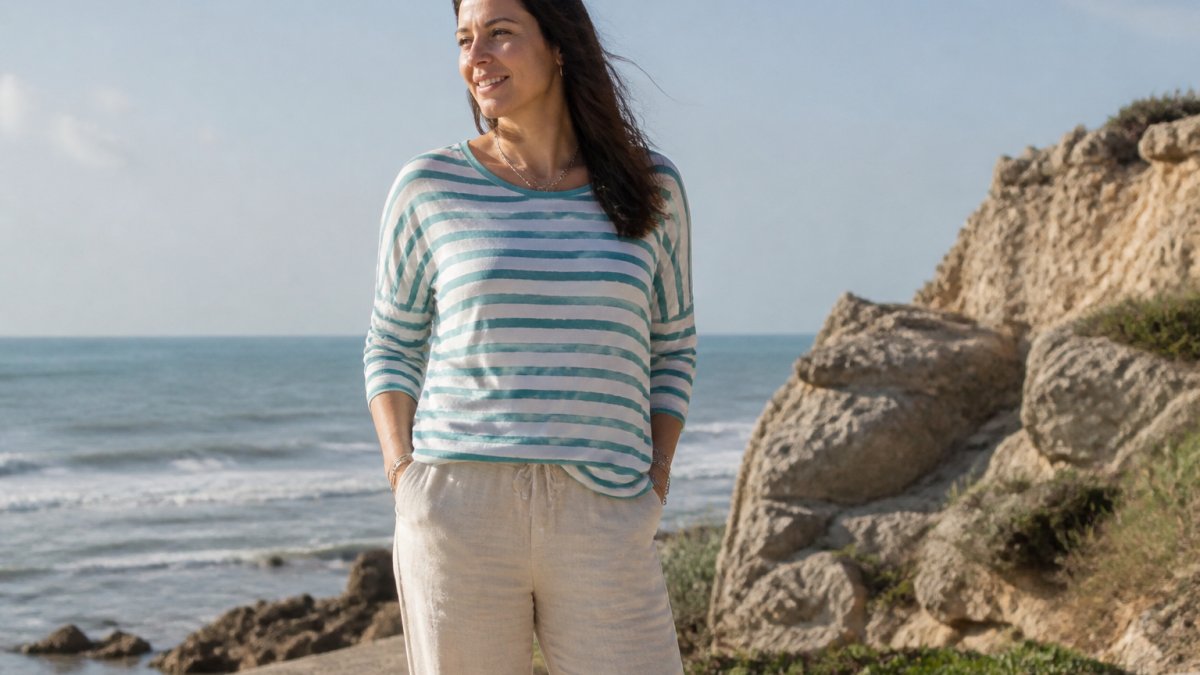
Start with these core pieces:
- White or cream linen button-down shirts
- Neutral striped tees (like our Coastal Days Teal Stripe Relaxed Top at $24.99)
- Lightweight sweaters in cream, beige, or soft blue
- Neutral shorts and pants in khaki, white, or navy
Once you have these basics, build outfits around them: a striped tee with shorts for casual days, a linen shirt over a tank for layering, a cardigan when temperatures drop.

Choose pieces that fit well and feel comfortable. Coastal cool style is about relaxed silhouettes that move with you, not tight or restrictive clothing.
Creating Your Coastal Capsule Wardrobe
A coastal capsule wardrobe is a fixed set of pieces sharing one color story, so every top works with every bottom. Most practitioners land on 24 to 30 pieces for a full warm-weather season, or 12 to 16 for a one- to two-week trip. The ratio matters more than the number: roughly 60 percent tops, 30 percent bottoms, and 10 percent layering pieces, with shoes and accessories counted separately.
Step 1: Lock the palette before you shop
Choose three neutrals and one accent, then refuse everything else. A reliable coastal palette:
- Base neutrals: white, cream or oat, and navy
- Secondary neutral: sand, taupe, or light gray
- Accent: soft teal, faded olive, or washed coral
Write the palette on your phone and hold every item against it while shopping. If it does not match at least two neutrals, it will sit unworn, the most common reason capsule wardrobes fail.
Step 2: The countable checklist
Use these quantities as a template, then adjust for your climate and laundry habits.
Tops (10-12 pieces)
- 4 basic tees or tanks in white, cream, navy, and your accent
- 3 button-down shirts (linen or cotton), at least one white, one striped
- 2 lightweight sweaters or cardigans for layering
- 1-2 relaxed blouses for dinners or nicer outings
Bottoms (5-6 pieces)
- 2 pairs of shorts (one neutral, one denim or chambray)
- 2 pairs of pants (one wide-leg linen, one casual cotton or denim)
- 1 midi or maxi skirt, or a second dress if you prefer dresses
Dresses and one-pieces (2-3 pieces)
- 1 casual day dress
- 1 elevated dress for dinners
- 1 swimsuit you actually feel good in
Layers (2-3 pieces)
- 1 oversized linen shirt to wear open as a cover-up or light jacket
- 1 cardigan or lightweight knit
- 1 packable layer for cool evenings or air-conditioned interiors
Shoes (3-4 pairs)
- 1 pair of flat sandals
- 1 pair of walking sneakers or slip-ons
- 1 pair of dressier sandals or espadrilles
- 1 pair of water-friendly sandals for the beach or tide pools
Accessories (5-7 pieces)
- 1 tote or beach bag
- 1 crossbody for hands-free days
- 1 wide-brim sun hat
- 1 pair of sunglasses
Step 3: Match the count to your trip length
- Weekend (2-3 days): 6-8 pieces total. Two tops, two bottoms, one dress, one layer, two pairs of shoes.
- One week: 12-16 pieces. Add a third top, a second layer, and a second pair of shoes.
- Two weeks or longer: 18-24 pieces, or plan to do laundry once mid-trip and stay at the one-week count.
- Full season at home: 24-30 pieces, rotating heavier layers in and out as the weather shifts.
Pack for the longest day and the coolest evening, then repeat the middle. If you can build seven outfits, you have enough.
Step 4: Test before you commit
Lay everything on the bed and build three outfits without leaving the room. If a piece works in only one combination, return it or replace it with something that coordinates with at least three others.
Coastal Grandmother Outfits and Timeless Elegance
Coastal grandmother outfits take the relaxed coastal aesthetic and add refined, timeless touches: quality fabrics, neutral colors, and pieces that age gracefully.
Think cream linen pants, white silk blouses, and quality neutral basics, plus pearls, delicate gold jewelry, and a structured bag for polish.
This style works at any age.
For coastal grandmother outfits, prioritize:
- Quality linen in neutral colors
- Classic button-down shirts
- Simple, well-fitting pants
- Timeless jewelry in gold or silver
Pieces last longer and feel more valuable, you're investing in items you'll wear repeatedly rather than following fleeting trends.
How to Mix and Match Summer Clothes for Coastal Living
Mixing and matching summer clothes for coastal living means choosing pieces that work in multiple combinations, starting from your neutral base.
Create outfit formulas that repeat throughout your week:
Formula 1: Casual Day
Coastal Days Teal Stripe Relaxed Top →
- Striped tee + neutral shorts + sandals + simple necklace
Formula 2: Layered Look
- Button-down shirt (unbuttoned) + tank top + lightweight pants + sneakers
Formula 3: Elevated Casual
- Neutral dress + lightweight cardigan + belt + structured bag
Formula 4: Beach Ready
- Swimsuit + cover-up + sandals + beach bag + sun hat
Each formula uses different pieces but keeps the same relaxed coastal feel, so you create more outfits without buying more clothes.
The secret is limiting your color palette. When everything coordinates, you can grab any top and any bottom and they work together.
Fabrics, Footwear, and Accessories That Complete the Look
Breathable, natural fabrics make or break coastal cool style, comfortable while looking effortless.
Best fabrics for coastal style:
- Linen: wrinkles add to the relaxed aesthetic
- Cotton: versatile, breathable, easy to care for
- Linen blends: durability with linen's look
- Lightweight cotton knits: comfortable for layering
Choose footwear that balances comfort and style: sandals, slip-on sneakers, and simple flats work with most outfits. Avoid heavy or overly trendy shoes that fight the relaxed vibe.
Keep accessories simple. A Summer Necklace - Star Fish Bead Necklace - Blue at $12.00 adds coastal charm without overwhelming an outfit; simple gold or silver designs work best.

A structured bag in neutral leather or canvas pulls outfits together, a tote for beach days, a crossbody for casual errands.
Adapting Coastal Cool to Your Climate, Budget, and Body
Coastal cool style is a set of principles, not a uniform. The palette and relaxed silhouette stay the same; fabric weight, layer count, and fit details change with your climate, trip length, and body.
Climate and season adjustments
Humid heat. Linen dries faster and stays cooler when damp; cotton holds moisture and feels heavy by mid-afternoon.
Windy coastlines. Skip anything that catches air, palazzo pants, unstructured maxi skirts, floppy hats.
Rain and shoulder seasons. Add one water-resistant layer, a packable rain shell or treated cotton jacket, and one closed-toe shoe.
Cooler evenings and air conditioning. Coastal evenings drop 10-15 degrees and restaurants over-air-condition.
Trip length and packing logic
- 2-3 days: 6-8 pieces, one walkable pair of shoes, one layer.
- One week: 12-16 pieces, two pairs of shoes, two layers; rewear bottoms twice.
- Two weeks or longer: 18-24 pieces or one laundry day, cheaper than checking a second bag.
- Full season at home: 24-30 pieces, rotating heavier layers in as temperatures fall.
A useful rule: pack for the longest day and the coolest evening, then repeat the middle. If you can build seven outfits from what is in the bag, you have enough.
Fabric trade-offs worth knowing
| Fabric | Dries fast? | Wrinkles? | Opacity | Best for |
|---|---|---|---|---|
| Linen | Yes | Yes, easily | Can be sheer in white | Hot, dry, or breezy days |
| Cotton | Moderate | Somewhat | Usually opaque | Everyday basics |
| Linen-cotton blend | Moderate | Less than linen | Usually opaque | Travel, mixed weather |
| Cotton knit | Slow | Rarely | Opaque | Layering, evenings |
| Silk or silk blend | Moderate | Yes | Often sheer | Dinners, elevated looks |
| Technical nylon blend | Fast | Rarely | Opaque | Rain, water activities |
White linen is the classic coastal fabric and the most transparent, plan a nude or matching-tone underlayer, or choose cream and oat. For hotel-sink laundry, linen and technical blends dry overnight; heavy cotton knits do not.
Budget planning
Start from your closet. Pull every white, cream, navy, and sand piece you own and build outfits from those first, most people are missing two or three pieces, not a whole wardrobe.
When you do buy, prioritize in this order:
- Shoes you can actually walk in. Bad shoes ruin a trip faster than a bad outfit.
- Bottoms. They take the most wear and are hardest to substitute.
- Layers. A good cardigan or linen shirt multiplies every outfit.
- Tops. Basics are easy to find at any price point.
- Accessories. Last, and the easiest place to save.
A cost-per-wear mindset helps: a $60 linen shirt worn 40 times costs less per wear than a $15 trend top worn twice. Buy one quality piece per month and let the capsule build itself.
Fit and body inclusivity
Coastal cool style is built on relaxed silhouettes, which flatter across body types, but "relaxed" is not "oversized." A few fit notes:
- Petite frames: cropped or tuckable tops, midi over maxi lengths, and a defined waistline keep proportions from swamping you.
- Tall frames: full-length linen pants, longline shirts, and maxi dresses use the vertical line instead of fighting it.
- Curvy frames: wrap tops, belted shirt dresses, and high-rise wide-leg pants create structure without clinging; choose fabrics with a little weight so they drape rather than pull.
- Straight frames: layering and texture, a chunky knit over a slip dress, a button-down over a tank, add visual interest a single flat piece will not.
Look for brands that publish real measurements and offer extended sizing rather than one relabeled size range. Fit is the difference between coastal cool and just wearing loose clothes.
Frequently Asked Questions
What is the difference between coastal style and coastal grandmother style?
Coastal style emphasizes relaxed, beachy vibes with striped tops, lightweight fabrics, and casual silhouettes that feel effortless and youthful. Coastal grandmother style takes those same elements, neutral tones, quality basics, linen, and timeless pieces, but adds refined tailoring, elevated accessories, and a more polished aesthetic. Both use similar color palettes and fabrics, but coastal grandmother style prioritizes investment pieces and classic elegance over trendy beach-specific items.
How do you create a coastal cool outfit without looking overly themed?
Skip obvious beach logos and novelty items. Instead, focus on neutral foundations like white, beige, navy, and khaki paired with one pop of color such as turquoise or olive green. Layer a relaxed striped top like our Coastal Days Teal Stripe Relaxed Top with neutral shorts or linen pants, add simple jewelry, and choose classic footwear. The key is mixing everyday basics with breathable fabrics and a subtle color palette, this approach reads as effortlessly chic rather than costume-like.
What colors are best for coastal style?
Neutral tones form the foundation: white, cream, beige, navy, and khaki. These mix and match endlessly and evoke a relaxed seaside feel without looking costume-y. Layer in accent colors sparingly: turquoise, soft blues, olive green, and sand tones add coastal warmth without overwhelming an outfit. Stick to a cohesive palette of 3-4 neutrals plus 1-2 accent colors across your entire wardrobe to maximize outfit combinations and maintain that effortless coastal aesthetic.
What fabrics work best for coastal cool style?
Breathable, lightweight fabrics are essential: cotton, linen, and linen blends keep you comfortable in warm weather while delivering that relaxed coastal vibe. These materials drape naturally and age beautifully, making them ideal for investment pieces. Look for soft cotton knits for tops and linen or cotton-blend pants and shorts. Avoid heavy synthetics that trap heat or feel stiff. Quality breathable fabrics also tend to hold their shape and color better over time, making them worth the investment.