


Table of Contents
- Why Designer Statement Jewelry Holds Real Value
- Designer Jewelry vs. Costume Jewelry: What Sets Them Apart
- Craftsmanship and Brand Heritage Drive Long-Term Appreciation
- How to Layer Statement Jewelry Without Overwhelming Your Look
- How to Care for Designer Jewelry to Preserve Its Value
- Resale Market and Liquidity: Converting Your Collection to Cash
- Authentication and Avoiding Counterfeits in the Secondary Market
- Building Your Designer Jewelry Portfolio
Last Updated: August 22, 2026
Why Designer Statement Jewelry Holds Real Value
Designer statement jewelry is worth the investment because it combines intrinsic value with cultural significance and long-term appreciation potential. Unlike costume jewelry that deteriorates within months, designer pieces maintain their integrity and desirability across decades. A designer statement necklace uses precious metals and genuine gemstones, components that hold inherent value independent of fashion cycles, while superior construction ensures pieces withstand regular wear without losing structural integrity or aesthetic appeal.
When you calculate cost-per-wear over a five-year period, the designer option often costs less overall while delivering consistent quality and style, since costume necklaces require replacement every season or two.
Designer Jewelry vs. Costume Jewelry: What Sets Them Apart
Designer jewelry differs fundamentally from costume jewelry in three critical ways: material composition, construction quality, and resale potential. Designer pieces use 14k or 18k gold, sterling silver, or platinum paired with genuine gemstones. Costume jewelry uses base metals with gold plating, cubic zirconia, or glass, materials that tarnish, chip, or fade with exposure and wear.
The craftsmanship distinction matters equally. Designer brands employ trained artisans who hand-finish components, ensure secure stone settings, and test durability before releasing pieces. The Baroque Pearl Chunky Chain Necklace from Boutique Bella Bella features solid gold construction with a genuine baroque pearl, components that age gracefully rather than deteriorate. Costume jewelry relies on mass production techniques that prioritize speed and cost reduction over longevity.

Resale value reflects these differences sharply. Designer jewelry retains 40-70% of its original value in secondary markets, depending on brand heritage and condition (peer-reviewed research). Costume jewelry resells for pennies on the dollar, if at all. Established designers have built recognition through decades of consistent quality and design innovation, so when you purchase a piece bearing a respected brand name, you're acquiring not just materials and construction but also the brand's promise of authenticity and value retention.
:::pro The easiest way to distinguish designer from costume jewelry at purchase: check the metal markings. Genuine designer pieces carry hallmarks indicating karat weight (14k, 18k) or purity (925 for sterling silver). Costume jewelry either has no marking or shows misleading stamps like "14k plated", a meaningless designation since plating wears away. :::
Craftsmanship and Brand Heritage Drive Long-Term Appreciation
Craftsmanship determines whether a designer statement jewelry piece appreciates, maintains value, or depreciates over time. Pieces constructed with attention to detail, secure stone settings, properly finished clasps, and reinforced attachment points survive decades of wear while remaining visually unchanged. Brand heritage compounds this impact, designers with 20+ years of consistent quality command premium prices in secondary markets because collectors trust the quality and recognize the design as potentially timeless.
The intersection of craftsmanship and heritage creates what collectors call "heirloom quality", pieces that can be passed down across generations without losing structural integrity or aesthetic relevance. A bold statement necklace from a heritage brand may go in and out of fashion cycles, but its underlying value, materials plus craftsmanship, remains stable. When the piece returns to fashion relevance, its value often increases because the combination of age, rarity, and proven quality becomes attractive to collectors.
How to Layer Statement Jewelry Without Overwhelming Your Look
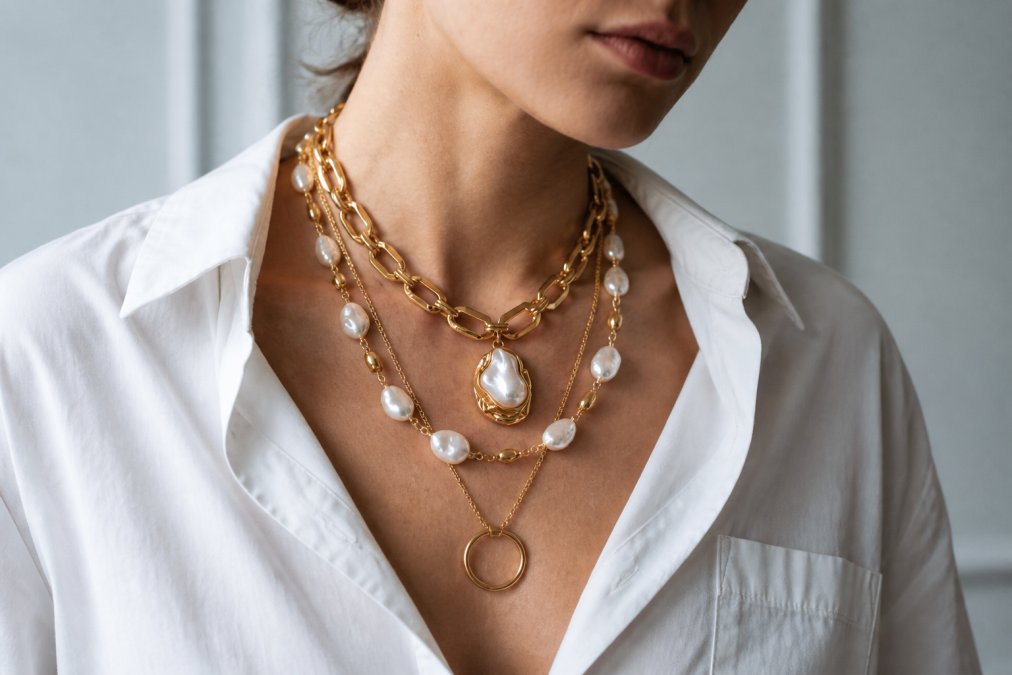
Layering designer statement jewelry requires intentional choices about length, weight distribution, and visual balance to create cohesive combinations rather than chaotic clutter. The fundamental principle is varying necklace lengths so each piece remains visible and distinct. A short choker-length piece (14-16 inches) worn above a mid-length statement necklace (20-24 inches) creates visual separation that prevents tangling and allows both pieces to command attention.
Weight distribution prevents the layered effect from feeling heavy or uncomfortable. Pair a substantial piece like the Grand Pearl Drape Collar with delicate chains rather than combining multiple chunky necklaces. Metal coordination simplifies the layering decision, use all warm metals (gold, rose gold, copper) or all cool metals (silver, platinum, white gold) unless you're deliberately creating a mixed-metal aesthetic. The Chunky Chain Necklace from Boutique Bella Bella works beautifully layered with pearl strands because both use gold tones, creating visual harmony.

Neckline and garment style influence layering success. V-necks and scoop necks provide space for multiple pieces to sit without bunching. High necklines restrict layering options because pieces crowd together. Consider your outfit's visual weight too, busy patterns or structured fabrics limit how many statement pieces work effectively.
How to Care for Designer Jewelry to Preserve Its Value
Designer statement jewelry maintains its value only when properly maintained. Storage matters first, pieces should be kept in a cool, dry environment away from direct sunlight, humidity, and temperature fluctuations. Moisture causes tarnishing on silver and can damage gemstone settings over time.
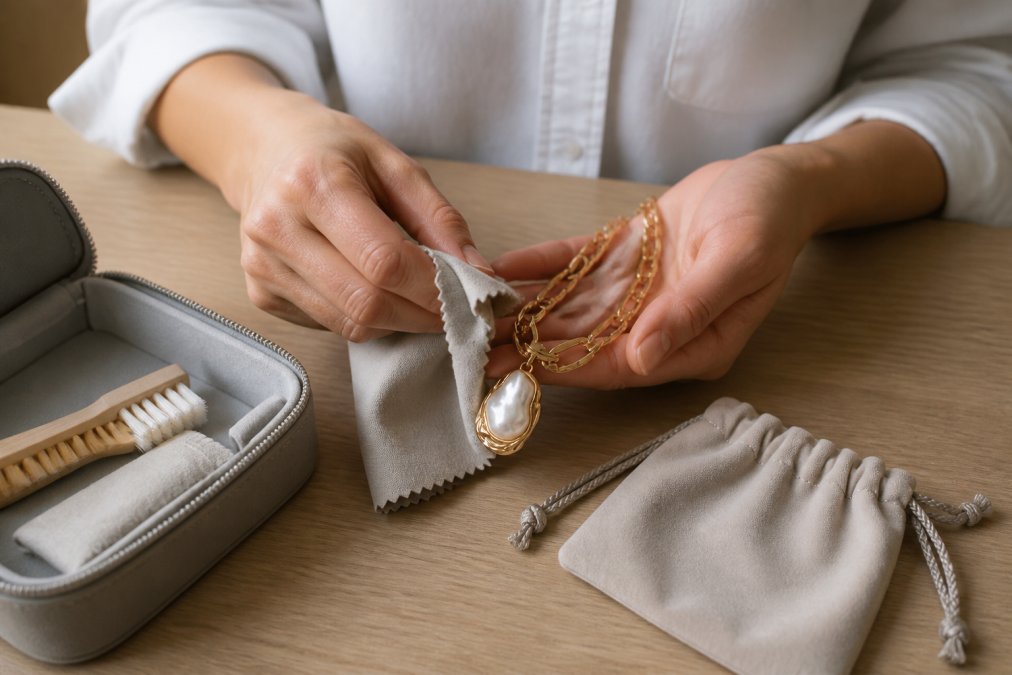
Cleaning frequency depends on wear patterns. Pieces worn daily need monthly gentle cleaning; pieces worn occasionally need cleaning before and after extended storage. Use a soft microfiber cloth to gently wipe surfaces, removing skin oils and environmental dust. For deeper cleaning, lukewarm water with mild dish soap and a soft brush works for most pieces, though certain gemstones (pearls, opals, emeralds) require specialized care.
Professional cleaning every 2-3 years extends the life of designer statement jewelry significantly (the American Dental Association). Professional jewelers have specialized ultrasonic cleaners and polishing compounds that remove buildup without damaging metal or stone settings. They also inspect clasps, prongs, and attachment points for weakness or damage, preventing catastrophic failures like lost stones or broken chains.
Storage solutions protect pieces during periods of non-wear. Individual soft pouches prevent pieces from scratching each other. Avoid plastic bags that trap moisture; use fabric pouches or lined jewelry boxes instead. For valuable pieces, a home safe or safe deposit box provides protection. Documentation, photos, receipts, appraisals, becomes critical for insurance purposes and resale authentication.
Resale Market and Liquidity: Converting Your Collection to Cash
The secondary market for designer statement jewelry offers genuine liquidity, the ability to convert pieces back to cash when circumstances change. Unlike costume jewelry that has virtually no resale value, designer pieces from established brands command meaningful prices on platforms like Vestiaire Collective, TheRealReal, and Rebag.
Resale prices depend on several factors: brand reputation, condition, rarity, and current demand for that specific style. A piece from a heritage brand in excellent condition typically sells for 50-70% of its original retail price (peer-reviewed research). Condition directly influences resale value more than most people expect, a designer necklace with a loose stone or tarnished metal sells for 40-60% less than an identical piece in perfect condition. Professional cleaning and minor repairs before listing significantly improve selling price. Documentation, original receipts, appraisals, and certificates of authenticity add 10-20% to resale value because buyers gain confidence in the piece's legitimacy.
Timing affects resale outcomes. Pieces from designers currently experiencing cultural relevance sell faster and at higher prices. Seasonal trends influence jewelry resale too, statement necklaces see stronger demand in spring and summer when people wear more open necklines.
Authentication and Avoiding Counterfeits in the Secondary Market
Counterfeit designer jewelry represents a growing threat in secondary markets, where buyers cannot inspect pieces in person before purchasing. Learning authentication basics protects your investment and ensures pieces you purchase are genuine.
Metal markings provide the first authentication checkpoint. Genuine designer pieces carry hallmarks indicating karat weight or purity. Check inside the band or clasp for stamps like "14k," "18k," "925," or "PT" (platinum). Counterfeit pieces either lack markings entirely or carry misleading stamps like "14k plated", which is costume jewelry since plating wears away within months.
Gemstone quality offers another authentication signal. Genuine designer pieces use diamonds, sapphires, rubies, or pearls that meet industry standards for clarity, color, and cut. Counterfeiters substitute cubic zirconia, glass, or synthetic stones that lack durability. Genuine diamonds and sapphires are harder than glass and won't scratch easily from normal wear.
Weight and construction quality reveal counterfeits when you hold them. Genuine pieces feel substantial and well-balanced. Clasps operate smoothly and securely. Prongs holding stones are precisely finished. Counterfeits feel lightweight, have stiff or loose clasps, and show rough finishing on prongs and attachment points.
Provenance matters increasingly in secondary markets. Pieces with documented purchase history, original receipts, appraisals, and certificates command premium prices and sell faster because buyers gain confidence in authenticity. When purchasing from secondary sources, request documentation and photos showing hallmarks clearly.
Building Your Designer Jewelry Portfolio
Building a designer jewelry portfolio, a curated collection of statement pieces that work together, requires strategic decisions about metals, styles, and occasions. Rather than accumulating random pieces, approach your collection like an investment portfolio: select pieces that complement each other, serve different occasions, and maintain value over time.
Start with foundational pieces that work across multiple outfits and occasions. A classic gold statement necklace like The Gold Standard Pearls Necklace from Boutique Bella Bella serves as a versatile anchor piece that works with casual, business, and formal wear. Build from there by adding pieces that expand your styling options without duplicating functionality.
Consider occasion diversity as your collection grows. Pieces for everyday wear differ from evening statement jewelry. Everyday pieces tend toward simpler designs that don't overwhelm casual outfits. Evening pieces can be more elaborate and attention-demanding. Building across this spectrum creates a collection that serves genuine lifestyle needs.
Brand consistency within your collection simplifies authentication and resale. Pieces from the same designer or design house share quality standards, metal compositions, and design languages. Documentation builds throughout your collection journey, keep receipts, appraisals, and photos of each piece. This documentation proves ownership if pieces are stolen, establishes value for insurance purposes, and facilitates resale by providing authentication evidence to potential buyers.
Designer statement jewelry represents a genuine investment because quality pieces combine precious materials, superior craftsmanship, and brand heritage into wearable assets that maintain or appreciate in value. The secondary market for authenticated designer pieces offers real liquidity, meaning you're not permanently locking capital into fashion items. At Boutique Bella Bella, we curate designer collections specifically for customers seeking pieces that deliver both immediate wearability and long-term value. Explore our selection of statement necklaces, including pieces like The Baroque Pearl Chunky Chain Necklace and the Grand Pearl Drape Collar, and discover why investing in quality design pays dividends across years of confident, stylish wear. Stop in today to find the designer statement pieces that align with your personal aesthetic and investment goals.

Frequently Asked Questions
Q: Does designer statement jewelry hold its value over time?
A: Yes, high-quality designer statement jewelry typically maintains or appreciates in value when crafted from precious metals and gemstones. Pieces from established brands with strong heritage retain value better than trend-driven costume jewelry. Factors like condition, authenticity, and market demand influence resale prices.
Q: What's the difference between designer jewelry and costume jewelry?
A: Designer jewelry uses precious metals (gold, silver, platinum) and genuine gemstones or pearls, constructed with meticulous craftsmanship. Costume jewelry relies on base metals, plating, and synthetic stones. Designer pieces feature investment-grade materials that resist tarnishing and retain intrinsic value. Costume jewelry prioritizes aesthetic appeal over durability and resale potential. Designer jewelry from reputable brands comes with authentication and documentation, while costume pieces depreciate rapidly and lack secondary market liquidity.
Q: How should I layer statement jewelry without looking overdone?
A: Start with one focal point, either a bold necklace or statement earrings, not both. If wearing a chunky necklace like The Baroque Pearl Chunky Chain Necklace, keep earrings simple. Layer necklaces of different lengths and weights to create visual interest; longer pieces (18-24 inches) pair well with shorter collar styles like the Grand Pearl Drape Collar. Leave breathing room between pieces. Match metal tones for cohesion. Practice the rule: if wearing multiple statement pieces, let one dominate while others complement it subtly.
Q: What makes designer statement jewelry worth the investment compared to fast fashion?
A: Designer statement jewelry offers intrinsic value through precious metals and genuine gemstones, superior craftsmanship that lasts decades, brand heritage that commands resale demand, and versatility across multiple occasions and wardrobes. Fast-fashion pieces depreciate immediately, tarnish quickly, and lack secondary market value. A timeless designer necklace worn hundreds of times costs pennies per wear over its lifetime, while trendy costume pieces become unwearable within seasons. Designer pieces serve as wearable art and portfolio diversification, combining aesthetic pleasure with financial utility.
This article was written using GrandRanker