


Table of Contents
- Start With a Coastal Vacation Packing Checklist
- Build a Coastal Capsule Wardrobe That Works
- Day to Night Beach Outfits: One Bag, Two Looks
- How to Pack Light for a Beach Trip Without Missing Anything
- Beach Gear and Accessories That Earn Their Space
- Pack for Flying vs. Driving to the Coast
- Eco-Friendly and Budget-Friendly Coastal Vacation Packing
- After the Beach: Cleanup and Organization
- Pack for Flying vs. Driving to the Coast
- Eco-Friendly and Budget-Friendly Coastal Vacation Packing
- After the Beach: Cleanup and Organization
- Frequently Asked Questions
Last Updated: September 13, 2026
Start With a Coastal Vacation Packing Checklist
Knowing how to pack for a coastal vacation comes down to one principle: build around items that do two jobs each, then resist "just in case" extras. A coastal vacation means sand, salt water, and sun, so plan for all three.
Start with this checklist, then adjust by trip length:
- 2-3 swimsuits (rotate so one is always dry)
- 1-2 cover-ups that work over a suit or as a dress
- 2 pairs of shorts or lightweight pants
- 3-4 tops that mix and match
- 1 pair of sandals, 1 pair of closed shoes
- Wide-brim hat and polarized sunglasses
- Reef-safe sunscreen, SPF 30 or higher
- After-sun lotion and lip balm with SPF
- Beach towel or sand-free towel
- Beach bag or tote
- Reusable water bottle
- Waterproof phone pouch
- Small first aid kit
This guide from Boutique Bella Bella covers wardrobe, gear, transport, and cleanup.
Build a Coastal Capsule Wardrobe That Works
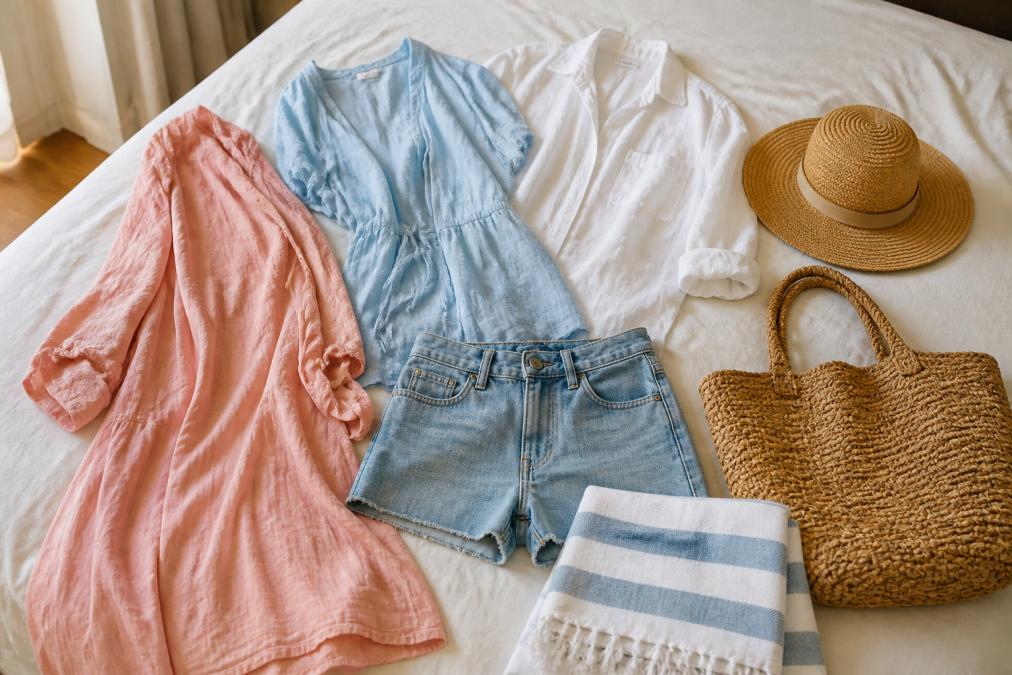
A coastal capsule wardrobe is a small set of coordinating pieces, so a week's outfits fit in a carry-on. Aim for roughly 12 to 15 clothing items for a week-long trip, in breathable fabrics like cotton, linen, and quick-dry blends.
Cover-Ups That Go From Sand to Boardwalk
Cover-ups do the heaviest lifting in a coastal wardrobe because they transition from beach to boardwalk without a full outfit change. The All Things Tropic Coverup works over a swimsuit at midday and reads as a sundress by evening, with chest pockets and button-front styling. Pack two cover-ups maximum, one light neutral, one statement piece.

Day to Night Beach Outfits: One Bag, Two Looks
Day-to-night beach outfits shift with accessories, not a second wardrobe. Build each day around one base outfit and one swap item:
| Time of Day | Base Piece | Add | Swap Out |
|---|---|---|---|
| Morning beach | Swimsuit + cover-up | Sunscreen, hat | - |
| Afternoon boardwalk | Cover-up | Tote bag, sandals | Wet swimsuit |
| Evening dinner | Cover-up or sundress | Statement jewelry, wedges | Sandals |
| Late night | Linen shirt + shorts | Light layer | Day bag |
Three swap items (jewelry, a clutch, wedges) turn three daytime outfits into three evening outfits.
How to Pack Light for a Beach Trip Without Missing Anything
Packing light for a beach trip works when you pack by category, not by outfit:
- Roll, don't fold swimwear, cover-ups, and knits. Rolling compresses fabric and reduces wrinkles.
- Cube by category (one for tops, one for bottoms, one for toiletries) so you can find items without unpacking everything.
- Wear the heavy items on travel days: closed shoes, jeans if you're bringing them, and any bulky layer.
A common mistake is packing for the trip you imagined rather than the one you booked. Check the forecast and itinerary before committing space to formalwear.
Beach Gear and Accessories That Earn Their Space
Beach gear earns its place when it solves a specific problem: sun, sand, water, wind, or boredom. Everything else is weight, and "essential" changes with the coast you're visiting.
Match Your Gear to the Coast You Booked
Use this as a filter before you buy or pack anything:
| Coastal Climate | What Changes | Gear That Earns Space | Gear to Leave Home |
|---|---|---|---|
| Tropical / warm-water (e.g., Hawaii, Florida Gulf) | High humidity, intense midday UV, sudden afternoon showers | Reef-safe sunscreen, quick-dry towel, waterproof phone pouch, light rain shell | Heavy denim, bulky sweatshirts, full-size beach umbrella if flying |
| Cool / windy coastal (e.g., Pacific Northwest, Northern California, Maine) | 55-65°F water, wind chill, fog, rocky shore | Windproof fleece or packable puffer, water-resistant hiking shoes, beanie, wool socks, thermos | Reef booties, tiny bikini-only packing, sun umbrella that flips inside out |
| Desert-meets-sea (e.g., Southern California) | Big day-night temperature swing, dry heat | Linen layers, wide-brim hat, refillable bottle, light jacket for evening | Heavy rain gear, humid-climate quick-dry everything |
Travelers pack for the postcard, not the forecast. Pull the 10-day forecast and average water temperature before committing space.
Sun Protection and Toiletries
Sunscreen is the one item you should never ration (the CDC). Pack a reef-safe formula at SPF 30 or higher, plus a face-specific sunscreen and an SPF lip balm, and reapply every two hours (more often after swimming) (the FDA). If you're flying, remember the TSA 3-1-1 rule: liquids and gels in containers of 3.4 ounces or less, inside one clear quart-sized bag per passenger (tsa.gov). A single 3-ounce tube covers roughly two full-body applications, so a week-long trip for one person usually needs two to three tubes or a solid sunscreen stick, which skips the liquid limit entirely. Toiletries belong in a travel-sized dopp kit: after-sun lotion or aloe, a lightweight moisturizer, and a hydrating mist for salt-dried skin. Consider solid formats (shampoo bars, deodorant paste) to free up your quart bag for sunscreen.
Tech, Entertainment, and First Aid
A waterproof dry bag and a sand-proof phone case protect the two electronics most likely to get ruined on a coastal trip. Add a portable charger, since beach days drain batteries fast, and keep it in the shade, a car trunk or beach bag in direct sun can exceed 140°F, which degrades both lithium batteries and SPF actives. If you're driving, pack a small cooler or insulated bag for sunscreen, snacks, and electronics.
For downtime, pack one paperback or e-reader in a zip bag, plus a deck of cards for rainy afternoons.
Your first aid kit should cover the coastal basics: adhesive bandages, antiseptic wipes, pain reliever, antihistamine, and tweezers for splinters or stingers. Add hydrocortisone for bites and rashes. On a rocky or coral coast, add waterproof bandages and a small bottle of vinegar, a common folk remedy for jellyfish stings (check local guidance, since treatment advice varies by species).
Beach Gear and Accessories That Earn Their Space
Beach gear earns its place when it solves a specific problem: sun, sand, water, or boredom. Everything else is weight. Prioritize sun protection, hydration, and one or two items that make the beach genuinely comfortable.
Sun Protection and Toiletries
Sunscreen is the one item you should never ration. Pack a reef-safe formula at SPF 30 or higher, plus a face-specific sunscreen and an SPF lip balm. Reapply every two hours, more often after swimming.
Toiletries belong in a travel-sized dopp kit. Include after-sun lotion or aloe, a lightweight moisturizer, and a hydrating mist for salt-dried skin. Decant liquids into travel-sized containers to stay under carry-on limits.
Tech, Entertainment, and First Aid
A waterproof dry bag and a sand-proof phone case protect the two electronics most likely to get ruined on a coastal trip. Add a portable charger, since beach days drain batteries fast.
For downtime, a beach read beats a screen in direct sun. Pack one paperback or e-reader, and keep it in a zip bag.
Your first aid kit should cover the coastal basics: adhesive bandages, antiseptic wipes, pain reliever, antihistamine, and tweezers for splinters or stingers. Add a small tube of hydrocortisone for insect bites and minor rashes.
Pack for Flying vs. Driving to the Coast
Flying and driving require different packing strategies because the constraints are different. Flying limits you by weight and liquid rules; driving limits you by space and heat inside the vehicle.
| Factor | Flying | Driving |
|---|---|---|
| Bag limit | Carry-on + personal item | Whatever fits the trunk |
| Liquids | 3.4 oz containers, 1 quart bag | Full-size bottles fine |
| Bulky gear | Rent or buy at destination | Bring chairs, coolers, umbrellas |
| Heat risk | Minimal | Electronics and sunscreen can degrade |
| Best for | Short trips, carry-on only | Families, long stays |
If you're flying, ship or rent beach chairs, umbrellas, and coolers rather than paying baggage fees. If you're driving, pack the cooler and beach chairs but keep sunscreen and electronics out of direct sun, since heat degrades both.
Eco-Friendly and Budget-Friendly Coastal Vacation Packing
Eco-friendly packing and budget packing overlap more than most guides admit. The same choices that cut waste also cut cost: reusable over disposable, multi-purpose over single-use, and quality over quantity.
Reusable swaps that pay for themselves on one trip:
- Reusable water bottle instead of bottled water
- Reef-safe sunscreen in a reusable container
- Cloth tote instead of plastic bags
- Sand-free towel instead of multiple beach towels
- Solid toiletries (shampoo bars) to skip liquid limits
For budget gear, buy secondhand beach chairs and umbrellas, or rent at your destination. A Blue Coastal Luxe Tote with a wipe-clean laminated interior handles wet swimsuits and sandy gear without soaking through, which means fewer plastic bags and less waste.

After the Beach: Cleanup and Organization
Post-beach cleanup is the step most packing guides skip, and it determines whether your gear survives the trip. Sand and salt destroy fabric, clog zippers, and corrode electronics.
The Same-Day Rinse Rule
Rinse everything the same day. Swimsuits, cover-ups, towels, and totes all need a fresh-water rinse to remove salt and sand before it sets into fibers. Salt crystals act like tiny abrasives that break down elastic and Lycra, and sand in a zipper track grinds the teeth.
A practical routine:
- Rinse swimwear and cover-ups in cool fresh water (not hot, which can set stains and damage elastic). A quick hand-rinse in the sink or an outdoor shower is enough.
- Shake towels and totes out before rinsing, so you're not pushing sand deeper into the weave.
- Hang to dry rather than leaving damp items in a bag. Coastal humidity keeps fabric wet for hours, and damp fabric in a closed bag is how mildew starts.
- Wipe down electronics with a dry microfiber cloth. Never rinse a phone or charger, even a "waterproof" one, since salt residue on charging ports causes corrosion.
Build a Wet-and-Sandy Kit
Separate clean from dirty before you leave the beach. A dedicated wet bag, a large zip-top bag, or the laminated interior of a tote keeps damp items from soaking everything else in your suitcase or car trunk.
What to keep in your wet-and-sandy kit:
- One large wet bag or reusable dry bag for suits and towels
- A small mesh bag for shells, rocks, or wet sandals
- A microfiber towel for quick-drying gear
- A travel-size bottle of fresh water for a parking-lot rinse
- A few zip-top bags for wet swimsuits if you're flying home
Packing for the Trip Home
Packing the return trip is a different skill, because now you have wet gear, dirty laundry, and sand everywhere.
A simple return-trip system:
- Launder or rinse everything wearable the night before you leave, if your rental has a washer or a drying line.
- Roll, don't fold, damp items and pack them in the wet bag, not against dry clothes.
- Empty and wipe down your beach bag with a damp cloth, then let it air-dry fully before zipping it closed.
- Charge all electronics before packing, and store them in a dry bag or zip-top bag rather than loose in a suitcase.
- Shake out shoes and stuff them with newspaper or a dry sock to absorb moisture and hold shape.
A Quilted Scallop Shell Tote works as both a beach bag and a return-trip carry bag, since the quilted panels hold shape and the interior wipes clean. If you're flying, remember that wet swimsuits and damp towels count toward your carry-on weight and can trigger a bag check at security if they push you over the limit.

Protecting Your Car and Your Luggage
If you're driving, the return trip is where sand does the most damage. Keep a dedicated beach blanket or mat in the trunk, use a plastic bin for sandy gear, shake out floor mats before the drive home, and keep a small hand broom in the car. If you're flying, pack wet items in a sealed bag inside your checked luggage, and keep one dry outfit and your electronics in your carry-on in case your checked bag is delayed.
A Quick Gear Triage Before You Pack
Before you pack for home, triage:
- Rinse and keep: swimwear, cover-ups, quick-dry towels, totes with wipe-clean interiors
- Wipe and keep: phones, chargers, e-readers, sunglasses
- Toss or replace: cheap flip-flops with cracked soles, sun-bleached hats, expired sunscreen
- Launder before storing: anything that touched salt water, even if it looks clean
Packing for a coastal vacation gets easier once you stop treating it as a packing problem and start treating it as a wardrobe problem. The pieces that do double duty, the cover-ups that shift from sand to dinner, and the gear that solves a real problem are what make a coastal trip feel effortless instead of overpacked. Boutique Bella Bella carries size-inclusive cover-ups, totes, and accessories built for exactly this kind of trip, including exclusive brands like Queen of Sparkles, Dingo, and Stetson. Stop in and let our team help you build a coastal wardrobe that actually fits your trip, your style, and your suitcase.
Pack for Flying vs. Driving to the Coast
Flying and driving require different packing strategies because the constraints are different. Flying limits you by weight and liquid rules; driving limits you by space and heat inside the vehicle.
| Factor | Flying | Driving |
|---|---|---|
| Bag limit | Carry-on + personal item | Whatever fits the trunk |
| Liquids | 3.4 oz containers, 1 quart bag | Full-size bottles fine |
| Bulky gear | Rent or buy at destination | Bring chairs, coolers, umbrellas |
| Heat risk | Minimal | Electronics and sunscreen can degrade |
| Best for | Short trips, carry-on only | Families, long stays |
If you're flying, ship or rent beach chairs, umbrellas, and coolers rather than paying baggage fees. If you're driving, pack the cooler and beach chairs but keep sunscreen and electronics out of direct sun, since heat degrades both.
Eco-Friendly and Budget-Friendly Coastal Vacation Packing
Eco-friendly packing and budget packing overlap more than most guides admit. The same choices that cut waste also cut cost: reusable over disposable, multi-purpose over single-use, and quality over quantity.
Reusable swaps that pay for themselves on one trip:
- Reusable water bottle instead of bottled water
- Reef-safe sunscreen in a reusable container
- Cloth tote instead of plastic bags
- Sand-free towel instead of multiple beach towels
- Solid toiletries (shampoo bars) to skip liquid limits
For budget gear, buy secondhand beach chairs and umbrellas, or rent at your destination. A Blue Coastal Luxe Tote with a wipe-clean laminated interior handles wet swimsuits and sandy gear without soaking through, which means fewer plastic bags and less waste.
After the Beach: Cleanup and Organization
Post-beach cleanup is the step most packing guides skip, and it's the one that determines whether your gear survives the trip. Sand and salt destroy fabric, clog zippers, and corrode electronics faster than anything else you'll encounter.
Rinse everything the same day. Swimsuits, cover-ups, towels, and totes all need a fresh-water rinse to remove salt and sand before it sets into fibers. Hang to dry rather than leaving damp items in a bag, since coastal humidity keeps them wet for hours.
Organize for the trip home by separating clean from dirty. Pack a dedicated "wet and sandy" bag or use the laminated interior of a tote for damp items. Empty and wipe down your beach bag, shake out towels, and charge electronics before you pack them.
A Quilted Scallop Shell Tote works as both a beach bag and a return-trip carry bag, since the quilted panels hold shape and the interior wipes clean.
Packing for a coastal vacation gets easier once you stop treating it as a packing problem and start treating it as a wardrobe problem. The pieces that do double duty, the cover-ups that shift from sand to dinner, and the gear that solves a real problem are what make a coastal trip feel effortless instead of overpacked. Boutique Bella Bella carries size-inclusive cover-ups, totes, and accessories built for exactly this kind of trip, including exclusive brands like Queen of Sparkles, Dingo, and Stetson. Stop in and let our team help you build a coastal wardrobe that actually fits your trip, your style, and your suitcase.
Frequently Asked Questions
What is the 5-4-3-2-1 rule for packing a coastal vacation?
The 5-4-3-2-1 rule means packing 5 tops, 4 bottoms, 3 dresses or cover-ups, 2 pairs of shoes, and 1 swimsuit. For a coastal vacation, swap one bottom for a second swimsuit and add a light layer. This method keeps your bag light while giving you enough outfit combinations for a week. Choose pieces that mix and match, like a neutral cover-up you can wear over a swimsuit or with shorts.
What is the most forgotten item when packing for a coastal vacation?
Travelers most often forget a reusable water bottle, lip balm with SPF, and a small first aid kit. These items are easy to overlook because they are not part of your daily outfit. A reusable water bottle keeps you hydrated in the heat, SPF lip balm protects against sunburn, and a first aid kit handles minor cuts or blisters. Add them to your packing checklist and place them in your beach bag before you leave.
How do you pack a capsule wardrobe for a week at the coast?
Start with a color palette of two or three shades, like white, blue, and sand. Pick 5 tops, 3 bottoms, 2 cover-ups, and 2 swimsuits. Choose fabrics that dry quickly and resist wrinkles, such as cotton voile or linen blends. A coastal capsule wardrobe lets you create multiple day to night beach outfits with fewer items. Roll each piece to save space and reduce creases.
What should you pack for a coastal vacation with unpredictable weather?
Pack a light rain jacket, a long-sleeve linen shirt, and a packable hat. Coastal climates can shift from sunny to windy or rainy in hours. A rain jacket doubles as a windbreaker, and a long-sleeve shirt adds warmth without bulk. Bring a dry bag for your phone and electronics. Check the forecast before you leave, but always include one warm layer and one waterproof layer.
How can you transition beachwear from day to evening?
Swap your flip-flops for sandals, add jewelry, and tie a cover-up differently. A cover-up worn open over a swimsuit works for the beach; button it up and add a belt for dinner. Choose pieces with coastal prints or sequins that catch the light. A tote bag can become an evening bag if you remove beach items and add a small clutch. Keep a lightweight scarf in your bag for cool evenings.
What are the best eco-friendly packing choices for a coastal vacation?
Use a reusable water bottle, a canvas tote bag, and reef-safe sunscreen. Avoid single-use plastics like straws and water bottles. A canvas tote like the Blue Coastal Luxe Tote replaces plastic bags for shopping or beach trips. Reef-safe sunscreen protects marine life. Pack a small container for snacks instead of buying individually wrapped items. These swaps reduce waste and often save money.