


Table of Contents
- Assessing the Damage to Your Sequin Top
- Hand Sewing vs. Fabric Glue: Which Method Works Best
- Selecting the Best Needle for Sequin Repair
- Step-by-Step Guide to Reattaching Loose Sequins
- Matching Replacement Sequins by Size, Color, and Shape
- How to Wash Sequin Tops Safely
- Preventing Sequin Loss on Garments
- Frequently Asked Questions
Last Updated: October 20, 2026
Assessing the Damage to Your Sequin Top
Before you start to repair loose sequins, take a close look at what you're working with. Understanding the type of damage and how many sequins need attention will help you choose the right fix.
Identifying the type of sequin attachment
Sequins attach to fabric in different ways, and knowing which method was used matters for your repair.
Some sequins are hand-sewn with thread through a center hole. Others use a cup-shaped back that sits flat against the fabric. A few are glued on with fabric adhesive. The attachment style determines whether you'll hand sew, use glue, or both.
Look at the sequin closely. Does it have a visible hole in the center? That's a sewn sequin. Is it cupped and smooth on the back? That's typically glued or heat-set. Check the underside of the fabric too. You'll see thread knots if it was stitched, or dried adhesive if it was glued.
Determining how many sequins need repair
Count how many sequins you need to repair loose sequins before you start. A single sequin is quick to fix. A cluster of loose sequins in one area might need a different approach than scattered loss across the whole top.
If you have more than five sequins loose in the same spot, you might consider reinforcing the entire area once you've reattached them. This prevents the same problem from happening again soon.
Run your fingers gently across the sequin fabric. Press lightly on sequins that look secure. You might find loose ones that haven't fallen off yet. Mark these with a small piece of tape so you don't miss them during repair.
Hand Sewing vs. Fabric Glue: Which Method Works Best
Both methods work. The best choice depends on the original attachment, the sequin fabric, and how you plan to wash your top.
When to use hand sewing
Hand sewing is the strongest repair for sequins that were originally stitched. It's also the safest method for delicate fabrics that might get damaged by adhesive.
Choose hand sewing if your top has a lining or backing fabric. The needle can pass through the sequin, through the outer fabric, and into the lining without showing on the outside.
Hand sewing also works best for tops you'll wash regularly. Stitches hold up through many wash cycles. Fabric glue can weaken over time with water exposure and detergent.
The downside is time. Hand sewing one sequin takes two to three minutes. If you have many loose sequins, you'll spend an hour or more on the repair.
When fabric glue is the better choice
Fabric glue works well for sequins that were originally glued. It's also the faster option when you have many sequins to fix.
Use fabric glue on sequin fabric that's sturdy and doesn't have a delicate backing. The glue creates a permanent bond once it dries.
Fabric glue is ideal for costume pieces, seasonal tops, or garments you don't wear often. The repair is quick and creates a clean look with no visible stitching.
Be careful with glue near seams or edges. Excess glue can bleed onto surrounding fabric and leave a stiff, shiny spot. Work in a well-ventilated space and use a small applicator to control the amount.
Selecting the Best Needle for Sequin Repair
The right needle makes sequin repair faster and prevents fabric damage.
Needle size and type recommendations
Use a beading needle or sharp needle in size 10 or 11. These are thin enough to pass through the sequin hole without enlarging it. They're also short enough to control easily when working with delicate fabric.
Avoid large sewing needles. They'll create holes in the sequin that look rough or enlarged. Stay away from blunt needles too. They can push the sequin fabric rather than piercing it cleanly.
If you're working with a particularly delicate sequin fabric, try a size 12 needle. It's thinner and causes less fabric stress. The trade-off is that it requires a bit more pressure to push through.
Thread selection and color matching
Choose regular thread that matches your sequin color exactly. Hold the thread against the sequin in natural light. If you can't find an exact match, pick a shade slightly darker rather than lighter. Darker thread is less noticeable on shiny surfaces.
Use a single strand of thread, not doubled. One strand is strong enough for sequin repair and creates a thinner, less visible stitch. Tie a small knot at the end before you start.
Match the thread to the sequin, not to the garment fabric. A sequin is what people see. The thread holding it should blend with the sequin color.
Step-by-Step Guide to Reattaching Loose Sequins
These two methods cover almost every sequin repair situation.
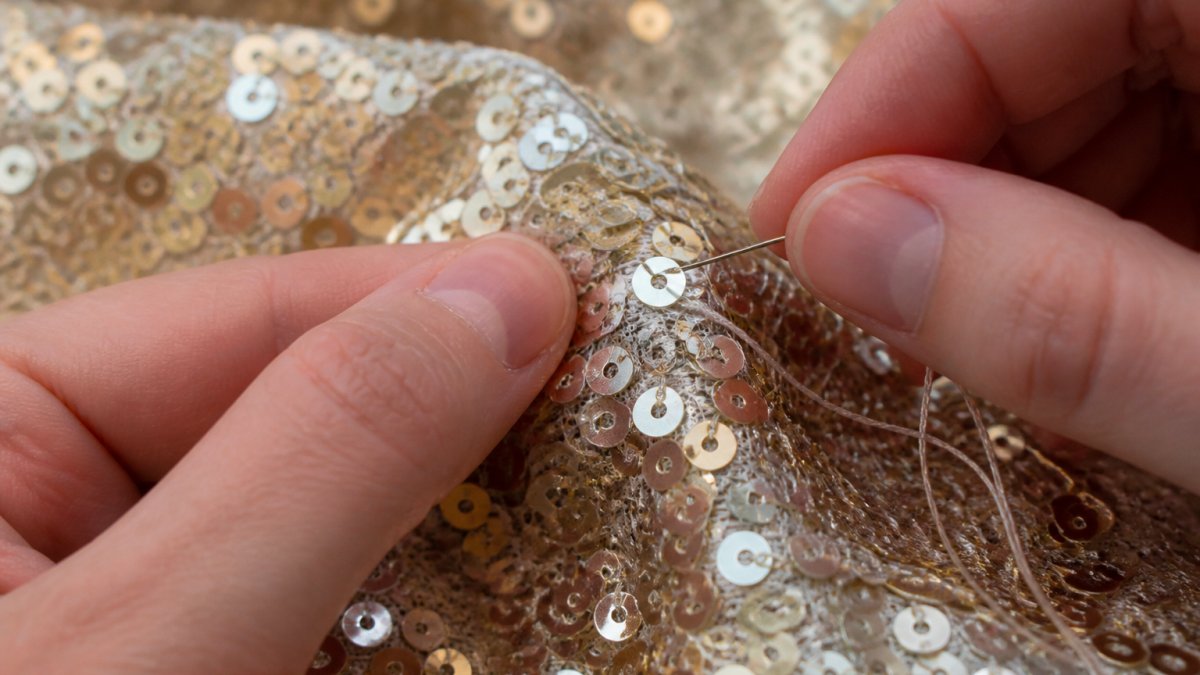
Hand sewing method
What you'll need:
- Needle (size 10 or 11)
- Matching thread
- Small scissors
- Your sequin top
Step 1: Thread your needle and tie a knot [Time: 1 minute]
Cut about 18 inches of thread. Pass it through the needle eye. Tie a small knot at the end.
Step 2: Position the sequin [Time: 1 minute]
Place the loose sequin where it belongs.
Step 3: Push the needle up through the sequin hole [Time: 1 minute]
Start from the underside of the fabric. Push the needle up through the sequin hole.
Step 4: Create a basting stitch [Time: 2 minutes]
Push the needle back down through the sequin hole.
Step 5: Secure and tie off [Time: 1 minute]
Wild Side Sequin Shoulder Top →
On your last stitch, push the needle to the underside of the fabric.
Expected result: The sequin should be secure and sit flat. You should not see any thread on the front of the top.
Fabric glue method
What you'll need:
- Fabric glue (washable)
- Small applicator or toothpick
- Paper towel
- Your sequin top
- Replacement sequins (if needed)
Step 1: Clean the area [Time: 2 minutes]
If the sequin is still attached but loose, gently peel it away. Wipe away any old glue or debris with a damp paper towel.
Step 2: Apply glue to the sequin back [Time: 1 minute]
Place a tiny dot of fabric glue on the back of the sequin.
Step 3: Position and press [Time: 2 minutes]
Place the sequin on the fabric in its correct position. Press down firmly for 30 seconds. Hold it steady while the glue begins to set.
Step 4: Let it cure [Time: 24 hours]
Leave the top flat and undisturbed for at least 24 hours. The glue needs full curing time to create a permanent bond.
Expected result: The sequin should be permanently attached and lie flat. The repair should be invisible from the front.
Matching Replacement Sequins by Size, Color, and Shape
If a sequin is missing entirely, you'll need a replacement. Finding the right match prevents your repair from looking obvious.
Most sequins come in standard sizes: 4mm, 5mm, 6mm, and 8mm. The size refers to the diameter. Measure a nearby sequin with a ruler. Most tops use 5mm or 6mm sequins.
Color matching is trickier. Sequins come in hundreds of shades. Bring your top to a craft store and hold potential replacements next to it in natural light. Metallic sequins vary widely between gold, silver, and rose gold tones.
Shape matters too. Most sequins are flat and round. Some are cupped. A few are oval or irregular. Check the original sequins on your top to match the shape exactly.
How to Wash Sequin Tops Safely
Proper washing protects your repair and extends the life of the sequin fabric.
Hand washing best practices
Always hand wash sequin tops. Machine washing creates friction that loosens sequins and damages the fabric underneath.
Fill a sink with cool water and add a small amount of mild detergent. Submerge the top and gently swish it around for two to three minutes. Avoid rubbing or scrubbing the sequin areas. Rinse with cool water until all soap is gone.
For tops with recent repairs, wait at least one week before washing. This gives hand-sewn stitches and fabric glue time to fully set.
Drying and storage tips
Never wring or twist sequin fabric. Instead, gently squeeze out excess water. Lay the top flat on a clean towel to dry. Do not hang sequin tops on hangers. The weight of the fabric can stress the sequins and cause them to loosen.
Store sequin tops flat in a drawer or on a shelf. If you must fold them, fold along the seams rather than across the sequin areas. Keep them away from direct sunlight, which can fade the color over time.
Preventing Sequin Loss on Garments
The best repair is the one you never need to make. These steps reduce the chance of sequin loss.
Reinforcement techniques before wear
If you've just bought a new sequin top, inspect it carefully before wearing. Check every seam and edge where sequins attach. Gently tug on sequins near the neckline, armholes, and hem. Loose ones should be tightened immediately.
For tops you wear often, consider a preventive stitch. Run a small basting stitch around the perimeter of sequin clusters. This distributes the stress across multiple stitches rather than relying on the original attachment alone.
Avoid wearing sequin tops under tight jackets or straps. The friction loosens sequins. Wear them over loose clothing or by themselves.
Storage and handling strategies
Never stuff sequin tops into a crowded closet. They need space so sequins don't catch on other garments. Hang them on padded hangers if you must hang them, or store them flat.
When packing for travel, wrap sequin tops in tissue paper. This protects them from friction with other items in your luggage. Place them on top of other clothes rather than underneath where they'll be compressed.
Handle sequin fabric gently when putting on or removing your top. Pull straight down rather than wiggling side to side. The less movement, the less stress on the sequins.
Sequin tops are investment pieces that deserve proper care. At Boutique Bella Bella, we carry beautiful sequin garments like the Wild Side Sequin Shoulder Top and the Wildly Chic Embellished Leopard Tee that deserve the right care.


Frequently Asked Questions
Is it better to sew or glue loose sequins?
Hand sewing is more durable for sequins that receive frequent wear or washing, as stitches hold through repeated movement and laundry cycles. Fabric glue works best for decorative sequins on pieces worn occasionally or for quick repairs when sewing isn't practical. For sequin tops from brands like Queen of Sparkles that you plan to wear regularly, hand sewing with the right needle and thread provides longer-lasting results and maintains the garment's integrity.
What kind of thread is best for repairing sequins?
Use regular thread that matches your sequin color exactly. Keep tension moderate to avoid puckering the fabric around the sequin. Always tie off thread ends securely on the underside of the top to prevent loose ends from catching during wear.
Can you use fabric glue to fix loose sequins?
Yes, fabric glue can repair loose sequins, but it's best suited for occasional-wear pieces or single sequins in non-stress areas. Apply a small amount of fabric-safe adhesive to the sequin's underside, press it firmly onto the fabric, and allow it to cure according to the glue's instructions before wearing. For sequin tops that get frequent wear, hand stitching offers better durability and washability.
How do you prevent sequins from falling off in the wash?
Hand wash your sequin top in cool water with mild detergent, using gentle motions rather than scrubbing. Turn the top inside out before washing to protect the sequin surface from friction. Avoid using the washing machine, dryer, or harsh agitation that loosens stitches. After washing, lay flat to dry away from direct heat or sunlight. Store the top flat or hanging on a padded hanger to reduce stress on sequin attachments, and avoid overstuffing your closet where sequins can catch on other garments.