


Table of Contents
- Why Texas Weather Demands a Smart Layering Strategy
- Breathable Fabrics for Hot Weather: The Foundation of Every Outfit
- Quick Comparison: Best Fashion Pieces for Texas Weather
- 1. The Sequin Statement Top: From Day Heat to Night Glow
- 2. The Versatile Tank Dress: Your One-Piece Answer to Heat Index Peaks
- 3. The Breathable Denim Jacket: Your Transitional Armor for Aggressive AC
- 4. The Wide-Brim Hat: Sun Protection Meets Instant Polish
- 5. The Mockneck Sweatshirt: Game Day Comfort Without the Overheat
- Frequently Asked Questions
Last Updated: September 9, 2026
Texas weather is less a forecast and more a plot twist: scorching triple-digit afternoons that give way to aggressively air-conditioned restaurants, then crisp evenings that arrive without warning. Navigating texas weather fashion means building a wardrobe that treats temperature swings as a styling challenge, not a crisis.
The secret isn't owning separate summer and winter closets. It's owning versatile, statement-ready layers that work overtime. Below, we break down seven specific pieces that handle the heat index, the humidity, and the indoor freeze.
Why Texas Weather Demands a Smart Layering Strategy
The core problem with texas weather fashion is the温差 between outdoor heat and indoor cooling. A summer day can hit a heat index well over 100°F, while a nearby store keeps its thermostat near 68°F (weather.gov). That swing of 30-plus degrees happens in the time it takes to walk through a door.
But the real challenge isn't just the swing, it's the frequency and unpredictability. In a single afternoon of errands, you might move through a parking lot at 102°F, a grocery store at 70°F, a restaurant at 68°F, and back outside before the sun drops.
The Actual Numbers Behind the Problem
Texas commercial buildings are notoriously cold. ASHRAE recommends a thermostat range of 68-75°F, but many Texas retailers and restaurants set theirs at the low end, or below it, to combat heat load from constantly opening doors (ashrae.org). Meanwhile, outdoor temperatures in July and August routinely exceed 100°F, with the heat index pushing even higher in humid regions.
This creates a thermal differential of 30-35°F that you cross in seconds. Your body's thermoregulation system cannot adapt that quickly. When you step from 100°F heat into a 68°F store, your blood vessels constrict, your sweat production stops abruptly, and you feel a genuine chill, especially in a sweat-soaked base layer.
The Three-Layer System for Texas Transitions
Most layering advice comes from cold-weather climates and fails in Texas. The solution is a modified three-layer system for heat-to-cold transitions:
Layer 1: The Wick (next to skin), This layer manages sweat outdoors. It should be a moisture-wicking technical fabric or a loose-weave natural fiber that dries quickly. The critical requirement: it must not hold moisture against your skin when you step into air conditioning.
Layer 2: The Insulator (the transition piece), This is the layer you add when you cross the threshold. It should provide moderate insulation without bulk, a lightweight cardigan, linen blazer, or thin cotton sweater. The key is that it must be easy to remove and carry.
Layer 3: The Shell (for aggressive AC), For restaurants, movie theaters, and other venues that crank the AC, you need a true outer layer. A denim jacket, light trench, or structured blazer provides the insulation you need. This layer should be packable enough to tie around your waist or stuff in a tote when you're back in the sun.
The "Tie-Off" Technique
One of the most practical strategies is the waist-tie method. When you're outdoors and your outer layer is too warm, tie it around your waist rather than carrying it. This keeps the layer accessible for your next indoor transition without adding bulk to your hands or bag, and a denim jacket or flannel tied at the waist adds visual interest to a simple tank dress or shorts outfit.

Timing Your Layers to the Day
The thermal challenge shifts throughout the day. Morning temperatures in Texas summer typically start in the high 70s to low 80s, comfortable enough for a light layer. By noon, the heat index peaks and you want minimal clothing. By 6 PM, temperatures begin dropping, and by 9 PM, you may need a jacket even in summer.
If you have an outdoor event at noon followed by dinner at 7 PM, carry your insulator layer with you. If you're spending the day indoors with brief outdoor walks, prioritize a breathable base layer and keep a light cardigan at your desk.
The Humidity Complication
Humidity adds another dimension. When you step from humid outdoor air into air conditioning, the moisture on your skin and clothing condenses, accelerating heat loss, you feel colder than the thermostat suggests because your damp clothing is actively cooling you. This is why a moisture-wicking base layer is essential.
Most guides miss this: the goal isn't just staying cool outside. It's managing thermal regulation across environments. The solution is a capsule wardrobe built on breathable layers and transitional clothing, lightweight and quick-drying for the parking lot, then easy to throw on or peel off when the AC hits.
Breathable Fabrics for Hot Weather: The Foundation of Every Outfit
Fabric choice determines whether you survive a Texas afternoon or spend it miserable. But "breathable" is an overused word that fails to capture what actually matters in a climate where the heat index routinely pushes past 105°F and humidity hovers above 70% along the Gulf Coast. The real distinction isn't natural versus synthetic, it's how a fabric manages external heat, your body's sweat response, and the moisture already hanging in the air.
Why Humidity Changes the Fabric Equation
Your body cools itself through evaporation. When sweat evaporates, it pulls heat away from your skin. But in coastal Texas, where humidity often exceeds 70%, the air is already saturated, evaporation slows dramatically, and sweat just sits on your skin. This is why a 95°F day in Houston feels more oppressive than a 105°F day in El Paso.
This physiological reality dictates your fabric choices. You need materials that do two things simultaneously: pull moisture away from your skin (wicking) and allow that moisture to reach the fabric's surface where it can evaporate (breathability). A fabric that only wicks without breathing traps dampness against your body.
The Linen-Cotton Tradeoff
Linen is the classic Texas summer fabric, and for good reason. Its flax fibers have a hollow structure that creates natural air channels, allowing heat to escape and air to circulate. A loose-weave linen shirt can keep you noticeably cooler than a cotton equivalent. But linen absorbs moisture readily and dries slowly, once saturated, it clings and feels heavy. A linen-cotton blend (typically 55% linen, 45% cotton) offers the best compromise: linen's airflow with cotton's reduced cling.
Cotton alone is more complicated than most guides suggest. A tight-weave, high-thread-count cotton broadcloth traps heat and moisture, but a loose-knit cotton jersey or gauze-weave cotton allows significant airflow. The problem with cotton in Texas humidity is that it absorbs sweat like a towel and holds it against your skin, when the mercury hits 100°F, a cotton t-shirt can become a wet, heavy layer within an hour.
Technical Fabrics: The Humidity Solution Most Guides Ignore
This is where technical performance fabrics outperform natural fibers, and where most fashion articles miss the mark. Modern moisture-wicking synthetics are engineered with mechanisms natural fibers cannot replicate:
- Capillary action: Polyester and nylon fibers are extruded with channels or shaped cross-sections that create microscopic pathways. These channels pull sweat away from your skin through capillary action, spreading it across a larger surface area where evaporation can occur.
- Hydrophobic fiber cores: Many performance fabrics use fibers that repel water at the core while the fabric surface is treated to attract moisture. This creates a one-way transport system, sweat moves away from your skin but doesn't migrate back.
- Open-knit structures: Technical fabrics often use engineered mesh patterns or open-knit constructions that maximize airflow while maintaining structure. A polyester mesh tank can feel dramatically cooler than a cotton tee of similar weight.
Brands like Nike's Dri-FIT, Under Armour's HeatGear, and Patagonia's Capilene use variations of these technologies. The key specification is fabric weight, aim for 3-4 ounces per square yard for summer performance pieces.
The Viscose and Rayon Middle Ground
Viscose (also labeled rayon) occupies a useful middle position. Derived from wood pulp, it has a drape and softness that rivals silk while offering better airflow than most cottons. Its semi-synthetic nature means it handles humidity better than pure cotton, it doesn't absorb as much moisture and dries faster. However, it can become stiff when wet and may shrink with improper washing. Look for viscose blended with elastane (typically 5-8%) for shape retention.
What to Avoid in Texas Heat
- Heavy denim: A 14-ounce or heavier denim traps heat and restricts airflow. If you need denim for transitional AC moments, choose a lightweight version (10-12 ounces) with a looser weave.
- Acrylic and standard polyester: These petroleum-based fabrics without moisture-wicking treatments trap heat and create a sauna effect against your skin.
- Silk: While luxurious, silk absorbs moisture and dries slowly, making it a poor choice for active outdoor hours in humid conditions.
- Tight weaves: Poplin, broadcloth, and other tightly woven fabrics restrict airflow regardless of fiber content.
Perform the "flashlight test" on any fabric before purchasing: hold it up to a bright light. If you can see light passing through the weave, air can pass through too. This simple check helps identify genuinely breathable fabrics versus marketing claims.
The Layering Logic for Fabric Selection
Your base layer should prioritize wicking, a technical tank or loose-weave linen camisole works best. Your middle layer, for AC transitions, should prioritize breathability with some insulation, a lightweight cotton cardigan or loose-knit sweater. Your outer layer, for aggressive indoor cooling, should be easily removable and packable, think a lightweight denim jacket or linen blazer you can drape over a chair.
The goal is a system where each layer serves a distinct thermal function, and no single layer traps heat against your body when you step back outside.
Quick Comparison: Best Fashion Pieces for Texas Weather
| Piece | Best For | Key Feature | Indoor/Outdoor |
|---|---|---|---|
| Sequin Statement Top | Day-to-night events | Built-in storage, bold look | Both |
| Versatile Tank Dress | Peak heat index hours | One-piece, breathable | Outdoor |
| Denim Jacket | Aggressive AC transitions | Layerable, classic | Indoor |
| Wide-Brim Hat | Sun protection | Shields face and neck | Outdoor |
| Mockneck Sweatshirt | Game day, cool evenings | Cozy without overheating | Indoor |
1. The Sequin Statement Top: From Day Heat to Night Glow
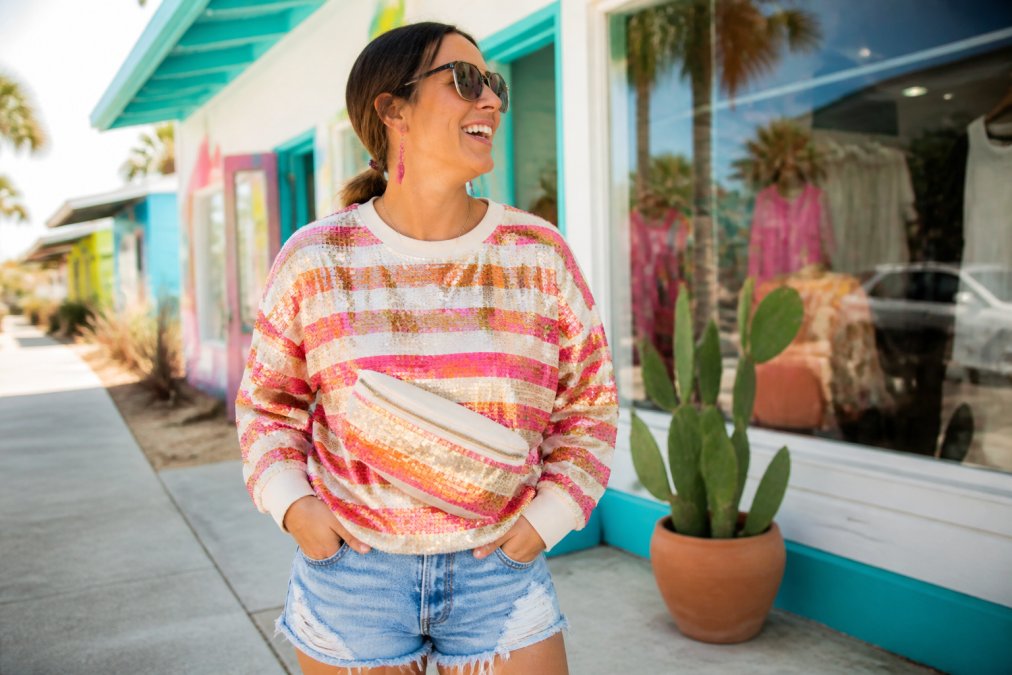
A sequined top sounds like the opposite of heat-friendly, but the right one works harder than any basic tee. The QOS Licensed Texas Sequin Striped Fanny Pack Sweatshirt, priced at $230.99, pairs bold sequin stripes with an integrated fanny pack, giving you storage without a bulky bag. The soft sweatshirt material keeps you comfortable when the sun drops, while the built-in pack holds your phone and lip gloss for a seamless day-to-night transition.

This is the piece that answers "what do I wear to a tailgate that starts at noon and ends after dark?" It celebrates Texas pride with flair, and the functional design means fewer things to carry in the heat.
2. The Versatile Tank Dress: Your One-Piece Answer to Heat Index Peaks
When the heat index peaks, the last thing you want is layers. A tank dress solves the problem in one piece: breathable, lightweight, and effortlessly stylish. The QOS Licensed Texas Full Sequin Football Field Tank Dress, at $322.99, takes the concept to statement level with a full sequin design that catches light from every angle. The sleek tank silhouette keeps you cool while the shimmer ensures you stand out.
For less formal days, a striped knit tank in soft, lightweight fabric offers the same ease with a more relaxed vibe. The key is choosing dresses with a loose fit that allows airflow.
3. The Breathable Denim Jacket: Your Transitional Armor for Aggressive AC
Here's where most Texas wardrobes fail: they nail the outdoor heat but freeze indoors. A denim jacket is the classic solution, but not all denim performs equally. The QOS Licensed Texas A&M Denim Multi Rhinestone Scattered Logo Button Up Top, priced at $218.99, offers quality denim construction with dazzling rhinestone detailing. Wear it solo over a tank or layer it when the AC gets aggressive.
4. The Wide-Brim Hat: Sun Protection Meets Instant Polish
Sun protection isn't just about sunscreen. A wide-brim hat shields your face, neck, and ears from UV rays while elevating any outfit from casual to polished. For outdoor adventures or a day of shopping, a hat with UPF-rated fabric or a classic cotton trucker style keeps you shaded and comfortable.
The Trucker Hat-Texas, at just $24.99, offers a structured, breathable cotton design with an adjustable back for a perfect fit. It's an easy, affordable way to add sun shades to your daily routine without overhauling your wardrobe.
5. The Mockneck Sweatshirt: Game Day Comfort Without the Overheat
Game days in Texas start hot and end cool, often with a dramatic temperature drop by the fourth quarter. A mockneck sweatshirt gives you the cozy warmth of a hoodie without the bulk that causes overheating. The QOS Licensed Texas Mockneck Camo Sweatshirt, at $241.99, blends a classic camouflage pattern with a comfortable mockneck design, perfect for layering over a tank or tee.

The soft, durable fabric keeps you warm when the evening chill arrives, while the versatile camo aesthetic pairs effortlessly with jeans or leggings. For fans of Queen of Sparkles, this piece combines school spirit with practical, weather-ready style.
Frequently Asked Questions
What is the 3-3-3 rule for clothing?
The 3-3-3 rule is a packing and wardrobe method where you choose three tops, three bottoms, and three pairs of shoes to create multiple outfits. For Texas weather, apply it with breathable fabrics: three lightweight tops in linen or cotton, three bottoms like shorts or flowy skirts, and three versatile pairs of footwear. This approach works well for building a capsule wardrobe that transitions from hot outdoor days to chilly indoor air conditioning.
What kind of clothing should I wear in Texas heat?
Focus on breathable fabrics for hot weather: lightweight cotton, linen, and viscose allow air to circulate and moisture to evaporate. Choose loose silhouettes that don't trap heat against your skin. For outdoor sun exposure, add a wide-brim hat and consider SPF clothing. Since indoor spaces blast AC, carry a lightweight denim jacket or transitional layer. These choices help you manage the swing between 100-degree days and 68-degree interiors.
How do I incorporate sequins and statement pieces into everyday wear?
Start small: pair a sequined tank with plain white shorts or jeans to let the sparkle stand alone. A sequin skirt works for daytime when styled with a simple cotton tee and sneakers. For game day or evenings, a full sequin dress is your one-piece answer. The key is balancing one statement piece with neutral, breathable basics so you stay comfortable in the heat while still turning heads.
How can I build a capsule wardrobe for fluctuating temperatures?
Build your capsule wardrobe essentials around three layers: a breathable base (tank tops and tees in cotton or linen), a mid-layer for AC (lightweight denim jacket or cardigan), and weather-resistant outerwear for cool snaps. Choose a cohesive color palette so pieces mix and match easily. Include one or two statement items, like a sequin top or rhinestone skirt, to add personality. This system covers you from summer heat to mild winter days.
Dressing for Texas weather isn't about suffering through the heat or shivering indoors. It's about choosing versatile, high-quality pieces that transition with you. At Boutique Bella Bella, we curate size-inclusive options from Queen of Sparkles and other standout brands, ensuring you find pieces that fit your body and your lifestyle. Stop in and discover how the right layers keep you comfortable, confident, and shining all day long.