


Last Updated: October 30, 2026
Quick Summary
Building a versatile wardrobe on a budget starts with a wardrobe audit to find gaps, then buying timeless basics first and setting a tiered clothing budget. Use cost per wear to judge purchases, so well-made pieces you wear often beat cheap items worn twice.
- Sort every item into keep, repair, or donate piles during a two-hour closet audit.
- Start a capsule with 25 to 35 pieces per season that suit your real weekly life.
- Split your budget 50% core basics, 30% statement pieces, and 20% trend and fun.
- A $60 item worn 120 times costs $0.75 per wear versus $12.50 for a $25 item worn twice.
- Three tops, two bottoms, and one layer create six outfits from fewer pieces.
Table of Contents
- Start With a Wardrobe Audit Before You Spend a Dollar
- Build a Capsule Wardrobe on a Budget That Actually Fits Your Life
- Pick Wardrobe Essentials on a Budget: Timeless Basics First
- Set a Clothing Budget With Spending Tiers You Can Stick To
- Learn How to Shop for Clothes on a Budget Without Cutting Corners
- Use Cost per Wear to Judge Every Purchase
- Mix and Match: Turn Fewer Pieces Into More Outfits
- Try Pieces On in Person at Boutique Bella Bella
- Frequently Asked Questions
Start With a Wardrobe Audit Before You Spend a Dollar
Building a versatile wardrobe on a budget starts with knowing what you already own, and a versatile wardrobe begins with that same honest inventory.
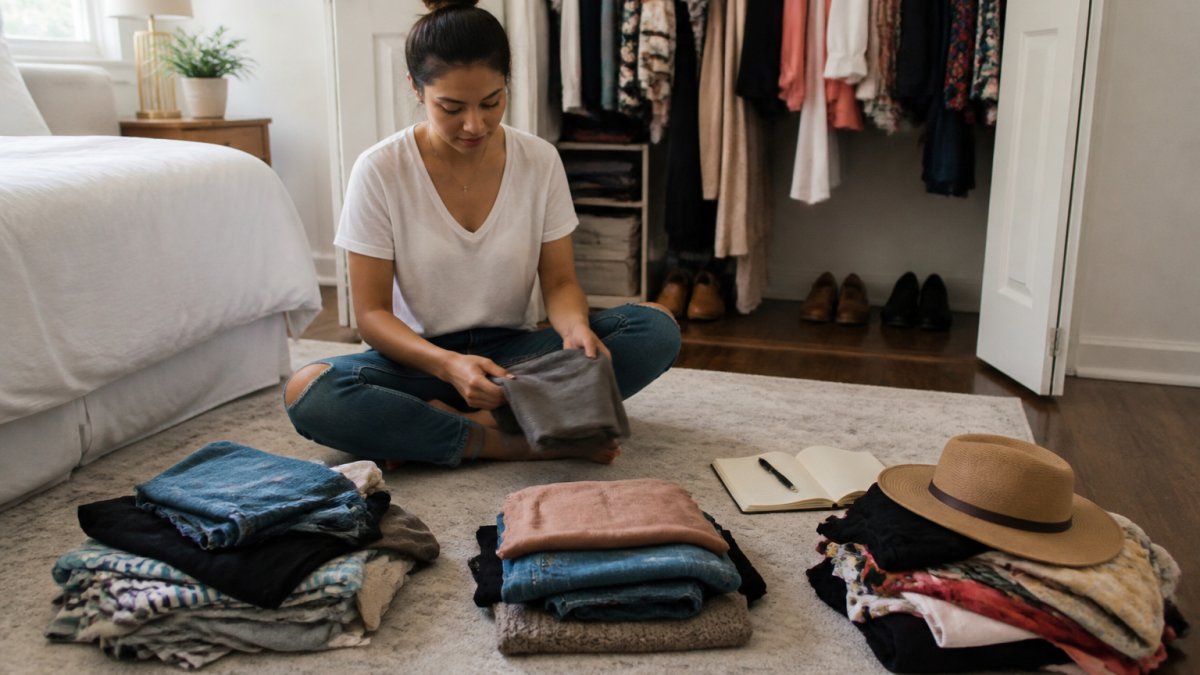
Set aside two hours and empty your closet onto the bed. Try things on. Be honest about fit, comfort, and how each piece makes you feel.
The Three-Pile Sort: Keep, Repair, Donate
Every item lands in one of three piles. This keeps the process fast and removes emotion from the decision.
- Keep: Fits well, you wore it in the last year, and it works with other pieces
- Repair: Good quality but needs a hem, button, or patch
- Donate: Wrong size, worn out, or unworn for over a year
Be ruthless with the donate pile. A closet full of "maybe someday" pieces hides the gaps you need to fill.
Find Your Wardrobe Gaps
Once the keep pile is set, look for what is missing. Common gaps include a neutral layer, a versatile pair of jeans, or a top that works for both casual and dressy plans.
Write these gaps on a shopping list. That list becomes your budget's best friend. It stops impulse buys and keeps every purchase tied to a real need.
Build a Capsule Wardrobe on a Budget That Actually Fits Your Life
A capsule wardrobe is a small set of pieces that mix together to create many outfits. The goal is not a tiny closet.
Start with 25 to 35 pieces for a full season, including tops, bottoms, layers, and shoes. For a deeper walkthrough, our complete guide to building a coastal capsule wardrobe covers the step-by-step process.
A capsule built for someone else's life will fail. Build yours around your real calendar, not a Pinterest board.
Pick Wardrobe Essentials on a Budget: Timeless Basics First
Wardrobe essentials on a budget are the pieces you reach for weekly: plain tees, a good pair of jeans, a neutral layer, and one or two tops that dress up or down. Buy these first, before trend pieces.
A white tank is the definition of a timeless basic. Our white basic tank top at $19.95 is designed to work on its own or under a layer, with a simple design that allows for endless styling options. Our Dusk Jeans at $65.95 feature a relaxed fit and versatile dark wash.


Spend more on pieces you wear most. Save on trend items you will wear a handful of times.
Set a Clothing Budget With Spending Tiers You Can Stick To
A clothing budget works best when it has tiers, not one flat number. Split your spend into three buckets so priorities stay clear, then set a dollar amount for each bucket based on what you can actually afford.
| Tier | Share of Budget | What It Covers | Example on a $100 Monthly Budget | Example on a $300 Seasonal Budget |
|---|---|---|---|---|
| Core basics | 50% | Tees, jeans, layers you wear weekly | $50 | $150 |
| Statement pieces | 30% | One or two standout items per season | $30 | $90 |
| Trend and fun | 20% | Low-cost experiments and accessories | $20 | $60 |
Pick the frame that matches how you shop. A monthly budget suits people who buy a piece or two at a time; a seasonal budget suits people who save up and buy in batches.
How to Prioritize When the Budget Is Tight
When money is short, the tiers still apply, but the order changes. Spend in this sequence:
- Replace, don't add. If a core basic is worn out or no longer fits, replacing it comes before any statement piece.
- Fill the gap that unlocks the most outfits. A neutral layer that works with five existing tops beats a statement piece that works with one.
- Cap the trend tier. Trend and fun money is the first thing to cut when the month is tight, because those pieces have the shortest useful life.
- Bank what you don't spend. Roll unused core-basics money into next month rather than moving it to the trend tier.
Track One Season Before You Adjust
Track every purchase against these tiers for one season. Most people find they overspend on trends and underspend on the basics they actually wear. At the end of the season, compare what you planned to spend in each tier with what you actually spent. If the trend tier ran over, cut it by half next season and move that money to core basics.
A budget you can stick to is one with real numbers attached. Pick your monthly or seasonal total, split it across the three tiers, and let the gap list from your wardrobe audit decide what gets bought first.
Learn How to Shop for Clothes on a Budget Without Cutting Corners
Shopping for clothes on a budget is about quality per dollar, not the lowest price tag. Check seams, fabric weight, and how a piece holds up after one wash.
If you are weighing whether to spend more on a well-made piece, read our breakdown on whether expensive boutique clothing is worth it. It covers the quality signals that justify a higher price.
Thrifting and Secondhand: A Quick Quality Checklist
Secondhand shopping stretches a budget far. Use this checklist before you buy:
- Check seams, underarms, and cuffs for wear
- Look for pilling, fading, or stretched elastic
- Confirm the fabric content on the tag
A great secondhand find beats a cheap new item every time. A worn-out one wastes money no matter how low the price.
Use Cost per Wear to Judge Every Purchase
Cost per wear is the price of an item divided by how many times you expect to wear it. A $60 pair of jeans worn 60 times costs $1 per wear. A $25 top worn twice costs $12.50 per wear. Run this math before checkout. It changes how you shop, because the cheaper item is often the more expensive one over a year.
Build a Realistic Wear Estimate
Most people overestimate how often they will wear a new piece. Use your own closet as the evidence.
A common pattern is to assume a statement piece will be worn weekly when it is actually worn monthly. If you are unsure, estimate low. A low estimate that turns out wrong costs you nothing; a high estimate that turns out wrong hides a bad purchase.
Add Care Costs to the Math
Purchase price is not the whole cost. Dry cleaning, special detergents, and delicate handling all add up. A $90 sweater that costs $8 to dry clean and is cleaned six times a year adds $48 a year to its real cost.
Before you buy, check the care tag. If the care instructions require a service you will not actually pay for, the piece will either be worn less or cost more than the sticker price suggests.
Factor In Repairability
A garment you can repair stays in the cost-per-wear math longer. Look for these signals before you buy:
- Seam allowance: Enough fabric inside the seam to let a tailor take it in or let it out.
- Replaceable buttons: Buttons sewn on with a shank or attached through a fabric bridge are easier to replace than glued or tightly stitched ones.
- Simple construction: Straight hems, standard zippers, and lined but not fused jackets are cheaper to alter and repair.
A $70 pair of jeans with a generous seam allowance and replaceable hardware can be hemmed, patched, and worn for years. A $40 pair with no seam allowance and glued buttons may be cheaper today and more expensive by the second year.
Compare Two Purchases Side by Side
Put the numbers in one place before you decide:
| Item A | Item B | |
|---|---|---|
| Purchase price | $25 | $60 |
| Estimated wears per year | 2 | 40 |
| Years of useful life | 1 | 3 |
| Total wears | 2 | 120 |
| Care cost per year | $0 | $10 |
| Cost per wear | $12.50 | $0.75 |
In this example the $60 item costs less than a dollar per wear while the $25 item costs more than twelve. The lower price tag was the more expensive choice.
Durable construction and quality fabrics lower cost per wear because the piece lasts longer and can be repaired. That is the real budget strategy: pay for wears, not for the tag.
Mix and Match: Turn Fewer Pieces Into More Outfits
Outfit combinations multiply fast when every piece shares a color palette. Stick to neutral colors like white, black, navy, and tan, then add two or three accent shades you love.
A simple formula: three tops, two bottoms, and one layer create six outfits. Add a second layer and you double that. A versatile pair of jeans like our Dusk Jeans anchors most of those looks.
Layering extends a wardrobe across seasons too. A tank, a mock neck, and a cardigan cover spring through fall without a full closet reset.
Try Pieces On in Person at Boutique Bella Bella
Fit decides whether a piece earns its place in your wardrobe. A garment that fits well gets worn; one that almost fits sits in the closet.
If shopping in person makes you anxious, our article on why clothes shopping makes you anxious offers practical ways to make the trip easier.
Bring your wardrobe gaps list and stop in to explore our curated selection of apparel and accessories.
Frequently Asked Questions
How many clothes do you need for a versatile wardrobe?
Most people can build a versatile wardrobe with roughly 30 to 40 pieces, including tops, bottoms, layers, and shoes that all work together. The exact number matters less than cohesion: every piece should match at least three others you own. A smaller closet of neutral colors and timeless basics usually produces more outfit combinations than a packed closet of one-off statement pieces. Start by counting what you actually wear, then fill gaps one purchase at a time.
What are the essential pieces for a wardrobe essentials on a budget shopping list?
A practical starter list includes a white tank or tee, a fitted long-sleeve top, and dark-wash jeans. Choose neutral colors so everything mixes. At Boutique Bella Bella, the White Basic Tank Top at $19.95 and the Dusk Jeans at $65.95 are good anchors because they pair with nearly anything already in your closet.
How do you build a capsule wardrobe on a budget without spending a lot upfront?
Build it in phases. Audit what you own first, then buy one or two pieces per month that fill real gaps rather than shopping a full list at once. Set a monthly cap, use cost per wear to judge each item, and check secondhand options before buying new. Layering pieces like the Black Long Sleeve Mock Neck Top at $49.99 can add variety to a small capsule.
How can you make more outfits from the clothes you already own?
Stick to a tight color palette of two or three neutrals plus one accent, then build outfit combinations by pairing each top with every bottom you own. Layering adds variety: a tank under a mock neck, or a cardigan over a blouse, creates new looks without new purchases. Photograph the combinations that work so you can repeat them quickly. Repairing loose buttons and hems also brings forgotten pieces back into rotation.
Building a versatile wardrobe on a budget takes a plan, not a big spend. Start with an audit, set spending tiers, and judge every purchase by cost per wear. Boutique Bella Bella carries size-inclusive apparel, from Queen of Sparkles statement pieces to everyday basics, so you can fill your wardrobe gaps in one welcoming stop. Get started with Boutique Bella Bella and build a closet where every piece earns its place.
