


Last Updated: November 2, 2026
Quick Summary
The safest way to clean vintage jewelry is to first identify the metal or material, then use warm water with a drop of mild dish soap, a soft brush, and a soft cloth. Dry each piece thoroughly right away, and skip harsh chemicals, abrasives, and ultrasonic cleaners.
- Identify the metal first by checking for stamps like 10K, 14K, 925, or sterling on the clasp or band.
- Use warm, not hot, water with one drop of mild, unscented dish soap.
- Dip pieces for no more than 30 to 60 seconds and never soak them.
- Wipe plated and costume pieces with a damp cloth only; never rub them with a polishing cloth or abrasive.
- Dry pieces fully, especially clasps and hinges, before storing, since trapped moisture causes tarnish and verdigris.
Table of Contents
- Identify Your Jewelry Materials Before You Clean
- Inspect for Damage and Know When to Stop
- What to Clean Vintage Jewelry With
- How to Clean Vintage Costume Jewelry
- How to Clean Vintage Gold Jewelry and Vintage-Style Rings
- Rinse, Dry, and Store Your Pieces to Prevent Future Buildup
- Pick Your Next Step for Your Vintage Collection
- Frequently Asked Questions
Identify Your Jewelry Materials Before You Clean
Vintage jewelry is a mix of metals, plating, glass, stones, and glue.
Start with a simple look. Real gold and silver are often marked "10K," "14K," "925," or "STERLING (Buying Platinum, Gold, and Silver Jewelry)." Plated or costume pieces usually have no stamp at all, or a brand name instead.
A common mistake is assuming a piece is solid silver because it looks old. Plated items often wear down to a different base metal, and that base can turn green or black quickly.
Gold, Silver, and Plated Pieces
Solid gold and sterling silver handle gentle cleaning well. Plated pieces are more fragile. Once the thin top layer wears through, no cleaner can bring it back, so scrub lightly and never use abrasives on them.
Watch out: Rubbing plated jewelry with a polishing cloth or baking soda can remove the plating in a few strokes.
Costume and Unknown Materials
Costume jewelry is often glued, not soldered, and may contain glass, plastic, or painted parts. If you cannot identify the material, treat the piece as fragile. Test any cleaner on a hidden spot first, such as the inside of the clasp, and wait a few minutes to see if the color or finish changes.
Inspect for Damage and Know When to Stop
Before any water touches a piece, look for signs that cleaning could make things worse. Loose stones, cracked enamel, flaking paint, or a clasp that wobbles are all reasons to stop and get help.
Stop cleaning and take the piece to a professional jeweler if you see any of these:
- Loose or missing stones
- Cracked glass, enamel, or resin
- Peeling plating or paint
- Hair-thin cracks in the metal
- A smell of glue or a soft, crumbling setting
A local jeweler can often tell you the material and advise on repairs. Cleaning a damaged piece yourself can lower its value, and some antique pieces lose collector interest once they are scrubbed.
What to Clean Vintage Jewelry With
For most vintage pieces, the safest cleaner is also the simplest: warm water and a drop of mild dish soap. Dish soap lifts oils and everyday dirt without harsh chemicals.
Here is what to keep on hand:
- A small bowl of warm (not hot) water
- A few drops of mild, unscented dish soap
- A soft-bristled toothbrush or makeup brush
- A soft, lint-free cloth
- A towel to dry on
Avoid these products on vintage jewelry:
- Chemical jewelry dips and strong polishes
- Toothpaste, baking soda, or vinegar
- Abrasive cloths and scouring pads
- Ultrasonic cleaners, which can loosen glued stones and pearls
A brief ammonia solution is sometimes used on solid gold, but it is not safe for pearls, opals, or costume pieces. When in doubt, stick with soap and water.
How to Clean Vintage Costume Jewelry
Costume pieces are the highest-risk category in vintage jewelry because they combine thin plating, glued settings, and non-metal components that react badly to water and abrasion. Treat every costume piece as fragile until you have identified what it is made of.
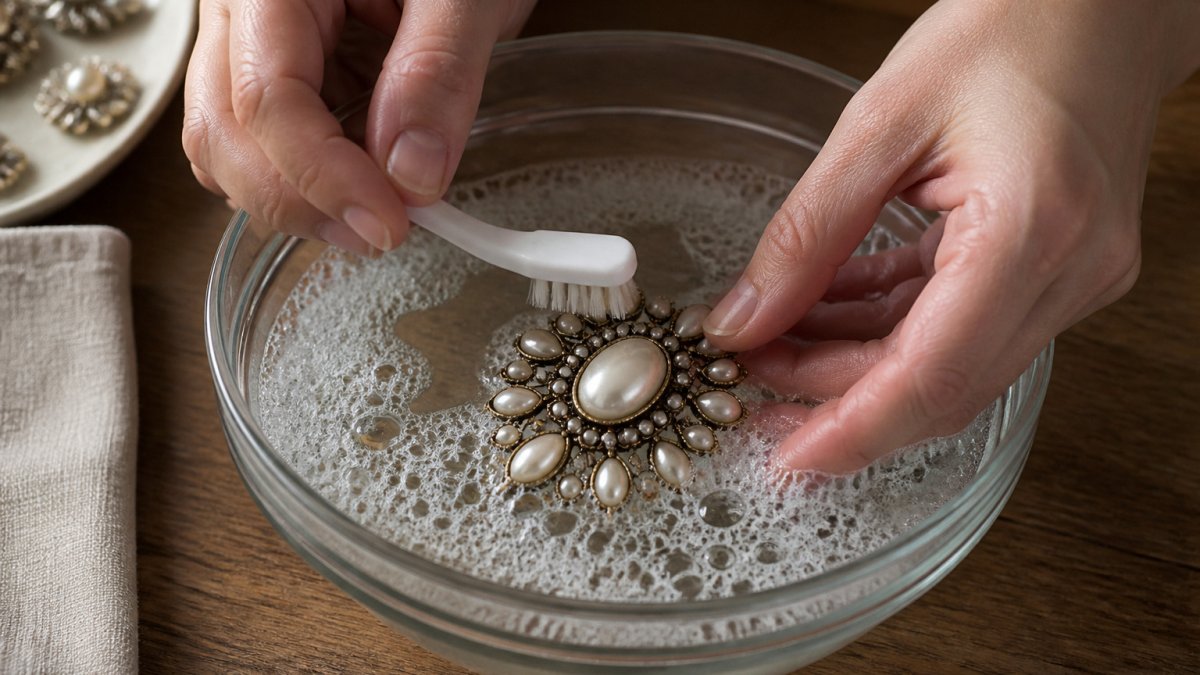
Sort the piece before you wet it
Look closely at how the stones are held. Prong-set glass rhinestones can usually tolerate a quick surface clean.
A common pattern is that pieces with a solid metal back and open settings survive a quick clean, while closed-back and glued pieces do not. When you cannot tell, clean only the metal with a barely damp cloth and leave the stones alone.
The low-moisture method for glued and foil-backed pieces
- Dampen a soft cloth with plain warm water, no soap needed for light surface dust.
- Wipe the metal surfaces only, working around the stones rather than over them.
- For grime in crevices, use a dry soft-bristled brush or a wooden toothpick, not water.
- Dry immediately with a lint-free cloth and let the piece sit uncovered for an hour before storing.
The quick-dip method for prong-set and solid-back pieces
- Fill a small bowl with warm (not hot) water and one drop of mild, unscented dish soap.
- Dip the piece for no more than 30 to 60 seconds. Do not soak.
- Brush gently with a soft toothbrush, following the direction of any engraving.
- Rinse in a second bowl of plain water, then pat dry at once.
- Dry fully around clasps, pin backs, and hinges, where moisture hides and rust starts.
Watch out: Never submerge pieces with glued stones, foil-backed stones, painted surfaces, or open-backed settings. Water trapped behind a stone can loosen the glue and stain the foil, and the damage is not reversible.
Materials that need their own handling
- Plated metal: wipe only; never rub with a polishing cloth or abrasive, which removes the thin top layer in a few strokes.
- Pearls and imitation pearls: wipe with a soft damp cloth and dry immediately; never soak, since the nacre and the coating on imitation pearls can degrade.
- Enamel: dust with a dry brush; avoid water if the enamel is chipped or crazed.
- Turquoise, coral, and opal: porous or soft, so keep water and chemicals away and clean with a dry or barely damp cloth.
- Glued components: skip water entirely and use a dry brush or toothpick.
Removing verdigris from costume pieces
Green residue around clasps and settings is verdigris, a sign that the base metal is reacting with moisture and oils. It is common on older costume pieces and is not the same as tarnish. A dry soft brush removes loose verdigris; a barely damp cloth with a trace of mild soap can lift the rest from solid metal areas. Keep the residue away from stones and glue, and dry the piece fully afterward.
How to Clean Vintage Gold Jewelry and Vintage-Style Rings
Solid gold is the most forgiving metal for home cleaning.
For rings, focus on the area under the stone and inside the band, where residue collects.
Watch out: Never use hot water or chemical dips on pieces with pearls, opals, emeralds, or other soft or porous stones.
Vintage-style rings made of gold-tone or plated metal should be treated like costume pieces.
Rinse, Dry, and Store Your Pieces to Prevent Future Buildup
Rinsing and drying are where most home cleaning goes wrong. Leftover soap film attracts dust and dulls the finish, and moisture trapped in a clasp or hinge starts corrosion that shows up weeks later. Storage then decides whether a piece stays clean or needs cleaning again in a month.
Rinse and dry by material
- Solid gold and sterling silver: rinse in a clean bowl of plain water, pat dry with a lint-free cloth, then air-dry for 10 to 15 minutes before storing.
- Plated and costume pieces: skip the rinse bowl. Wipe with a damp cloth, then dry immediately and completely; do not air-dry plated pieces, since standing moisture reaches the base metal.
- Pieces with stones: dry around the settings with a cloth or a soft brush, and check that no water sits under the stone.
- Pearls and porous stones: pat dry and let them sit uncovered for an hour before they go back in a box.
Watch out: Storing a piece while it is still damp is the most common cause of renewed tarnish and verdigris. Clasps, hinges, and pin backs hold water longer than the visible surface.
Storage that prevents the next cleaning
- Separate every piece. Stones and chains scratch each other, and plated pieces rub their finish onto neighbors. Use individual pouches or divided compartments.
- Control humidity. Keep jewelry out of bathrooms and away from windows. A simple sealed box with a moisture-absorbing packet helps in humid rooms.
- Use anti-tarnish protection for silver. Anti-tarnish strips or bags slow tarnish, but they work only in an enclosed space, so pair them with a sealed container.
- Keep pieces out of direct sunlight. Sun fades enamel, resin, and some stones over time.
- Store plated and costume pieces dry and separate. A soft pouch is better than a hard box for pieces with glued stones, since it cushions without pressure on the settings.
- Put jewelry on last. Perfume, lotion, and hairspray are the main sources of the buildup you just cleaned off, so let them dry before the piece goes on.
A travel-friendly option is the Sahira Jewelry Travel Case ($38.00), a suede jewelry box for safely storing favorite pieces on the go. For everyday storage, the Queen Jewelry Zip Case ($24.99) keeps rings, necklaces, bracelets, and earrings secure and tangle-free.
When cleaning can reduce value
Not every piece should be cleaned to a shine. Patina on antique silver is often part of its value, and collectors may pay more for an untouched surface than for a polished one. Original finishes, such as a factory-applied oxidation in recessed areas, are removed by polishing and cannot be restored.
Rinsing, drying, and storage determine how long a clean piece stays clean, and the right approach depends on the material.
| Material | Rinse and dry | Storage note |
|---|---|---|
| Solid gold and sterling silver | Rinse in plain water, pat dry, air-dry 10 to 15 minutes | Store once fully dry |
| Plated and costume pieces | Wipe with a damp cloth, dry immediately and completely | Do not air-dry; keep separate |
| Pieces with stones | Dry around settings; check no water sits under stone | Make sure no moisture remains |
| Pearls and porous stones | Pat dry, leave uncovered for an hour | Then place in a box |
| Silver with anti-tarnish | Dry fully before storing | Use an enclosed space |
Pick Your Next Step for Your Vintage Collection
Once your pieces are clean and dry, you may want fresh ways to wear them. Layering vintage necklaces, stacking rings, and pairing brooches with everyday tops can make a collection feel new. Read a step-by-step guide to layering statement jewelry for ideas on combining your pieces.
Cleaning your vintage pieces is the first step to enjoying them every day. Pick one piece to wear this week, and see how it changes your outfit. Stop in today at Boutique Bella Bella to find pieces that make you shine!
Frequently Asked Questions
What should you use to clean vintage jewelry?
For most vintage pieces, start with warm water and a few drops of mild dish soap, then use a soft brush and a soft cloth. This gentle method removes built-up dirt and dust without stripping plating or damaging delicate settings. Avoid harsh chemical cleaners and abrasive products, since they can remove patina that collectors value and can strip finishes from costume pieces. If a piece has gemstones, pearls, or fragile settings, keep the soak short and rinse thoroughly.
Is Dawn dish soap safe for vintage-style jewelry?
A mild, unscented dish soap can be safe for many metal pieces when diluted in warm water and used briefly. Use only a small amount, avoid soaking pieces for long periods, and rinse completely afterward. Do not use it on pearls, opals, or porous stones, which can absorb moisture and be damaged. When you are unsure whether a stone or finish can handle water, test an inconspicuous area first or ask a professional jeweler.
How do you clean vintage costume jewelry at home?
Lay the piece on a soft towel, brush away loose dust with a soft brush, and then dip a soft cloth in warm water with a drop of mild soap. Gently wipe the surface, working into crevices with the brush. Rinse with a damp cloth, then dry immediately and fully. Costume pieces often have plating or glued stones, so avoid soaking them and never scrub hard enough to wear the finish. Stop if the plating flakes or the stones loosen.
When should you take vintage jewelry to a professional?
Take a piece to a professional jeweler if it has heavy tarnish or verdigris you cannot remove gently, loose or missing stones, cracked enamel, flaking plating, or a value you want to protect. Professionals can identify materials and recommend safe treatment. Stop cleaning at home as soon as you see damage, since further scrubbing can reduce both the beauty and the value of an antique or estate piece.
