


Table of Contents
- How to Tell If a Belt Is Real Leather
- Real Leather vs Faux Leather Belt: Key Differences
- The Leather Belt Smell Test
- Assessing Genuine Leather Belt Quality
- Understanding Leather Grades and Misleading Labels
- How to Spot Genuine Leather Western Belts When Shopping
- Frequently Asked Questions
Last Updated: October 15, 2026
How to Tell If a Belt Is Real Leather
When shopping for a western belt, the difference between genuine leather and faux materials matters. Real leather develops character, holds its shape, and lasts for years; fakes crack, peel, and disappoint. At Boutique Bella Bella, we help customers spot the difference.

How to tell if a belt is real leather starts with knowing what to look for. Genuine leather has distinct characteristics faux materials can't replicate: grain pattern, smell, feel, and edges.
Check the Grain Pattern and Surface Texture
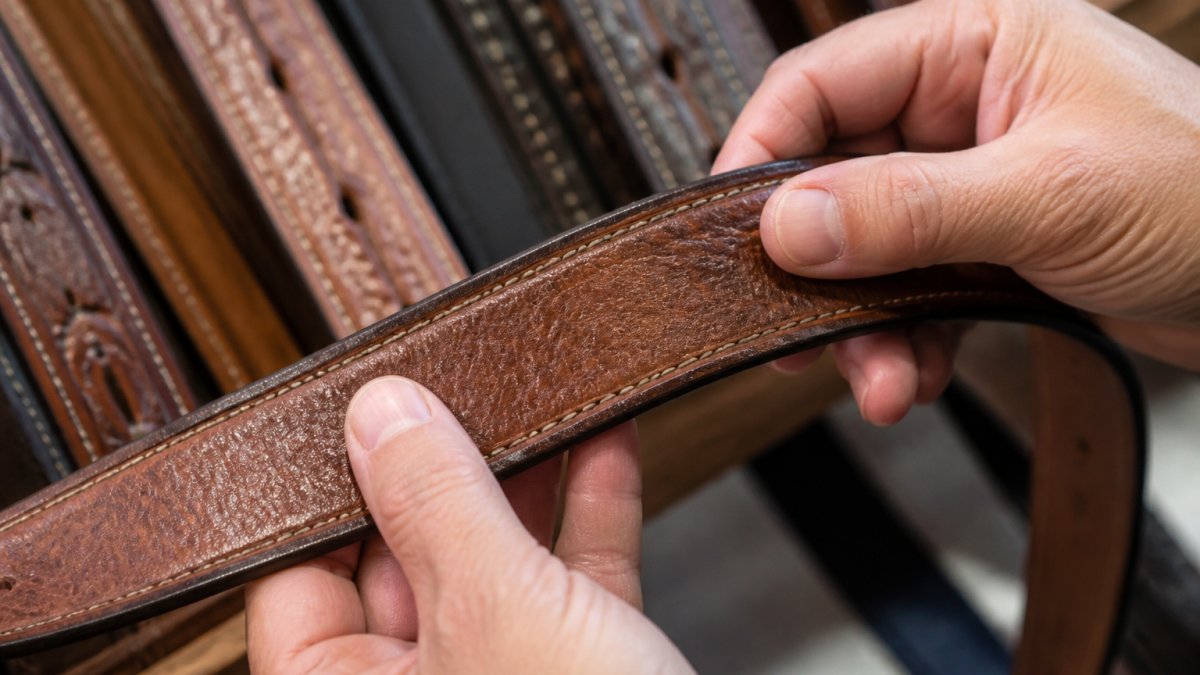
Real leather shows natural grain patterns that vary across the belt, no two spots look identical. Nature doesn't repeat itself perfectly.
Run your fingers across the surface. Authentic leather feels textured and organic, with random grain. Faux leather often has a repeating, printed-on pattern, if the same design repeats every few inches, that's a red flag.
Under bright light, real leather shows depth because the grain goes into the material; bonded and synthetic options look flat and plastic-like.
Inspect the Cut Edges and Belt Holes
This is where many fakes fail. Genuine leather edges show actual material layers with exposed fibers, looking rough and natural.
Faux leather edges look plastic or painted, uniform and smooth, sometimes peeling or showing a mismatched backing.
Genuine leather belt holes have clean, defined edges with visible fibers and don't fray easily; fake leather holes look rough, torn, or show a synthetic backing.
Real Leather vs Faux Leather Belt: Key Differences
Understanding the differences between genuine leather and faux materials helps you choose smarter, since each behaves and ages differently.

What Faux Leather Looks and Feels Like
Faux leather is made from synthetics like polyurethane or PVC, designed to mimic real leather but falling short.
Faux leather feels plastic-like, cold, and stiff; real leather warms up when you wear it.
Faux leather's surface is uniform, with a repeating grain and painted-on texture. Bend it and it cracks unnaturally; real leather develops a patina.
Why Bonded Leather Is Not Genuine
Bonded leather is scraps of leather glued to a synthetic backing, a cheap way to look leather-like without full-grain cost.
Bonded leather delaminates: the coating separates from the backing, peeling within months of regular wear.
If plastic or fabric peeks through at the edges, it's bonded, not genuine, real leather is leather all the way through.
The Leather Belt Smell Test
The smell test is the fastest check you can run, but it's often oversold. Smell can confirm a belt contains real leather, but not the grade, thickness, or whether it's a thin layer glued to a synthetic core. Treat it as one signal among several.
What Genuine Leather Actually Smells Like
Real leather smells earthy, warm, and slightly animalic, thanks to the tannins and oils used to cure the hide. A new full-grain belt smells strongest, then mellows; even a five-year-old belt carries a faint leather scent up close.
Faux leather smells like plastic, vinyl, or sharp solvent, and some synthetics have almost no smell because the PU or PVC surface is sealed. Bonded leather is trickiest, part leather, part glue. A chemical note under the leather smell means bonded or leather-faced synthetic.
Why Smell Alone Can Mislead You
A few situations trip up buyers:
- Heavily finished top-grain. A thick pigment coating can mask the leather smell, so a genuine top-grain belt may smell faintly of plastic.
- Scented or oiled belts. Some makers add leather fragrance or heavy oils to cheap material. If the smell is overpowering or perfumed rather than earthy, be suspicious.
- Storage and shipping. A genuine belt that sat in a plastic bag can pick up a chemical odor that fades after a day or two of airing out. Don't reject a belt on smell alone.
How to Use Smell as One Check Among Several
Run the smell test alongside the grain, edge, and thickness checks. A belt that smells like leather, shows natural grain variation, and has exposed fibers at the cut edge is almost certainly genuine; one that smells like plastic with uniform printed grain is not.
For western belts, the smell test is most useful on the back of the strap and around the concho holes, where decorative finishes are absent.
Assessing Genuine Leather Belt Quality
Not all genuine leather is the same. Quality varies by grade, thickness, and construction, and understanding those differences helps you spot a belt worth the investment.
Leather Thickness and Belt Strength
Genuine leather thickness directly impacts durability, thicker leather means a stronger, longer-lasting belt.
Quality western belts use leather at least 3-4mm thick, giving structure and preventing sagging. Thin belts fold and lose shape within months.
Press on the belt with your thumb. Quality leather resists pressure and springs back; cheap leather stays dented. It should feel substantial, not flimsy.
Stitching, Edges, and Finishing Details
Quality belts have straight, even, tight stitches along the edges; loose or uneven stitching won't hold up to regular wear.
Stitching should be knotted or secured at the ends, not stopped abruptly, or it will unravel.
Real leather edges are sealed or finished properly, smooth, not rough or fraying, and dyed to match the belt color all the way through.
Red Tooled Genuine Leather Studded Wide Belt →
Western-Specific Construction: Conchos, Studs, and Tooling
Western belts feature conchos, studs, and tooled designs. Done right, they signal quality, not just looks.
Conchos should be solidly attached. Wiggle one, if it moves, the attachment is weak. Quality conchos are riveted or screwed in securely.
Studs should be evenly spaced and firmly set, not loose or protruding unevenly. Cheap studs are glued on and fall out; real studs are punched through the leather and set on the back.
Tooled designs should be crisp, clear, and consistent; blurry tooling suggests low-quality leather or poor craftsmanship. Boutique Bella Bella's Red Tooled Genuine Leather Studded Wide Belt shows how quality tooling should look: sharp, detailed, and lasting.
Understanding Leather Grades and Misleading Labels
The word "genuine" on a leather label doesn't mean what most shoppers assume. In the trade, "genuine leather" is a specific grade near the bottom of the quality ladder, not the top. Knowing the hierarchy is the fastest way to judge a western belt before buying.
The Leather Grade Ladder, From Best to Worst
Top-grain leather. The surface is sanded to remove imperfections, then given a uniform finish. Still real and durable, but it loses full-grain's natural character.
Split leather. The lower layers below the grain. With no natural grain surface, makers emboss a pattern or coat it.
Bonded leather. Leather scraps and fibers ground up and glued to a synthetic or fabric backing.
Why the Labels Are Designed to Confuse You
The leather industry has no mandatory grading standard, and marketing language fills the gap. Watch for these patterns:
- "Genuine leather" with no grade. Usually the lowest real-leather grade; sellers rely on shoppers assuming "genuine" means "high quality."
- "100% leather" or "real leather." Technically true for bonded leather, since it contains leather fibers. Not a quality claim.
- "Leather-like," "leatherette," "faux leather," "vegan leather," "eco-leather." All synthetic, with no meaningful leather content. The eco and vegan prefixes are marketing, not material descriptions.
- "Full-grain" used loosely. Some sellers apply it to any belt with a visible grain, including embossed split. Ask whether the grain is natural or embossed.
- "Italian leather" or "imported leather." Describes origin, not grade. A bonded belt can be made from imported scraps.
How Grade Shows Up on a Western Belt
Grade changes how a belt behaves. Full-grain tooled belts hold crisp impressions for decades and darken into a deep patina. Top-grain stays uniform but shows less character. Split-leather belts with embossed "tooling" look sharp when new, then crack along the pattern lines. Bonded belts peel at the edges and buckle holes within months.
For a western belt you'll wear hard, full-grain is worth paying for. Top-grain is a reasonable middle ground. Split and bonded are false economies, cheaper up front, costlier in replacements.
How to Spot Genuine Leather Western Belts When Shopping
When shopping for a western belt, you need practical checks you can do in minutes. These methods work in a store or online.
What to Ask Sellers Before Buying
Ask directly: "Is this full-grain or top-grain leather?" A seller who knows their product answers confidently; vagueness is a warning sign.
Ask about thickness: "How thick is the leather?" Quality sellers know, 3-4mm or thicker.
Ask about construction: "How are the conchos attached?" or "Is this belt tooled or printed?" Legitimate sellers can explain their methods.
Get it in writing. If the seller claims it's genuine leather, ask for documentation or a guarantee. Reputable businesses stand behind their products.
Verification Checks for Online and Secondhand Purchases
Online shopping requires extra care. You can't feel the leather or smell it. Focus on what you can verify.
Ask for detailed photos, close-ups of the grain, edges, and stitching.
Check the return policy.
Look at customer reviews. Real customers describe how the leather feels and ages.
For secondhand purchases, inspect the aging.
Feel the flexibility. Bend the belt gently. Real leather flexes smoothly; faux materials crack or resist stiffly.
Our Brown Leopard Genuine Leather Turquoise Stone Ribbon Concho Belt and Oval Vintage Silver Concho Belt demonstrate the quality markers we look for, genuine leather construction, solid concho attachment, and tooled details that last.

Spotting genuine leather western belts protects your investment and ensures a belt that looks better every year. Stop in to feel the difference, or explore our Gold Buckle Leather Belt and other curated pieces that combine genuine materials with western style.
Frequently Asked Questions
How do I identify a genuine leather belt?
Check the grain pattern for natural, irregular variations rather than uniform printing. Genuine leather has visible pores and a unique texture. Inspect the cut edges, real leather shows visible leather fibers and a natural color, not plastic backing. Feel the belt's flexibility and weight; genuine leather is supple yet substantial. Smell it: authentic leather has a distinctive, natural scent, while faux leather smells plastic or chemical. Look for quality stitching and finishing details that indicate careful construction.
What does genuine leather smell like compared to faux?
Genuine leather has a distinctive, earthy, natural smell often described as warm and slightly sweet. Faux leather typically smells plastic, chemical, or synthetic, similar to vinyl or polyurethane. Bonded leather may have a weak leather smell mixed with chemical odors because it combines scraps with synthetic binders. When you're examining a belt in person or online, ask sellers if you can smell it or request detailed photos of the leather backing to assess material authenticity.
How can I tell if a western belt is real leather without damaging it?
Examine the cut edges and belt holes without touching the surface finish. Real leather edges show visible fibers and natural coloring; faux leather edges look plastic or uniform. Check the back of the belt, genuine leather backing is consistent and natural-looking, while bonded leather shows a papery or synthetic layer. Feel the flexibility by gently bending a small section. Look at decorative elements like conchos and studs; quality western belts feature secure, well-finished metalwork that indicates overall construction quality.
Why does leather quality matter in a western belt?
Quality genuine leather develops a natural patina over time, actually improving in appearance and durability. Full-grain and top-grain leather withstand regular wear, maintain their shape, and age beautifully. Poor-quality faux or bonded leather cracks, peels, and loses its finish within months. A genuine leather western belt with proper construction, reinforced stitching, quality metalwork, and adequate thickness, can last years with basic care, making it a worthwhile investment compared to cheap alternatives that fall apart quickly.