


Table of Contents
- The Economic Multiplier Effect of Local Boutique Shopping
- Size-Inclusive Boutique Shopping: A Real Difference
- Discovering Unique Fashion Finds You Won't Find Elsewhere
- Personalized Service and Community Connection
- Benefits of Shopping Local for Your Wallet and Your Values
- Local Boutiques vs. Chains: What the Numbers Show
- The Hidden Costs of Convenience
- Conclusion
Last Updated: August 20, 2026
The Economic Multiplier Effect of Local Boutique Shopping
When you spend money at a local boutique, something different happens compared to shopping at a chain store. That dollar circulates through your community multiple times before leaving. A boutique owner buys from local suppliers, pays staff who live nearby, and reinvests profits back into the neighborhood. Chain stores funnel revenue to distant corporate headquarters.
The mechanism is straightforward. When you spend $100 at a local boutique, the owner uses roughly $30-40 to pay local staff, $20-30 on inventory from regional suppliers, and $10-15 on rent or property taxes in your community. The remaining margin funds owner income, which is spent locally on groceries, services, and other goods. Each of those transactions triggers the same cycle: the grocer pays staff, the staff member buys gas, the gas station owner pays rent. Economists call this the "multiplier effect," and research from the American Independent Business Alliance suggests that local retail spending generates 2-3 times more community reinvestment than the same purchase at a chain, where most revenue flows to distant corporate headquarters and shareholders.
But multipliers vary by community and business type. A 2024 analysis by the Brookings Institution found that in smaller towns (population under 50,000), locally owned retailers retained approximately 48% of revenue within the community, compared to 14% for chain retailers. In larger metros, the gap narrows, local retailers retained roughly 35% versus 20% for chains, but the advantage persists. The difference compounds over time. A thriving local boutique ecosystem attracts other independent businesses, creates foot traffic that benefits neighboring shops, and preserves the character that makes a place worth visiting. Chain dominance does the opposite: it homogenizes neighborhoods and erodes the reasons people choose to spend time in specific communities.
There's also a tax dimension most shoppers overlook. According to the Institute for Local Self-Reliance's research on local tax revenue, independent retailers generate 1.5 to 2 times more tax revenue per square foot than chain competitors. A local boutique owner pays property tax, sales tax (which funds schools and infrastructure), and payroll taxes on every employee. Chain stores, by contrast, often negotiate tax abatements with municipalities and centralize profits in low-tax jurisdictions. When you choose a local boutique, your purchase directly funds local schools, roads, and emergency services in ways that chain spending does not.
Size-Inclusive Boutique Shopping: A Real Difference
The promise of size-inclusive shopping sounds good until you walk into a boutique and discover they carry sizes 0-12 only. Real size-inclusive boutique shopping means every customer can find pieces that fit and flatter, not just a token larger size in basics.
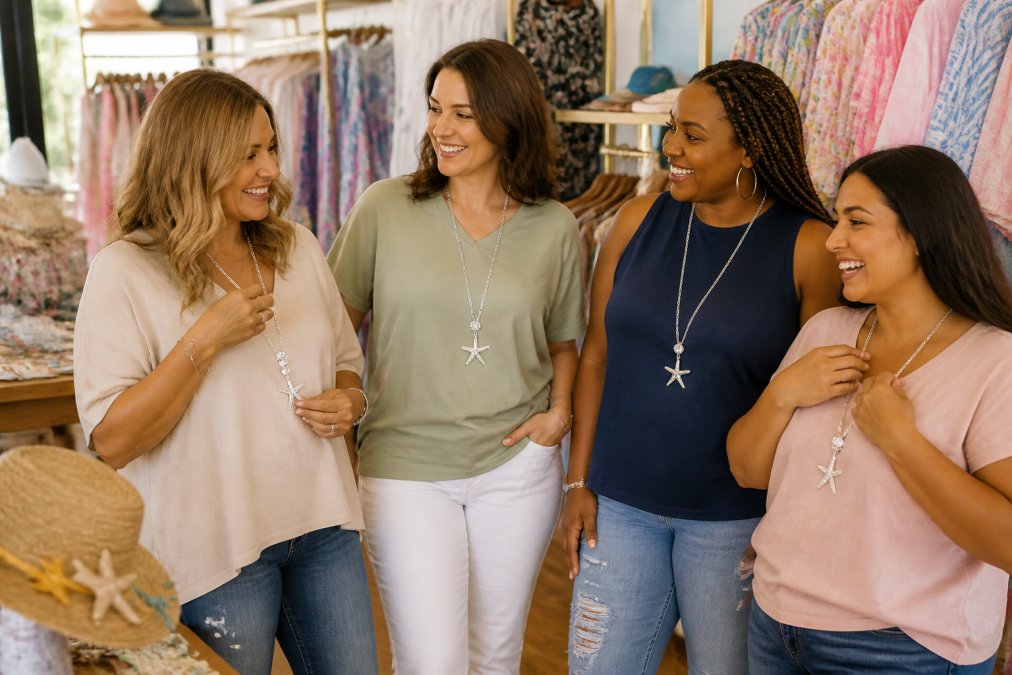
This is where local boutiques often outperform chains, but the advantage comes with trade-offs worth understanding. Chain stores optimize inventory for their statistical average customer, which means limited selection at the extremes. A true size-inclusive boutique curates with intention. We stock multiple sizes in the same styles because we're not bound by corporate sizing algorithms. A Queen of Sparkles sequined top that makes you feel confident should be available whether you wear a size 4 or a size 20. The experience of finding your size in a style you actually want, not a consolation prize, changes how you feel about shopping.
However, size-inclusive curation has a cost: higher per-unit prices and smaller inventory depth. A chain can spread the cost of carrying 15 sizes across 500 stores. A local boutique carries those same 15 sizes in one location, which means higher inventory carrying costs and slower turnover on extreme sizes. That cost gets passed to customers. You may pay 15-25% more for a size-inclusive piece at a boutique than at a chain. The trade-off is worth it if you value fit and quality, but it's not invisible.
Modern boutiques are bridging this gap through digital tools that chains struggle to match at the local level. Many independent retailers now use social media and email to take custom orders, source items from brands' full size ranges, and hold inventory specifically for customers who've requested it. Some use live shopping events on Instagram or TikTok to showcase pieces in real time and take pre-orders. This hybrid model, combining in-store curation with digital reach, lets boutiques offer size-inclusive selection without carrying excessive inventory. A customer can visit in person, fall in love with a style, and have the boutique source their size from the brand's warehouse within 1-2 weeks. That's not as instant as chain convenience, but it's far more personal and often faster than waiting for a chain restock.
Boutique Bella Bella carries brands like Queen of Sparkles and French Kande specifically because they understand that size-inclusive doesn't mean one-size-fits-all basics. These brands design with proportion and fit in mind across their entire range. A local boutique owner has the flexibility to make those purchasing decisions based on what their actual customers need, not what a national buying committee predicts. And increasingly, that flexibility extends to digital channels: taking custom requests, sourcing from brand partners, and using social proof (customer photos, reviews) to build confidence in fit before purchase. The result is size-inclusive shopping that feels personal, not algorithmic.
Discovering Unique Fashion Finds You Won't Find Elsewhere
Chain stores buy in bulk from the same manufacturers, which means thousands of stores carry identical inventory. Walk into ten locations and you see the same merchandise. That's efficient for corporate operations. It's deadening for anyone who wants to wear something distinctive.
A local boutique shopping experience centers on discovery. The owner has traveled, attended trade shows, built relationships with independent designers, and made deliberate choices about what to stock. You find pieces at Boutique Bella Bella that no one else in your community owns. A Stetson hat selected for its specific color and quality. A French Kande necklace that catches light differently than mass-produced alternatives. Coastal-inspired jewelry that feels authentic rather than manufactured to a trend.
This curation is the opposite of algorithm-driven recommendations. It's human judgment applied to inventory. The owner asks: Does this reflect our community's aesthetic? Will our customers appreciate the craftsmanship? Is this brand's mission aligned with ours? Those questions produce selections that feel intentional rather than random.
When you shop at chains, you're browsing what corporate buyers decided was worth stocking nationally. When you shop at a local boutique, you're seeing what someone who understands your community believes is worth carrying. That difference shows in the merchandise. Unique fashion finds aren't accidents, they're the result of deliberate curation that chain operations can't replicate at scale.
Personalized Service and Community Connection
The staff at chain stores follow scripts. They're trained to process transactions efficiently. Nothing wrong with that, it's the model that works for high-volume retail. But it's not personal service.
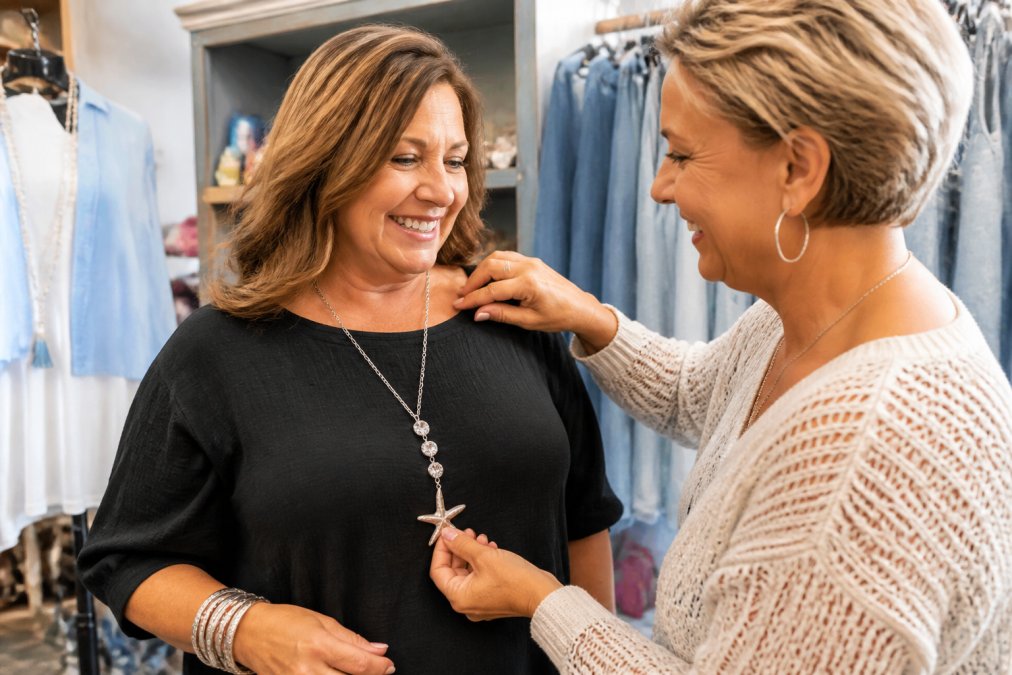
A local boutique employee knows regular customers by name. They remember what you bought last time. They understand your style preferences and point you toward pieces that fit your aesthetic, not just your size. They have time for conversation because they're not managing a line of thirty customers. This personalized service creates relationships that turn occasional shoppers into loyal community members.
Community connection runs deeper than transaction-level service. A local boutique becomes a gathering place. You run into neighbors while shopping. You hear recommendations from people you trust. The owner sponsors local events, supports youth sports teams, and participates in neighborhood decisions. Shopping there isn't just commerce, it's participation in community life.
Boutique Bella Bella's mission centers on creating a fun, welcoming, and memorable shopping experience. That means staff who have time to help you find pieces that make you shine, not just ring up sales. It means building relationships with customers who visit for vacation and return because they felt genuinely cared for. Community connection is what differentiates a place you shop from a destination you visit.
Benefits of Shopping Local for Your Wallet and Your Values
The assumption that chains offer better prices is worth examining. Chain stores achieve lower per-unit costs through volume purchasing, but they don't always pass those savings to customers. They optimize for margin, not value. A local boutique often has more flexibility in pricing because overhead is lower and inventory moves faster.
More importantly, the benefits of shopping local extend beyond unit price. You're investing in your community's economic health. You're supporting a business owner who lives nearby and makes decisions based on community values, not shareholder returns. You're preserving neighborhood character and the social fabric that makes a place worth living in.
When you choose a local boutique over chains, you're voting with your dollars for the kind of retail landscape you want to see. You're saying that unique inventory, personalized service, and community connection matter more than shaving a few dollars off a transaction. That vote compounds when repeated across a community. Enough local shoppers supporting independent retailers changes the entire character of a neighborhood.
The values alignment matters too. A local boutique owner can decline to carry brands that don't reflect community values. They can prioritize sustainability, fair labor practices, and artisanal production in ways that chain buyers cannot. Your purchases support those values directly.
Local Boutiques vs. Chains: What the Numbers Show
| Factor | Local Boutique | Chain Store |
|---|---|---|
| Economic multiplier effect | 2-3x community reinvestment | Revenue leaves community |
| Size-inclusive selection | Full range in curated styles | Limited sizes in basics |
| Unique inventory | Handpicked, rarely duplicated | Mass-produced, widely available |
| Staff knowledge | Personal relationships, style expertise | Transaction-focused, scripted |
| Community investment | Owner participates locally | Corporate policies only |
| Personalized service | Individual attention | Efficiency-optimized |
| Decision-making | Community values | Shareholder returns |
The data tells a clear story. Local boutiques outperform chains on nearly every measure that matters beyond unit price. The question isn't whether chains are cheaper, sometimes they are. The question is what you're actually getting for your money and what kind of community you're building with your choices.
The Hidden Costs of Convenience
Chain stores market convenience. One-stop shopping. Consistent experience everywhere. Predictable inventory. Free shipping. Those benefits are real, but they obscure hidden costs that don't show up in your receipt.
The convenience of chains extracts costs from communities. When local retail closes, neighborhoods lose gathering places. Property values often decline. Small business owners who might have employed neighbors disappear. The tax base shrinks. Schools have less funding. That's not theory, it's documented in communities across the country where chain expansion has hollowed out main streets.
There's also a personal cost to convenience-optimized shopping. When everything is instantly available online, you lose the experience of discovery. You lose the relationship-building that happens when you shop in person. You lose the sense of supporting something you believe in. Convenience is efficient, but it's not always satisfying.
The environmental cost deserves mention too. Chain operations require massive supply chains, frequent inventory turnover, and rapid shipping. A local boutique with curated inventory that moves thoughtfully has a smaller carbon footprint. When you buy one perfect piece that you'll wear for years, you're reducing waste compared to buying multiple cheaper items you'll discard.
The hidden cost of convenience is community erosion. When enough people choose chains for their efficiency, local alternatives disappear. Then convenience becomes the only option. You've traded the ability to choose for the illusion of choice.
Shopping at a local boutique like Boutique Bella Bella means choosing community vitality over convenience. It means supporting an owner who lives in your neighborhood and makes decisions based on your values, not quarterly earnings reports. It means access to unique pieces you won't find elsewhere, personalized service from people who know you, and the satisfaction of building the kind of retail landscape you actually want to see. Stop in today to explore our hidden gem and discover pieces that make you shine.
Frequently Asked Questions
What makes a local boutique stand out compared to a chain store?
Local boutiques offer curated selections chosen by owners who understand their community, personalized service from staff who remember you, and unique inventory you won't find in chains. They invest in their neighborhoods, creating social capital and community vitality. Unlike mass-produced goods at chains, boutique items often reflect local artisans and small-scale production that supports the entrepreneurial spirit of independent retailers.
How does size-inclusive boutique shopping differ from what chains offer?
True size-inclusive boutique shopping means carrying a full range of sizes in every style, not just basics. Boutiques like Boutique Bella Bella curate brands that prioritize all body types across their entire collection. Staff provide personalized styling help regardless of size, creating a welcoming experience. Many chains carry limited size ranges in trendy pieces, relegating larger sizes to basics, boutiques refuse that approach, ensuring every customer finds statement pieces in their size.
How much of my spending actually stays in the local economy when I shop at a boutique?
When you shop at a local boutique, approximately 48% of spending stays in the local economy through local taxes, payroll, and supply chain spending, compared to just 14% at chain stores. This economic multiplier effect strengthens the local tax base, supports neighborhood jobs, and builds economic resilience. Independent retailers reinvest profits locally, creating a sustainable small business ecosystem that benefits the entire community.
Why is shopping local better for the environment than shopping at chains?
Local boutiques typically reduce carbon footprint through shorter supply chains and lower shipping volumes compared to massive chain distribution networks. Many boutiques prioritize local sourcing and sustainable commerce practices. By shopping local, you support supply chain sustainability and reduce the environmental impact of mass-produced goods. Plus, boutique items tend to be higher quality and longer-lasting, meaning less waste over time.
This article was written using GrandRanker