


Table of Contents
- Why Beach Wedding Guest Outfits Go Beyond Traditional Dresses
- Jumpsuits for Beach Weddings: Elegant and Practical
- Dressy Separates for Wedding Guests: Mix and Match Sophistication
- Rompers and Two-Piece Sets: Playful Formality
- Beach Wedding Guest Footwear Guide: From Sand to Ceremony
- Fabric Choices That Thrive in Coastal Heat and Humidity
- Color Palettes for Tropical and Coastal Settings
- Styling Statement Accessories with Non-Dress Outfits
- Frequently Asked Questions
Last Updated: October 3, 2026
Why Beach Wedding Guest Outfits Go Beyond Traditional Dresses
Beach wedding guest outfits have evolved far beyond the standard sundress. Sand, humidity, and ocean breeze require fabrics and silhouettes that work with the setting, not against it. At Boutique Bella Bella, we understand that beach weddings call for creative styling solutions that feel both elevated and practical.
The challenge is finding something that looks polished while handling coastal elements. Jumpsuits, tailored separates, and two-piece sets offer sophistication without the limitations of a traditional dress, with movement, breathability, and flexibility as the day shifts from ceremony to reception.
You're not sacrificing formality or elegance, you're gaining comfort, confidence, and options that work better in sand and humidity through breathable fabrics, strategic cuts, and versatile styling.
Jumpsuits for Beach Weddings: Elegant and Practical
A well-chosen jumpsuit delivers formal elegance with inherent practicality. The silhouette skims the body without clinging, moves beautifully with ocean breezes, and keeps you grounded (literally) on sandy terrain better than a flowing hem.
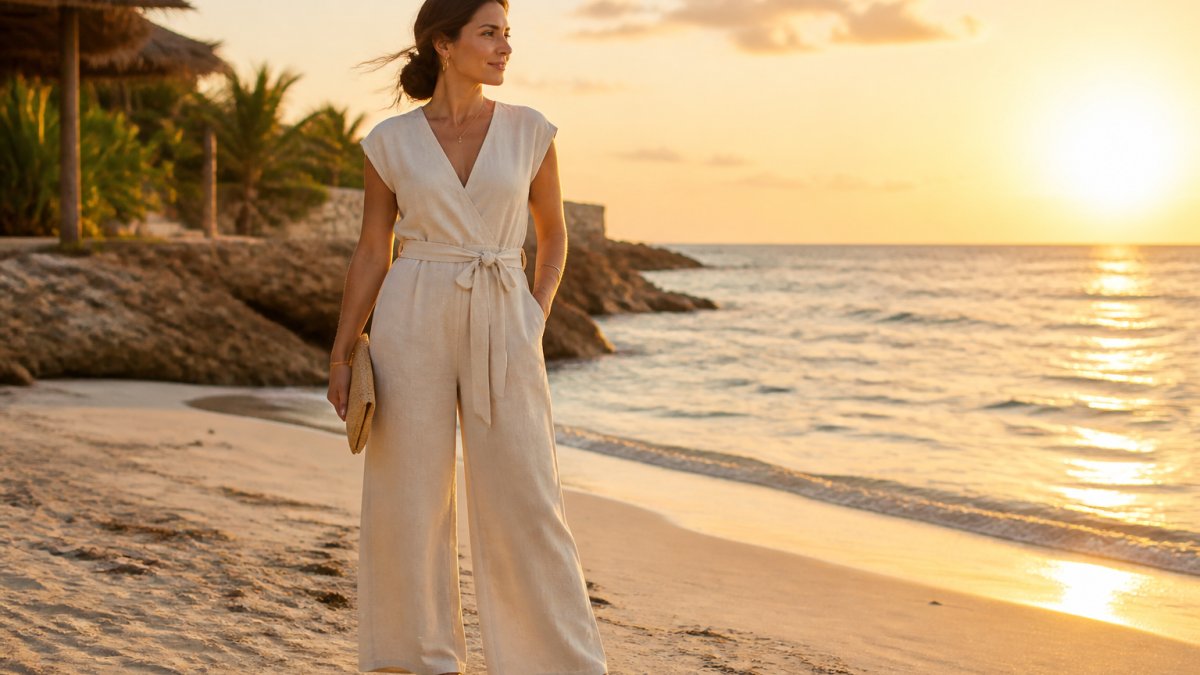
Wide-leg styles for comfort and movement
Wide-leg trousers drape without clinging, allow air circulation, and create an elongated silhouette that reads as sophisticated rather than casual.
Pair a fitted top, structured button-down, sleek tank, or tailored blouse, with wide-leg bottoms to keep the look polished. Oversized tops and bottoms together can feel shapeless.
Wide-leg jumpsuits keep hems out of sand and salt water, staying clean and structured throughout the event.
Breathable fabrics that handle humidity
Linen blends, cotton blends, and silk separates allow air circulation, preventing the clammy feeling synthetics create in humidity.
Linen-cotton blends hold shape better than pure linen while maintaining breathability. Silk separates offer formal appearance and beautiful drape but require careful handling in beach settings.
Lightweight, elevated fabrics feel luxurious without bulk. A cotton or cotton-blend jumpsuit in a structured weave reads as intentional and formal.
Dressy Separates for Wedding Guests: Mix and Match Sophistication
Separates give you control over skin, volume, and how pieces relate, especially valuable at beach weddings where dress codes sit between formal and relaxed.
Tailored tops paired with flowing bottoms
A crisp, fitted top with a flowing maxi skirt creates an effortlessly elegant look through contrast between structure and movement.

Pair a structured v-neckline or wrap-style top with a flowy maxi in a coordinating shade or subtle pattern for dress formality without single-piece commitment.
Tailored separates let you adjust formality: a sleeveless top with maxi skirt reads formal; add a lightweight jacket for formal dress codes, remove it for cocktail-casual.
Two-piece sets and coordinated looks
A co-ord, a matching two-piece set designed to be worn together, eliminates styling guesswork. The pieces are proportioned to work as a unit, which means you get a polished look without overthinking the combination.
Two-piece sets range from structured and tailored to relaxed and flowy. For a beach wedding, look for sets that balance formality with breathability. A fitted top with a flowing midi skirt, or a structured crop top with high-waisted wide-leg trousers, both work well.
A coordinated look reads as intentional and put-together, signaling a deliberate choice.
Rompers and Two-Piece Sets: Playful Formality
Rompers and two-piece sets occupy a unique space between casual and formal, offering dress structure with separates' movement. Fit and body-type styling are critical.
Choosing romper silhouettes for your body type
Rompers are tricky to fit as a single piece with no waist or hip adjustability, making body-type-specific styling essential.
For pear-shaped figures: Choose rompers with fitted or tapered top and wider, flowing leg. Ruching at sides or strategic seaming creates definition. Avoid fitted hips and thighs.
For apple-shaped figures: Choose rompers with looser, flowing top and fitted leg. Wrap-style or v-neckline draws eye downward. Avoid horizontal stripes or bust gathering.
For hourglass figures: Avoid overly fitted rompers. Choose subtle structure with defined waist, tailored seaming, structured neckline, or thoughtful color palette.
For rectangular figures: Choose rompers with ruching, gathering, or strategic seaming. Peplum top, cinched waist, or draped bodice adds dimension. Avoid straight, unstructured styles.
Inseam length and proportion
Romper inseams vary across brands. Aim for an inseam hitting at the ankle or grazing the top of your foot to create elongated silhouette and keep hem out of sand.
Have rompers tailored if inseams are too long or short, pooling or mid-calf hits read as sloppy or casual.
Choose mid-rise or high-rise rompers for better coverage and comfort during the ceremony.
Two-piece sets for coordinated ease
Try both pieces together and assess proportions: fitted tops pair with volume or flow; loose or cropped tops pair with structured bottoms.
Styling rompers and sets for formality
Elevate rompers or two-piece sets with dressy sandals (metallic or jeweled), minimal jewelry (necklace or earrings, not both), and a lightweight wrap or cardigan for formality.
Choose elevated fabrics (linen, cotton, or silk blends) with formal details: structured neckline, tailored seaming, wrap-style top. Neutral tones read more formal than bright prints.
A clutch or small crossbody bag keeps essentials close without weighing down your look. Choose metallic, neutral, or coordinating colors. Avoid large or casual bags that undermine the formality of your outfit.
Beach Wedding Guest Footwear Guide: From Sand to Ceremony
Your shoes need to work on sand, look appropriate for a formal event, and ideally transition from ceremony to reception without requiring a complete wardrobe change.
Sand-friendly options that stay put
Choose metallic flat sandals, jeweled sandals, or minimalist leather options, avoid casual flip-flops or athletic sandals.
Wedge heels offer stability on sand with height and formality. The wider base prevents sinking better than thin heels.
Consider going barefoot for the ceremony, many beach weddings embrace this. Bring shoes in a small bag and change for the reception.
Transitioning from casual to formal
If wearing casual footwear during ceremony, choose beaded sandals, strappy flats, or embellished flip-flops that feel intentional for the occasion.
Transition to dressier footwear for indoor receptions to signal the shift from ceremony to celebration.
Fabric Choices That Thrive in Coastal Heat and Humidity
The right fabric holds up beautifully in humid, salty, windy coastal environments while handling sand, sunscreen transfer, and perspiration visibility.
Performance fabrics for tropical climates
Linen-cotton blends (typically 55% linen, 45% cotton) offer the best balance, resisting humidity wrinkles and the clammy feeling synthetics create while drying quickly.
Cotton-blend separates in structured weave read formal while allowing air circulation. Medium-weight cotton sateen or poplin feels luxurious and resists humidity-induced sagging.
Silk separates drape beautifully but absorb moisture and salt water, leaving stains and fiber damage. Silk-blend alternatives offer drape with more durability.
Anti-wrinkle and sweat-wicking considerations
Humidity causes wrinkles, but so does perspiration. Look for fabrics with moisture-wicking properties, natural fibers like cotton and linen wick sweat away from the body, while synthetics trap moisture against your skin. However, some high-performance blends (often marketed as "travel fabrics" or "performance blends") incorporate synthetic fibers specifically engineered to wick moisture while maintaining a natural appearance.
Fabrics treated with wrinkle-resistant finishes (often labeled "easy care" or "no-iron") can be helpful, but check the fiber content first. A wrinkle-resistant treatment on a natural fiber blend works better than relying on the treatment alone. Avoid 100% polyester or nylon, even with wrinkle-resistant finishes, these trap heat and moisture in humid climates.
Sweat visibility is a real concern at beach weddings. Darker colors and patterned fabrics hide perspiration better than light solids. If you're choosing a cream or white jumpsuit, consider a structured fabric with a subtle texture or weave that doesn't show moisture as easily as a smooth, flat weave.
Salt spray and chlorine resistance
If the ceremony is oceanside or near a pool, salt spray and chlorine can damage fabrics and cause discoloration. Natural fibers like cotton and linen are more resistant to chlorine damage than synthetics, but salt spray affects all fabrics. Rinse any outfit in fresh water immediately after exposure to salt water or chlorine.
For maximum protection, choose darker or jewel-toned fabrics over pastels and whites. Salt spray and chlorine can bleach lighter colors or leave visible residue. If you're wearing a light-colored outfit and the ceremony is directly oceanside, plan to change before the reception or position yourself away from direct salt spray during the ceremony.
Weight and drape in moving air
Consider the weight of the fabric too. Lightweight materials feel cooler and move more gracefully in ocean breezes, but they can also cling to the body in humidity. A medium-weight fabric in a natural fiber blend often strikes the best balance, it drapes beautifully without clinging, moves elegantly in wind, and maintains structure throughout the day.
A structured weave in a lighter weight often reads as more formal than a heavy fabric, even if both are technically "dressy." Test how the fabric moves in your hands before purchasing. Drape it over your arm and move it gently, you want to see graceful movement, not stiffness or excessive clinging.
Color Palettes for Tropical and Coastal Settings
Coastal settings call for color choices that complement the natural environment. Neutrals, cream, champagne, soft gray, and warm beige, work universally and let the ocean and sky be the backdrop. These tones also photograph beautifully against sand and water.
Jewel tones, emerald, sapphire, coral, echo the coastal landscape and add visual interest. Pastels like blush, soft lavender, and pale yellow feel fresh and appropriate for daytime ceremonies.
Consider the time of day. Morning and early afternoon ceremonies benefit from lighter, brighter colors. Evening ceremonies allow for deeper tones and richer hues. The angle and warmth of the light change throughout the day, which affects how colors appear.
Styling Statement Accessories with Non-Dress Outfits
Accessories elevate a jumpsuit, romper, or separates outfit from simple to sophisticated. They're also where you can inject personality and style without overwhelming the look.
With a neutral jumpsuit or two-piece set, statement jewelry becomes the focal point. A bold necklace, chandelier earrings, or layered bracelets adds visual interest.
For a printed or patterned outfit, choose accessories that complement rather than compete. A solid-colored necklace or simple studs work better than multiple statement pieces. Let the outfit itself be the statement.
Consider a lightweight wrap or structured cardigan in a complementary color.
A clutch or small crossbody bag keeps essentials close without weighing down your look. Choose metallic, neutral, or coordinating colors. Avoid large or casual bags that undermine the formality of your outfit.
Finding the right beach wedding guest outfit goes beyond grabbing a dress off the rack.
Frequently Asked Questions
Can I wear a jumpsuit to a beach wedding as a guest?
Yes, jumpsuits are an excellent alternative to dresses for beach wedding guests. They offer elegance and sophistication while providing comfort and ease of movement. Choose wide-leg styles in breathable fabrics like linen blends to handle coastal heat and humidity. A jumpsuit reads as formal when tailored and paired with the right accessories, making it appropriate for most beach wedding dress codes.
What fabrics work best for beach wedding guest outfits?
Lightweight, breathable fabrics are essential for beach settings. Look for linen blends, cotton blends, silk separates, and wrinkle-resistant materials that won't cling in humidity. These fabrics allow air circulation, dry quickly if you're near water, and maintain their shape throughout the event. Avoid heavy synthetics that trap heat and can wrinkle easily in coastal conditions.
What footwear should I wear with non-dress beach wedding outfits?
Choose sand-friendly footwear that transitions from casual to formal. Flat sandals, embellished flip-flops, and strappy flat sandals work well for beach ceremonies. If the reception moves indoors or to a more formal venue, consider wedge heels or dressy flat sandals that won't sink into sand. Metallic or jeweled options elevate the look while staying practical for coastal terrain.
Are rompers appropriate for a beach wedding as a guest?
Rompers are absolutely appropriate for beach weddings, especially for daytime or semi-formal ceremonies. They offer a playful yet polished alternative to dresses and jumpsuits. Choose rompers with flattering fits, elevated fabrics, and sophisticated details like halter necklines or wrap-style designs. Pair them with statement accessories and appropriate footwear to match the formality level of the event.