


Table of Contents
- Why Tailoring Transforms Plus-Size Clothing
- How Tailoring Improves Fit and Comfort
- Plus-Size Clothing Alterations That Make the Biggest Difference
- How to Get a Better Fit in Plus-Size Clothes
- Plus-Size Dress Alterations and Special Occasions
- Understanding Alteration Costs and Value
- Tailoring Boosts Confidence and Personal Style
- Frequently Asked Questions
Last Updated: October 12, 2026
Why Tailoring Transforms Plus-Size Clothing
Well-fitted clothes change how you feel in your body. When a garment fits your actual shape, you stand taller and feel more confident before you even leave home.
Standard sizing assumes a specific body shape. When your proportions don't match that template, even well-made pieces sit wrong: seams pull, hems hang unevenly, waists sit too high or too low.
Tailoring plus size clothing fixes that mismatch. Instead of forcing your body to adapt to the garment, tailoring adapts the garment to your body, creating clean lines, improving mobility, and transforming pieces from "okay" into "exactly what I wanted."
How Tailoring Improves Fit and Comfort
When a garment fits well, seams align with your natural body lines, fabric drapes instead of bunching, and you can raise your arms or sit without pulling or digging.
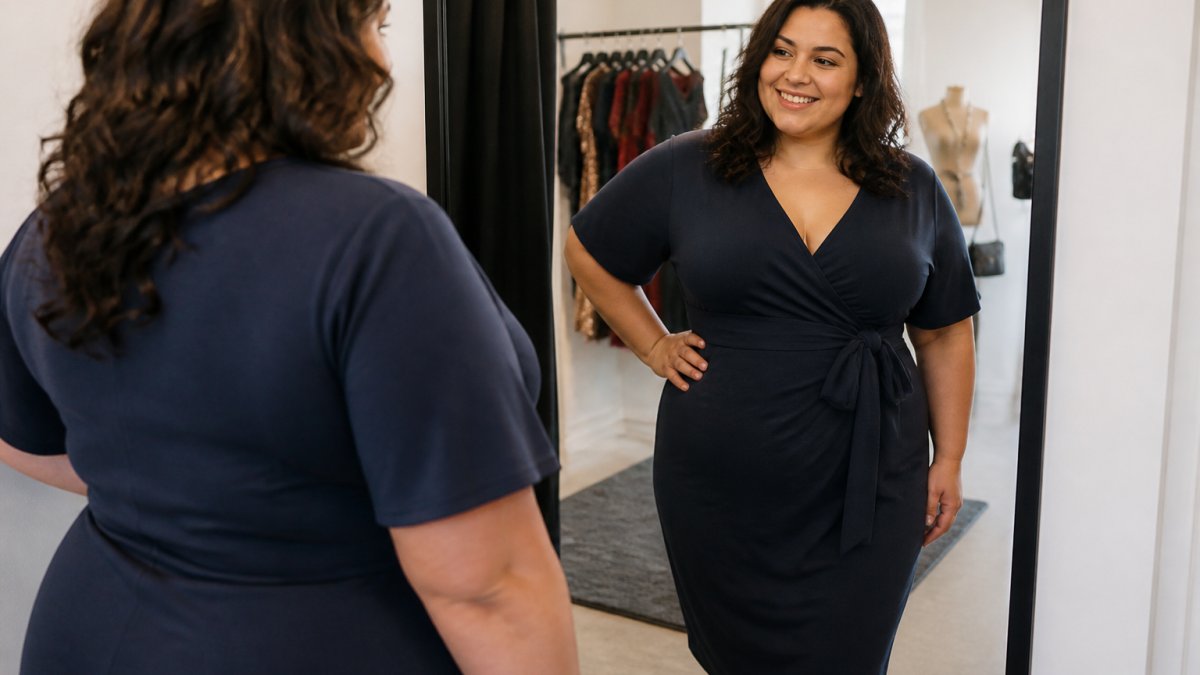
Ill-fitting clothes create constant micro-adjustments: tugging hems, smoothing fabric over your hips, shifting tight armholes.
Tailored plus-size clothing eliminates that friction. The garment works with your body, you forget you're wearing it, and clothes actually serve you.
Plus-Size Clothing Alterations That Make the Biggest Difference
Not every alteration delivers equal impact. Knowing which changes matter most helps you prioritize spending and get the biggest payoff from tailoring plus size clothing.
Plus-size garments are not just scaled-up straight-size garments. Grading patterns change as sizes increase, so the fit problems, and fixes, differ. A tailor who only knows straight-size alterations will often suggest the wrong correction.
Waist and Seam Adjustments
The waist is the most important measurement for fit. When it sits at your actual waist, everything else falls into place.
Many plus-size pieces have waistbands that sit too high or too low. Moving the waistband to your natural waist often improves the entire silhouette.
Side seams are equally critical.
Darts control fabric fullness and create shape; a tailor can add, remove, or reposition them to match your proportions, especially on dresses and fitted tops.
Plus-size-specific techniques to ask about:
- Curved waistband reset. Rather than taking in a straight horizontal band, a tailor can recut the waistband on a curve so it follows the dip at the small of your back and the rise over your hips. This is the single most common fix for gaping at the back waist on plus-size pants and skirts.
- Swayback adjustment. If your lower back curves inward more than the pattern assumes, fabric pools above your waistband. A tailor removes a wedge from the center back and reattaches the waistband. This is a standard alteration in plus-size work and rarely mentioned in general fit articles.
- Full bust adjustment (FBA). If a top or dress pulls across the bust while fitting everywhere else, the fix is not to size up. A tailor adds width and length to the front bodice piece and repositions the bust dart. This preserves the shoulder and waist fit you already like.
Sleeve and Shoulder Modifications
Sleeve length is straightforward: the hem should hit at your wrist bone.
Sleeve width matters more than most realize.
Shoulder seams should sit at the edge of your shoulder bone; too far in or out throws off your upper-body proportion.
A note on sleeve width: if the sleeve is too tight at the upper arm, the tailor needs matching fabric to let it out.
Hemming and Length Adjustments
Hemming is one of the most common alterations for plus-size clothing. A hem at the right spot changes your entire proportion.
For dresses and skirts, the hem should balance your proportions, knee-length for some, mid-calf for others.
Pants hemming matters too. The break at your ankle should be subtle: too much and your legs look shorter, too little and the pant looks cropped.
Length adjustments apply to tops too.
Fabric and Construction Limits: What Can and Cannot Be Altered
Before investing in an alteration, check whether the garment can take it. Some fabrics and constructions resist alteration, and a good tailor will tell you so.
Generally alterable:
- Wool, cotton, and linen wovens with at least 5/8-inch seam allowances. These take waist, seam, and hem work well.
- Ponte and stable double knits. They hold shape and can be taken in at side seams without distorting.
- Garments with princess seams (vertical seams running from shoulder or armhole to hem). These give a tailor multiple places to adjust without touching the outer silhouette.
Difficult or impractical to alter:
- Single-knit jersey and slinky fabrics. They curl, stretch, and show every needle mark. Taking them in often creates ripples.
- Garments with narrow seam allowances (common in fast-fashion plus-size pieces). There may be nothing to let out.
- Bonded, laminated, or coated fabrics. Once you puncture them, the holes are permanent.
A Quick Prioritization Framework
If you're tailoring one garment and can only afford two changes, start here:
- Waist position, this fixes the largest number of downstream fit problems.
- Shoulder seam position, this fixes upper-body proportion.
- Hem length, this fixes overall silhouette.
Everything else (darts, sleeve width, thigh adjustments) is refinement. Get the first three right and the garment will already read as custom.
How to Get a Better Fit in Plus-Size Clothes
Getting a better fit requires a clear process: assess, find the right tailor, then communicate your vision.
Step 1: Assess Your Current Fit Issues
Put on the piece and look in the mirror. Where does it pull or bunch? Does the waistband sit at your waist or dig in?
Write down specific issues. "The waist is too tight" is more useful than "it doesn't fit right." Specific observations help your tailor understand exactly what needs to change.
Consider the garment's construction: knit or woven, boning or structure. These details affect what alterations are possible.
Refined Denim Peplum Top- Light Wash →
Step 2: Find a Tailor Who Understands Plus-Size Construction
Not all tailors have equal experience with plus-size clothing. You need someone who understands how plus-size garments are constructed and altered.
Ask potential tailors about their experience with plus-size alterations. Have they worked in your size range? Do they understand the specific fit challenges?
A good tailor asks questions rather than just nodding and taking your garment, wanting to understand your fit concerns and vision and possibly suggesting alternatives you hadn't considered.
Look for clear communication: can they explain what they'll do and why, and manage expectations?
Step 3: Communicate Your Vision Clearly
Bring the garment to your tailor appointment.
Explain your specific concerns using your Step 1 notes. Point out where fabric pulls or bunches and where you want seams to sit.
Bring reference images of how you want the piece to fit, visual references eliminate guesswork.
Discuss the budget. A simple hem might cost $15-25; restructuring seams or moving waistbands costs more.
Plus-Size Dress Alterations and Special Occasions
Dresses are the most complex pieces to alter but deliver the biggest transformation when tailored properly.
For special occasion dresses, fit is everything. A dress that doesn't fit pulls your confidence down, even if you love the design.
Start with a dress you love. Pieces like our Goddess Waist Caftan are designed with intentional silhouettes.

For special events, consider alterations that add structure or support.
Understanding Alteration Costs and Value
Tailoring costs vary by complexity, garment construction, and local market.
Typical Price Ranges
| Alteration | Typical Range | Notes |
|---|---|---|
| Pant hem (simple) | $15-30 | Less if the pant has a straight hem; more for cuffed or lined pants |
| Skirt or dress hem | $20-45 | Lined or multi-layer hems cost more |
| Take in waistband | $25-50 | More if the waistband must be recut on a curve |
| Take in side seams | $30-60 | Price scales with the length of the seam |
| Shorten sleeves | $20-40 | More for lined or cuffed sleeves |
| Full bust adjustment | $40-80 | Requires opening the bodice and repositioning darts |
| Swayback adjustment | $35-70 | Common on plus-size pants and skirts |
| Replace zipper | $30-60 | Invisible zippers cost more |
| Add boning or structure | $50-150+ | Special-occasion work; price depends on the number of bones |
| Reshape armhole and sleeve cap | $60-120 | Complex; usually reserved for investment pieces |
What Drives the Price Up
Five factors move an alteration from the low end of the range to the high end:
- Number of steps. A hem is one operation. A waistband reset that requires removing the band, recutting it, and reattaching it is four or five.
- Lining. Any alteration on a lined garment means opening the lining, altering the shell, and closing the lining back up.
- Fabric difficulty. Slippery silks, beaded fabrics, and leather all take longer and carry more risk.
- Pattern matching. If stripes or a print must line up across a new seam, the tailor spends time aligning before cutting.
- Rush timing. Most shops charge a premium for turnaround under a week. If you have a wedding or event, book the alteration four to six weeks out.
When an Alteration Is Worth More Than a New Garment
Worth altering:
Not worth altering:
- Anything you don't actually love. Tailoring cannot fix a garment you're ambivalent about.
The Value Beyond the Price Tag
Tailoring also extends garment life. A well-fitted piece you love gets worn more often and cared for properly, becoming a wardrobe staple instead of something that sits unworn.
Do the cost-per-wear math: a $140 tailored dress worn 20 times costs $7 per wear, while a $60 off-the-rack dress that fits poorly and gets worn twice costs $30 per wear.
Think of tailoring as an investment in your wardrobe, not an expense. Quality pieces deserve proper fit.
Tailoring Boosts Confidence and Personal Style
When clothes fit well, you think about them less. You're not tugging at fabric or worrying about how you look.
Well-fitted clothes feel like they were made for you, because they were.
That matters. It says your body deserves clothes that work, that you're worth the investment, and that your comfort and confidence matter.
When you wear tailored plus-size clothing, you move differently and stand taller.
Personal style also emerges from fit.
At Boutique Bella Bella, we believe every customer deserves clothes that fit perfectly. That's why we carry size-inclusive pieces from brands like Queen of Sparkles and curated options like our Refined Denim Peplum Top and Lost in Paradise Pants.


Frequently Asked Questions
What are the biggest benefits of tailoring plus-size clothing?
Tailoring plus-size clothing eliminates pulling, bunching, and sagging that make ill-fitting clothes uncomfortable and unflattering. Well-fitted garments enhance your natural proportions, create clean lines, and improve posture and presence. Beyond the physical fit, tailoring boosts confidence by ensuring your wardrobe actually works for your body, reducing the frustration of pieces that don't fit right and making you feel more like yourself in what you wear.
Is it worth tailoring inexpensive plus-size clothes?
It depends on the garment's construction and fabric quality. Tailoring a $79.99 pair of well-made pants like the Lost in Paradise Pants or Oversized in Love Pants is often worthwhile because the base piece is solid and a few alterations, like hemming or waist adjustment, can extend its life and wearability. However, avoid tailoring pieces with poor fabric integrity, thin seams, or low-quality construction, as alterations may not hold up. Always ask your tailor to assess whether the garment is worth altering before committing.
Can a tailor adjust the waist, sleeves, and hem of a plus-size garment?
Yes, experienced tailors can adjust all three. Waist modifications involve taking in or letting out side seams or adding darts for shaping. Sleeve adjustments address length and width, which is especially important for plus-size fits where standard sizing often falls short. Hemming is one of the most common and affordable alterations. The key is finding a tailor familiar with plus-size construction, who understands that proportions and seam placement differ from standard sizing and can make adjustments that maintain the garment's intended silhouette.
What should I ask a tailor before altering plus-size clothing?
Ask about their experience with plus-size garments, whether they understand how seams and darts need to be positioned for larger sizes, and what alterations they recommend based on your fit concerns. Discuss the final cost upfront, including any rush fees. Ask how long the alterations will take and whether they'll do a fitting before finalizing the work. Request to see examples of previous plus-size alterations if possible. Finally, ask about fabric care and whether the alterations will affect how the garment should be washed or dried, important for pieces like the Refined Denim Peplum Top that require specific care.
Getting well-fitted clothes doesn't require a closet overhaul. It requires understanding how tailoring plus size clothing works and investing in pieces that matter to you. Visit Boutique Bella Bella to explore size-inclusive pieces worth tailoring, and discover how proper fit transforms your entire wardrobe. Stop in today to find your next favorite outfit.