


Table of Contents
- What to Look for in Felt Hat Brushes
- Horsehair Hat Brush: Why Natural Bristles Win
- Hat Brush Direction: How to Brush a Felt Hat Correctly
- How to Clean a Felt Cowboy Hat: Step-by-Step
- Matching the Brush to Your Felt: Fur, Wool, and Color
- Brush Care, Durability, and When to Replace
- Common Mistakes to Avoid When Brushing Felt Hats
- Conclusion
- Frequently Asked Questions
Last Updated: October 12, 2026
What to Look for in Felt Hat Brushes
A felt hat brush is a short-handled grooming tool with densely packed bristles, built to lift dust, lint, and hair off the surface of a felt hat without pushing grit deeper into the fibers.
Three features decide whether a brush helps or harms your hat: bristle material, bristle firmness, and how the handle fits your hand. Get those right and everything else, including how to clean a felt cowboy hat, gets easier.
Bristle Material: Horsehair vs. Synthetic
Horsehair bristles are the standard for felt hats, and for good reason. Natural horsehair has a slight natural stiffness that lifts surface dirt and dust without scratching the felt nap. Synthetic bristles, by contrast, tend to be either too stiff (nylon scrubbing brushes) or too slick to grab lint and hair.
Soft bristles work best on fine fur felt. Stiff bristles suit heavier wool felt and stubborn surface dirt. A brush with medium-firm horsehair covers most hats in a typical closet.
Bristle Firmness: A Practical Scale
Firmness is the spec most shoppers overlook, and it is the one that determines whether a brush cleans or damages. Most hat brushes fall into three usable bands:
- Soft, best for fine fur felt, vintage hats, and light-colored felt where any abrasion shows. Lifts dust and lint with almost no risk.
- Medium, the everyday default for most fur felt and mid-weight wool felt. Handles routine dust, dander, and hair without flattening the nap.
- Medium-firm, for heavier wool felt, work hats, and stubborn surface grime. Still horsehair, never nylon or wire.
A brush that feels scratchy against the back of your hand is too stiff for felt. A brush that slides without grabbing lint is too soft to be useful.
Handle Design and Grip
Wooden handles dominate this category for practical reasons. A shaped wooden handle gives you a comfortable grip for the repeated, light strokes a felt hat needs, and it will not flex or crack the way thin plastic can.
Look for a handle that fits your palm, roughly 4 to 5 inches long for a hat brush. An ergonomic handle with a slight curve keeps your wrist relaxed during longer sessions. A small hanging loop is a nice bonus for storage.
Side-by-Side: How the Main Brush Types Compare
Use this table to match a brush to your hat and your habits.
| Brush Type | Bristle | Best For | Handle | Typical Price |
|---|---|---|---|---|
| Classic horsehair hat brush | Natural horsehair, medium | Fur felt, everyday dust and lint | Shaped wood, 4-5 in. | $12-$25 |
| Soft horsehair brush | Natural horsehair, soft | Wool felt, vintage and light felt | Wood or lacquered wood | $15-$30 |
| Two-tone set (light + dark) | Natural horsehair, medium | Collections with light and dark hats | Wood, matched pair | $25-$45 |
| Synthetic-bristle brush | Nylon or mixed | Heavy mud, dried salt, work hats only | Plastic or wood | $5-$15 |
| Lint roller (companion tool) | Adhesive sheets | Quick touch-ups between brushings | Plastic | $4-$10 |
Buying Criteria by Budget and Use
- One hat, occasional wear: A single medium horsehair brush in a color that matches your hat is enough.
- Two or more hats in mixed colors: Buy a light-bristle and a dark-bristle brush, or a matched two-tone set, so you never transfer visible fibers onto the felt.
- Daily or work wear: Step up to medium-firm horsehair and a hardwood handle that will survive repeated use.
- Collector or vintage hats: Prioritize soft horsehair and a handle you can control precisely; abrasion risk matters more than cleaning speed.
Horsehair Hat Brush: Why Natural Bristles Win
Natural horsehair wins because it matches felt's texture. Felt is a matted fiber surface, and a horsehair hat brush glides across the nap, catching dust and lint on the bristle tips rather than dragging debris through the fibers. This is the core reason most hat-care advice points to natural bristles for fur felt and wool felt alike.
Synthetic brushes have their place, mostly for heavy mud or dried salt stains where you want more aggression. For routine maintenance, keep a horsehair brush as your daily tool.
Hat Brush Direction: How to Brush a Felt Hat Correctly
Brush with the nap, not against it. Every felt hat has a direction in which the fibers lay, usually running counterclockwise around the crown when viewed from above. Brushing with the nap lifts dirt off the surface.
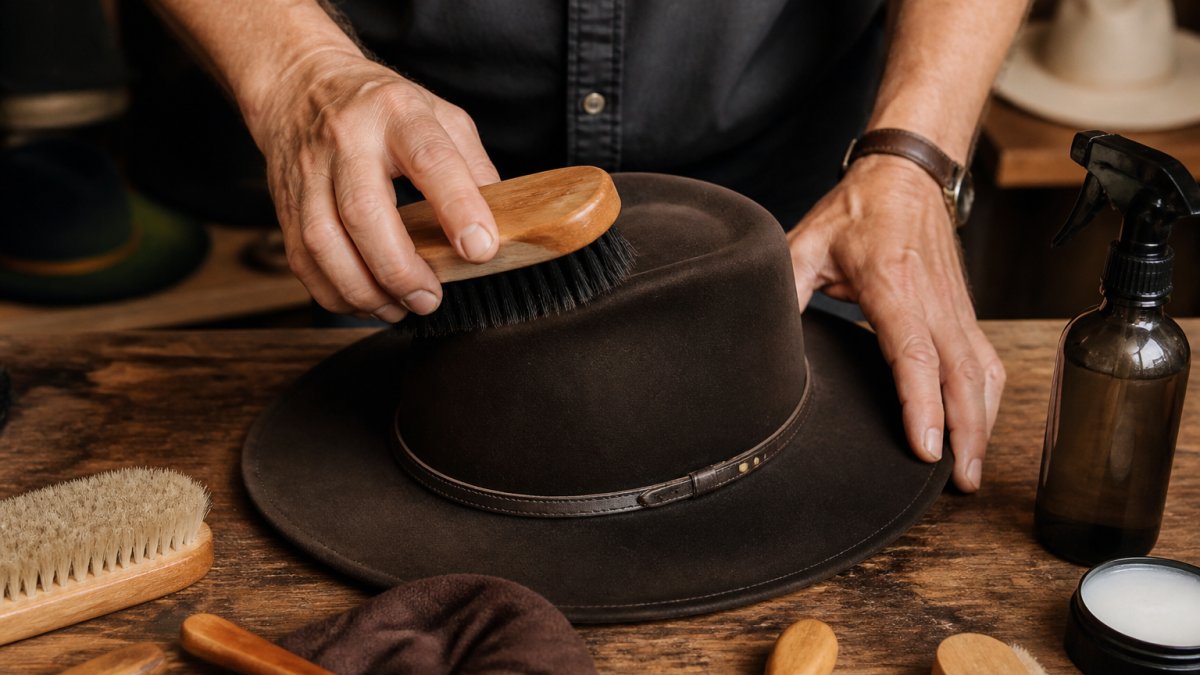
Here is the sequence to follow:
- Hold the hat by the brim, not the crown, to avoid stretching the felt.
- Start at the crown and brush in short, light strokes in one direction.
- Move down to the brim and brush outward from the crown to the edge.
- Work in the same direction the whole way around the hat.
- Finish with a second pass to catch any remaining lint or hair.
Light pressure is the whole technique. You are lifting dust, not scrubbing a stain.
How to Clean a Felt Cowboy Hat: Step-by-Step
Cleaning a felt cowboy hat starts with dry brushing, not water. Moisture is the enemy of shaped felt, so the first and often only step you need is a thorough brushing to remove dust, dander, and debris from the surface.
A brush removes dry, loose, and lightly embedded material. It does not remove oils, sweat salts, or set-in stains. Knowing which problem you have tells you whether to keep brushing or reach for a different tool.
What a Brush Can and Cannot Fix
| Problem | Brush Alone? | What Actually Works |
|---|---|---|
| Surface dust and dander | Yes | Horsehair brush, with the nap |
| Lint, pet hair, fibers | Yes | Brush, then a lint roller for stragglers |
| Light dried mud or salt | Partly | Let it dry fully, then brush; do not rub wet |
| Sweat marks on the sweatband | No | Damp cloth with mild cleaner, air dry |
| Oil or grease spots on felt | No | Felt-safe solvent or a hat cleaner, spot-tested first |
| Set-in stains and rings | No | Professional hat cleaning or a felt-safe cleaner |
| Odor | No | Air out; replace the sweatband if needed |
If brushing does not lift it, more brushing will not help. Stop and switch methods.
The Step-by-Step Routine
Follow this order:
- Brush dry first. Use your horsehair hat brush with the nap to lift loose surface dirt. Short, light strokes, working around the crown, then out along the brim.
- Tackle lint and hair. A second pass with a slightly firmer brush pulls embedded hair and lint free. A lint roller handles the last few fibers.
- Let any mud or salt dry completely. Do not brush damp debris; you will grind it into the felt. Once dry, it brushes away cleanly.
- Spot-treat sweat marks on the sweatband only. Use a barely damp cloth and a tiny amount of felt-safe cleaner, working in small circles. Keep moisture off the felt body.
- Address oil or grease spots separately. Blot, then use a felt-safe cleaner on a hidden patch first. Never soak the spot.
- Restore the shape. Set the hat on a clean surface or hat stand and gently reshape the crown and brim by hand while it dries.
- Store properly. Keep the hat on a stand or in a box, never stacked under weight.
How Often to Brush
- After every wear: A quick pass to knock off dust and dander before the hat goes back on the rack.
- Weekly for daily-wear hats: A full crown-and-brim brushing.
- Seasonally, or before storage: A thorough brushing plus a check of the sweatband and liner.
What Not to Do
Never soak a felt hat. Water breaks down the stiffeners that hold the shape, and that is how a good hat turns into a floppy one. Skip the washing machine, the dishwasher, and any home remedy that calls for submerging the hat. If a stain resists a felt-safe cleaner, a professional hat cleaner may be a good option.
Matching the Brush to Your Felt: Fur, Wool, and Color
Fur felt and wool felt need different levels of gentleness. Fur felt, made from beaver or rabbit, is denser and holds a crisp shape, so it tolerates a medium-firm horsehair brush. Wool felt is softer and more prone to fuzzing, so a softer brush and lighter strokes protect the surface.
Color matters too. On light-colored felt, dark bristles can leave visible fibers behind, and on dark-colored felt, light bristles show up the same way. Match your brush color to your hat, or keep two brushes if you own hats in both ranges.
| Felt Type | Brush Firmness | Brush Color | Pressure |
|---|---|---|---|
| Fur felt (beaver, rabbit) | Medium-firm horsehair | Match hat color | Light, even |
| Wool felt | Soft horsehair | Match hat color | Very light |
| Light-colored felt | Soft to medium | Dark bristles | Light |
| Dark-colored felt | Medium | Light bristles | Light |
Brush Care, Durability, and When to Replace
A quality horsehair brush lasts years if you keep it clean. Bristles collect oils, dust, and dander over time, and a dirty brush just redeposits grime onto your hat.
Maintenance is simple:
- Tap the brush against a hard surface after each use to shake out dust.
- Wash the bristles every few months with mild soap and warm water, then dry bristle-side down.
- Store the brush bristle-up or in a case so the bristles keep their shape.
Replace the brush when bristles splay, shed heavily, or feel stiff and brittle. A worn brush scratches felt instead of cleaning it.
Common Mistakes to Avoid When Brushing Felt Hats
Brushing against the nap is a common mistake. It roughs up the felt texture and can leave a dull patch that takes real effort to smooth back down. Always check the direction first.
Other common mistakes include:
- Brushing too hard. Heavy pressure grinds dust into the fibers instead of lifting it.
- Using a stiff scrub brush. Nylon or wire brushes scratch felt and pull the nap.
- Brushing a wet hat. Damp felt deforms easily and the brush drags fibers out of shape.
- Ignoring the brim edge. Dirt collects along the brim, and skipping it leaves a visible line.
- Storing the brush dirty. Oils and grit transfer back onto the hat next time.
Conclusion
Choosing a hat brush for felt hats often comes down to natural horsehair bristles and a comfortable wooden handle. Matching bristle firmness to your felt type, brushing with the nap, and cleaning the brush itself as often as you clean your hats can help keep a fur felt or wool felt hat looking sharp for years.
At Boutique Bella Bella, we carry classic Stetson hats and the accessories that keep them in shape. Stop in to see our curated selection of western-style hats and find the pieces that make you shine.
Frequently Asked Questions
What is the best way to clean a felt hat?
Start by brushing off loose dust and dirt with a soft horsehair brush, moving in a circular motion. For deeper cleaning, use a damp cloth with mild soap on stains, then let the hat air dry away from direct heat. Avoid soaking the felt, as it can lose its shape. Regular brushing after each wear keeps felt hats looking fresh and extends their life.
Which way should you brush a felt hat?
Brush in a counterclockwise direction, following the nap of the felt. This lifts dust and debris instead of pushing it deeper into the fibers. For cowboy hats and fedoras, work in small circles from the crown down to the brim. Consistent hat brush direction prevents matting and preserves the felt's smooth texture.
Can you use a regular clothes brush on a felt hat?
A regular clothes brush often has stiff bristles designed for heavier fabrics, which can scratch or flatten felt. Use a brush with soft horsehair bristles instead. Horsehair is gentle enough for fur felt and wool felt yet effective at removing surface dirt. If you only have a clothes brush, test it on a small hidden area first.
How often should you brush a felt hat?
Brush your felt hat after every wear to remove dust, lint, and hair before they settle into the fibers. If you wear it daily, a quick once-over takes less than a minute. For hats stored for long periods, brush before putting them away and again before wearing. Regular hat maintenance prevents stubborn buildup and keeps the nap smooth.