


Table of Contents
- Why Designer Clothing Costs More: The Value Framework
- Cost Per Wear Calculation: The Math That Settles the Argument
- Fabric Science: Why Natural Fibers and Textile Quality Matter
- Garment Construction and Craftsmanship: What to Look For
- How to Find Your Personal Style Before You Spend
- How to Build a Capsule Wardrobe Around Investment Pieces
- Resale Value, Counterfeits, and the Grey Market: What Buyers Miss
- The Diminishing Returns Threshold: When to Stop Paying More
- Frequently Asked Questions
Last Updated: September 11, 2026
Why Designer Clothing Costs More: The Value Framework
Designer clothing is apparel produced by established fashion houses that control their own materials, construction standards, and distribution, which is why a single piece can cost several times more than a similar-looking mass-market garment. At Boutique Bella Bella, we watch customers weigh that gap every day, and the honest answer is that what makes designer clothing worth buying comes down to four measurable factors, not the label alone. Below, we break down cost per wear, fabric quality, construction, and resale so you can judge any purchase on evidence.
The Four Pillars of Designer Value
Four pillars separate a genuine investment piece from a marked-up basic: material composition, garment construction, production scale, and brand equity.
- Material composition. Natural fibers like wool, silk, linen, and long-staple cotton hold shape and resist pilling far better than synthetic blends.
- Garment construction. French seams, matched patterns, and reinforced stress points cost labor hours that mass production skips.
- Production scale. Smaller runs mean tighter quality control and less tolerance for defects.
- Brand equity. A recognized house carries status value, but that pillar is the one most likely to be pure premium pricing rather than quality.
That last pillar is where most shoppers get burned. Paying more for a name is not the same as paying more for a garment.
Cost Per Wear Calculation: The Math That Settles the Argument
Cost per wear is the purchase price divided by the number of times you actually wear the item. A $300 coat worn 100 times costs $3 per wear; a $40 fast fashion jacket worn five times costs $8. Run this number before you decide, and the argument usually ends itself.
How to Run the Numbers on Any Purchase
Use this formula: Price ÷ Estimated wears = Cost per wear.
| Item | Price | Realistic Wears | Cost Per Wear |
|---|---|---|---|
| Fast fashion top | $25 | 6 | $4.17 |
| Mid-range investment top | $90 | 40 | $2.25 |
| Designer statement piece | $300 | 120 | $2.50 |
The pattern is clear: durability and timeless design lower cost per wear over time, while fast fashion's low sticker price hides a high per-wear cost. The FTC's guidance on textile labeling also requires accurate fiber content disclosure, so you can verify material composition before you buy rather than trusting marketing copy.
Fabric Science: Why Natural Fibers and Textile Quality Matter
Textile quality determines how a garment ages, and natural fibers generally outperform synthetic materials on shape retention, breathability, and repair potential. Cotton, wool, silk, and linen fibers are longer and more uniform, so they resist pilling and hold dye better over years of washing.
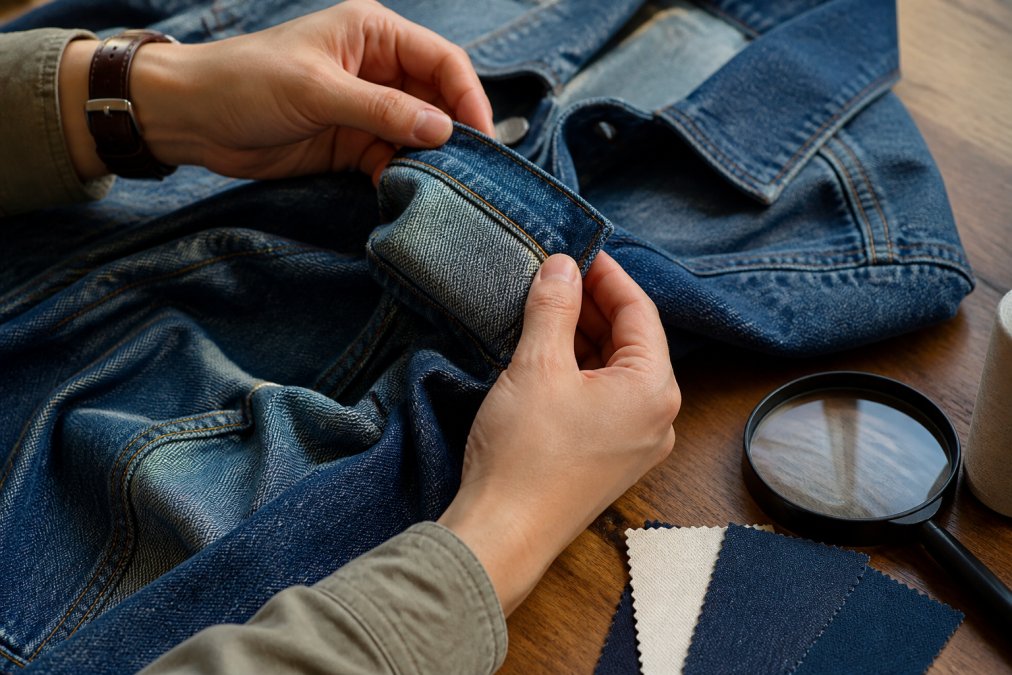
Check the tag before the price tag. A higher percentage of natural fiber usually signals a garment built to last, while heavy synthetic content often means the piece will stretch, pill, or fade within a season. The American Chemical Society's textile research documents how fiber structure affects durability, which is why two visually identical jackets can perform completely differently after a year of wear.
Garment Construction and Craftsmanship: What to Look For
Craftsmanship is visible in the details most shoppers never check. Turn the garment inside out and inspect the seams, lining, and stress points; this is where quality control shows itself.
- Seams: French or bound seams resist fraying; serged-only seams on a premium piece are a red flag.
- Pattern matching: Stripes and prints should align at the seams.
- Buttons and zippers: Metal hardware and reinforced buttonholes outlast plastic and loose stitching.
- Lining: A full lining protects shape and adds comfort in tailored pieces.
A common mistake is judging a garment by its hanger appeal alone. The inside tells the truth. Tailoring and finishing are labor costs that mass production cuts first, which is exactly why construction is the clearest signal of whether premium pricing is justified.
How to Find Your Personal Style Before You Spend
Finding your personal style is not just a styling exercise, it is the single biggest lever on whether a designer purchase actually pays off. A garment you wear 100 times at $400 costs $4 per wear; the same garment worn eight times costs $50 per wear. Style clarity is what converts a high price into a low cost per wear, and no amount of fabric quality can rescue a piece that never leaves the closet.
Start with what you actually wear. Pull ten items you reach for most and note their shared traits: cut, color, fabric, formality. That list is your style profile. Then test any new purchase against it with three questions: Does it match my palette? Does it suit an occasion I actually have? Can I style it three ways with what I own? If any answer is no, walk away.
The Maintenance and Care Economics Most Buyers Ignore
Here is the part almost every buying guide skips: the purchase price is only the entry fee. Designer garments carry ongoing ownership costs that mass-market pieces do not, and those costs belong in your cost-per-wear math before you buy, not after.
- Specialized dry cleaning. Wool coats, silk blouses, and structured tailoring usually require professional cleaning at $15-$40 per visit, and some pieces need it every few wears. Over five years, that can add hundreds of dollars to the true cost of ownership.
- Storage. Wool and cashmere need breathable garment bags, cedar or lavender protection against moths, and proper hangers to hold shoulder shape. A cheap wire hanger can distort a $600 blazer within a season.
- Repairs and alterations. A quality tailor charges $20-$60 to reattach a lining, replace a zipper, or take in a seam. This is money well spent on a good garment, and wasted on a bad one.
- Cleaning frequency trade-off. Natural fibers like wool and linen self-regulate odor and can often be aired and spot-cleaned between professional cleanings, which lowers care cost over time. Synthetics trap odor and need more frequent washing, which accelerates pilling and fading.
Run the full equation: Purchase price + estimated lifetime care cost ÷ realistic wears = true cost per wear. A $400 wool coat that costs $120 in cleaning and storage over five years and gets worn 150 times lands at about $3.47 per wear. A $60 synthetic jacket that needs replacing every 18 months at $25 per wash cycle often lands higher. That is the math that separates a genuine investment from an expensive mistake.
Style clarity plus honest care math is what makes a designer purchase defensible. Get both right and the price stops feeling like a splurge and starts looking like a calculation.
How to Build a Capsule Wardrobe Around Investment Pieces
A capsule wardrobe is a small, coordinated set of garments that mix into many outfits, and it works best when investment pieces anchor the core. But "investment piece" is not a synonym for "most expensive piece." The real skill is knowing where quality genuinely improves with price, and where it plateaus.
The Diminishing Returns Threshold
There is a point on the price curve where extra spending stops buying better fabric, better construction, or longer lifespan and starts buying only status. That is the diminishing returns threshold, and identifying it is the most useful decision tool in this entire framework.
A common pattern across apparel categories looks like this:
- Entry tier (mass market). Thin fabric, serged seams, plastic hardware, short lifespan. Low price, high cost per wear.
- Mid tier. Real natural fibers, decent construction, reasonable durability. This is where cost per wear typically bottoms out, the sweet spot for most buyers.
- Premium designer tier. Better fabric grades, more hand-finishing, longer lifespan. Quality is measurably better, but the improvement per dollar is smaller than the jump from entry to mid.
- Ultra-luxury tier. Marginal quality gains over premium, with most of the price reflecting scarcity, heritage, and brand equity rather than durability.
The practical takeaway: the biggest quality jump per dollar usually happens between mass market and mid tier. Above the premium tier, you are increasingly paying for status, exclusivity, and resale cachet, which can be a legitimate choice, but it is a different purchase than a durability play.
How to Find Your Own Threshold
Ask what the next price tier actually adds. If the jump buys a heavier fabric weight, a full lining instead of a partial one, hand-finished seams, or a longer expected lifespan, it may be worth it. If the jump buys only a logo, a seasonal colorway, or a limited-edition tag, you have crossed the threshold.
A simple test: compare two garments at different price points side by side. Turn both inside out. Check seam type, lining coverage, button material, and fabric weight. If the cheaper piece matches the more expensive one on all four, the extra money is buying brand, not garment.
Wardrobe Staples That Earn Their Keep
- A structured denim layer that works across seasons
- One tailored coat in a neutral tone
- A well-cut dress you can dress up or down
- Quality denim with real stretch recovery
Our wardrobe planning resources from the American Apparel & Footwear Association note that versatile basics deliver the highest wear counts, which is the whole point of a capsule. At Boutique Bella Bella, pieces like the Welcome to the Met Denim Duster ($99.99) fit this role: one layer, many outfits, and a construction that holds up season after season.

Resale Value, Counterfeits, and the Grey Market: What Buyers Miss
Resale value and authenticity are the two factors shoppers overlook most, and both affect long-term value. Some designer pieces retain a meaningful share of their price on the secondary market, while others depreciate almost immediately, so brand equity alone does not guarantee resale.
The grey market is the bigger risk. Counterfeit and unauthorized goods circulate through unofficial channels, and a discounted "designer" piece from an unverified seller is often neither authentic nor repairable. Provenance matters: buy from authorized retailers and keep your receipts. A genuine piece with documented provenance holds both aesthetic value and resale potential, while a counterfeit holds neither. When you shop in person, you can inspect material composition, hardware, and stitching before money changes hands, which is protection no online listing can offer.
The Diminishing Returns Threshold: When to Stop Paying More
There is a point where extra spending stops buying better quality and starts buying only status. That is the diminishing returns threshold, and recognizing it is the single most useful skill in this whole framework.
Ask what the next price tier actually adds. If the jump buys better fabric, stronger construction, or a longer expected lifespan, it is worth considering. If it buys only a logo, you have crossed the threshold. Premium pricing is justified by durability, tailoring, and material quality, not by prestige alone. Past that line, you are paying for a status symbol, which is a legitimate choice as long as you make it knowingly rather than mistaking it for value.
The real challenge is not finding expensive clothing; it is finding pieces whose quality actually justifies the price, in your size, with construction you can inspect in person. Boutique Bella Bella is a size-inclusive boutique with a curated selection of apparel, jewelry, and home goods, including exclusive brands like Queen of Sparkles, Dingo, and Stetson. Our team helps you judge fabric, fit, and cost per wear before you commit, so every piece earns its place in your closet. Stop in and let us help you find something that lasts.
Frequently Asked Questions
Are designer clothes really worth the price?
It depends on the garment's construction, fabric, and how often you wear it. A $99.99 denim duster worn twice a week for two years costs about $0.96 per wear, while a $25 fast-fashion top worn five times costs $5.00 per wear. Designer clothing earns its price when the material composition, stitching, and fit hold up over hundreds of wears. The value framework comes down to cost per wear, not the price tag alone.
Does designer clothing hold its resale value?
Some pieces do, especially those with timeless design, strong brand equity, and limited production. Heritage items like Stetson hats and structured handbags often retain 40-70% of retail on resale platforms. Trend-driven pieces depreciate faster. If resale matters to you, look for classic silhouettes in durable natural fibers, keep original tags and packaging, and avoid heavily embellished pieces that are hard to authenticate on the secondary market.
How can you tell the difference between luxury and fast fashion quality?
Check three things: material composition, garment construction, and quality control. Luxury pieces list specific fibers like 100% cotton or silk, use French seams or bound edges, and have matched patterns at the seams. Fast fashion often blends synthetic materials, leaves raw edges inside, and skips pattern matching. Run your hand along the inside seam. If it feels rough or unfinished, the piece will not survive repeated washing.
What designer items are worth buying first?
Start with pieces you will wear weekly: a well-cut denim layer, a versatile dress, or a signature accessory. A $79.99 denim barn coat or a $79.99 denim zipper dress can anchor dozens of outfits across seasons. Accessories like statement necklaces or hats often deliver the highest cost-per-wear because they elevate multiple looks. Build around wardrobe staples first, then add trend pieces once your core rotation is set.