


Last Updated: November 10, 2026
Quick Summary
Choose high quality boutique dresses by checking the fabric first, then the construction. Look for clear fiber content, breathable natural fibers, and a smooth, substantial hand-feel. Turn the dress inside out to inspect seams, stitching, lining, and hem finishing.
- Read the care label first: 100% cotton, linen, or silk usually holds its shape better than vague blends.
- Be wary of a dress called silky or luxe when no fiber content is listed, since it is often thin polyester.
- Hold the fabric to the light; if you can see your hand through it easily, it may be too sheer for everyday wear.
- Count about 8 to 12 stitches per inch on a straight seam, and pull gently on seams and stress points.
- Check that zippers run smoothly, buttons are securely sewn, and embellishments are stitched on rather than glued.
Table of Contents
- How to Choose High Quality Boutique Dresses Starting With the Fabric
- Inspecting Construction: Seams, Stitching, Lining and Hem Finishing
- How to Choose High Quality Boutique Dresses Online Without Seeing Them in Person
- How to Choose High Quality Boutique Dresses for a Wedding
- Boutique Dresses for Women Over 50: Fit, Silhouette and Fabric Choices
- Choosing a Boutique Dress for a Wedding Guest: Your Next Step at Boutique Bella Bella
- Frequently Asked Questions
How to Choose High Quality Boutique Dresses Starting With the Fabric
Choosing a high quality boutique dress starts with the fabric, not the price tag or the label. Shoppers weighing whether pricier boutique pieces are worth the cost can read whether expensive boutique clothing is worth it for a fuller comparison. A well-cut dress made from thin, pilling material will look tired after two wears. Boutique Bella Bella, a size-inclusive boutique, can help shoppers judge fabric before they buy, and the same checks work anywhere you shop.
The fabric decides how a dress fits, feels, and ages. Look at the care label first. A dress that says 100% cotton, linen, or silk usually holds its shape better than one that lists a long mix of unnamed fibers.
Natural Fibers Versus Synthetic Blends
Natural fibers breathe, which matters most in warm, humid places like the Texas coast. You can compare which fabrics stay cool in humid coastal weather to see how each performs in those conditions. Cotton, linen, and silk let air move across the skin. Synthetic blends are cheaper and wrinkle less, but they trap heat and can feel clammy by afternoon.
Blends are not automatically bad. A small share of polyester or elastane can help a dress keep its shape. The problem comes when synthetics make up most of the fabric and the label is vague about the rest. Keep these points in mind:
- Cotton: Breathable and soft, but it can shrink if not pre-washed.
- Linen: Cool and crisp, though it wrinkles easily. That look is part of its charm.
- Silk: Luxurious and drapey, but it needs gentle care.
- Rayon or viscose: Soft and flowing, yet it can lose shape when wet.
- Polyester blends: Hold color and resist wrinkles, but they can feel warm.
Watch out: a dress marked "silky" or "luxe" with no fiber content listed is often a thin polyester.
Hand-Feel, Drape and Shrinkage Checks
Before buying, run the fabric through your hands. Good fabric feels smooth and substantial, not flimsy or scratchy. Hold a section up to the light. If you can see your hand through it easily, the dress may be too sheer for everyday wear.
Drape matters too. Gently gather a fold of the skirt. Quality fabric falls into soft, even lines. Cheap fabric clumps or looks stiff.
Shrinkage is the last check. Natural fibers, especially cotton and linen, can shrink after the first wash. Ask whether the dress is pre-shrunk, and size up slightly if it is not.
The fabric checks covered above come down to these fiber and feel points.
| Fabric | Key trait | Watch out for |
|---|---|---|
| Cotton | Breathable and soft | Can shrink if not pre-washed |
| Linen | Cool and crisp | Wrinkles easily |
| Silk | Luxurious and drapey | Needs gentle care |
| Rayon or viscose | Soft and flowing | Can lose shape when wet |
| Polyester blends | Hold color, resist wrinkles | Can feel warm |
Inspecting Construction: Seams, Stitching, Lining and Hem Finishing
Fabric is only part of the picture. Construction also shows how a dress will hold up over time. Turn the dress inside out before you decide anything. The interior shows you how much time the maker spent on the parts you will never see in a photo.
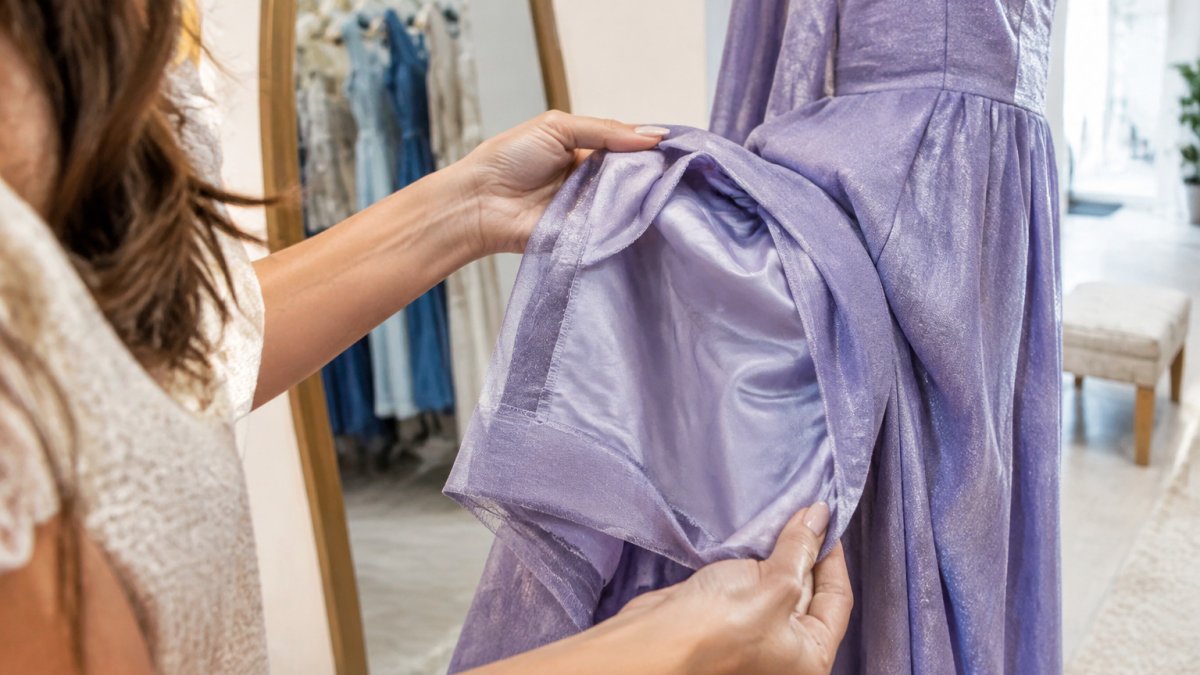
Start with the seams. Tight, even stitching with no loose threads usually means the garment was sewn with care. Focus on the underarms, the side seams, and any spot where two pieces meet at a stress point, such as the top of a sleeve, the crotch of a pleated skirt, or the join between a bodice and a waistband.
Next, count stitches per inch. Turn over a straight seam and count the stitches along one inch. A density of roughly 8 to 12 stitches per inch is common for a well-made woven dress, while noticeably longer stitches on a garment priced as a boutique piece often signal a rushed production run.
Check the overlock or serged edges. Inside a well-made dress, raw fabric edges are finished with a serger, a zigzag, or a bound seam allowance. Loose threads that look like a fringe, or edges that are simply cut and left to fray, are a sign of a garment built for a short life.
Lining is another signal. A fully lined dress usually hangs better and feels more comfortable against the skin. Lining should be attached at the neckline, the armholes, and the hem, and it should move slightly with the outer fabric rather than pulling it tight.
Hem finishing separates careful makers from rushed ones. Look for a clean, even hem with no wobbles, and check that the stitching is invisible from the right side. Rolled hems, blind hems, and serged edges on the inside all show attention to detail. Raw or frayed hems will unravel within a few washes.
Hardware is part of construction too. Pull gently on the zipper, each button, and any decorative trim. A zipper should run smoothly with a metal or high-grade plastic pull, and the teeth should sit flat without gaps. Buttons should be sewn with a shank or with multiple thread wraps underneath, so they do not wobble.
Finally, read the care label as a construction document. Labels that specify hand-wash only or dry-clean only on a fully lined silk garment are normal.
Most shoppers skip this inspection entirely. Doing the full check takes about five minutes in a store and can save you from buying a dress that falls apart on the first wear.
How to Choose High Quality Boutique Dresses Online Without Seeing Them in Person
Shopping online makes the fabric and construction checks harder, but not impossible. Start with product photos taken up close. Clear, close-up images of the fabric weave and stitching suggest a seller with nothing to hide.
Read the fabric and care details closely. A good listing names the fiber content, the lining, and how to wash the dress. Vague descriptions such as "premium blend" tell you little. If the listing skips these details, email the store before you order.
Measurements matter more online than in a store. Compare the listed garment measurements, such as bust, waist, and length, against a dress that already fits you well. Do not rely only on your usual size.
Check the return policy before you buy. A fair policy gives you a chance to try the dress at home and send it back if the fabric or fit disappoints.
How to Choose High Quality Boutique Dresses for a Wedding
Wedding dresses for guests call for a slightly different set of priorities. The fabric should look polished in photos and move well through a full day of standing, sitting, and dancing.
Choose a fabric with some structure, such as crepe, lightweight satin, or a cotton-silk blend. These hold their shape better than thin jersey through a long evening. Lining is especially important here, since you do not want the fabric clinging or showing through in flash photos.
Pay attention to hem length and silhouette for the venue. A maxi dress suits an outdoor ceremony on grass, where a stiletto heel would sink in, while a midi or mini can work for a beach or indoor reception. Think about where you will be standing and walking, and choose a length that suits that setting.
Finally, consider how the dress will look in photos. Bright solid colors and fabrics with a subtle sheen tend to photograph well. Heavily patterned fabrics can look busy once the camera flashes.
Boutique Dresses for Women Over 50: Fit, Silhouette and Fabric Choices
Women over 50 often want dresses that fit well through the shoulders and waist and flatter a changing shape. Quality matters here as much as at any age. A dress that drapes softly and skims the body usually works better than one that hugs tightly.
Look for a structured neckline that sits comfortably and a waistline that falls where you want it. A-line and wrap silhouettes offer ease of movement and tend to suit many body types. Fabrics with some stretch can add comfort without losing shape.
Fabric choice also matters for comfort through the day. Breathable natural fibers and well-made blends with a bit of give tend to feel better for longer events. Lined dresses avoid the clingy feel that can happen with thin, unlined knits.
A size-inclusive boutique can make this search easier. Our plus size vs standard sizing fit guide explains how cuts and measurements differ across sizes. Check whether the store carries your size across the styles you want, not just basic pieces. Ask for help if you are unsure.
Choosing a Boutique Dress for a Wedding Guest: Your Next Step at Boutique Bella Bella
You now know how to judge fabric, construction, and fit. The next step is finding a dress that passes those checks and suits your event. For a wedding guest, that usually means a piece with a polished look, a comfortable fabric, and solid construction.
The Espresso Dream High Low Dress ($59.99) is a strong option for a formal wedding or evening event. Its champagne tone works in many settings, and the high-low hemline adds graceful movement. For a bolder look, the Dazzle After Dark Dress ($110.99) has rhinestone-trimmed details and a sparkle tweed knit that suits a night celebration. You can view the Dazzle After Dark Dress to check its details before you decide.
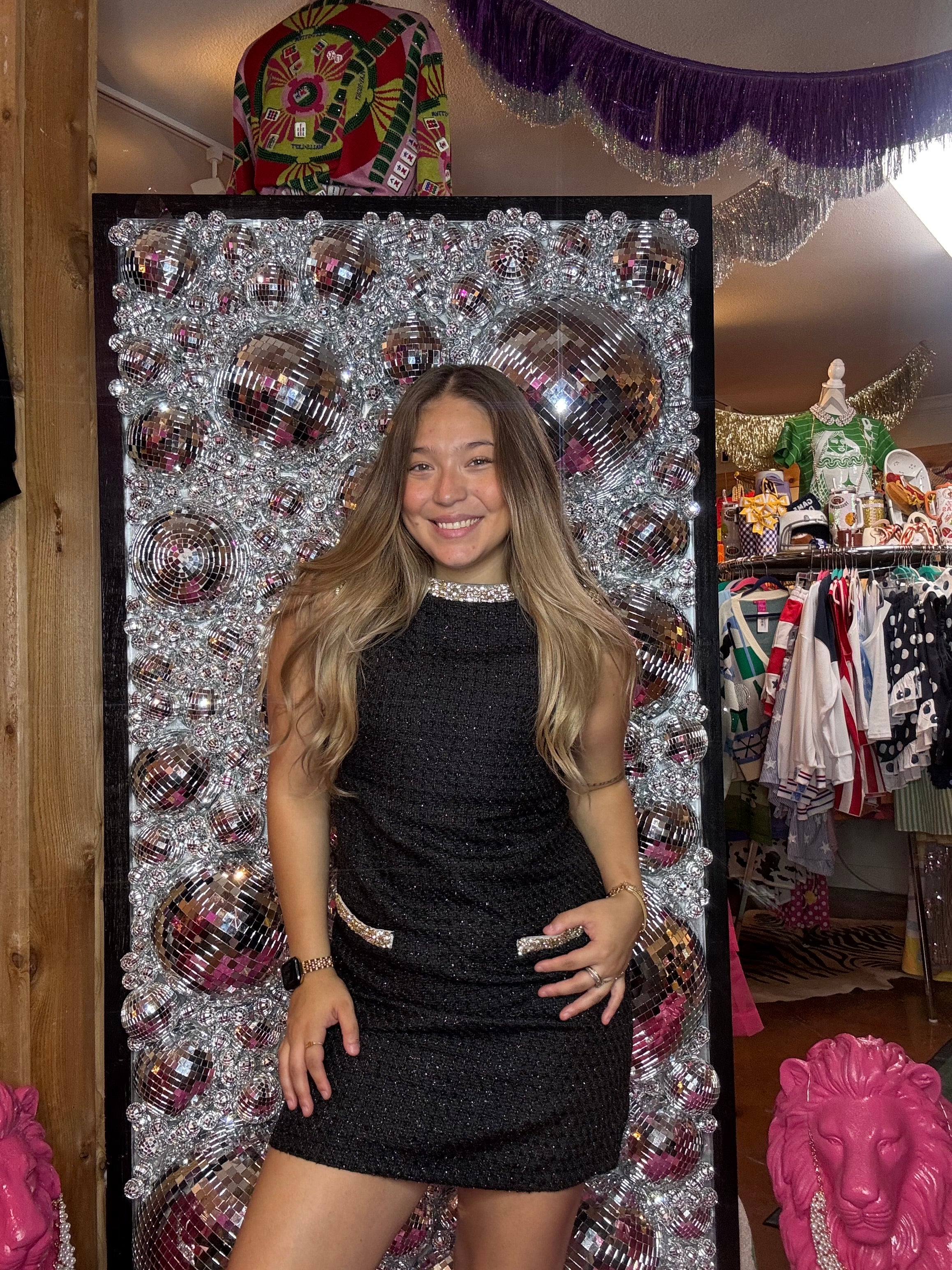
At Boutique Bella Bella in Port Aransas, our team can help you find the right fit. If you are ready to pick a wedding guest dress, browse our wedding guest dresses to find a style to try on. Stop in to try pieces on, or browse our collection online and find a dress that makes you shine.
Frequently Asked Questions
How can you tell if a boutique dress is high quality?
Check the fabric first: natural fibers like cotton, linen or silk usually breathe and drape better than thin polyester, and a fabric that feels heavy and smooth in the hand is a good sign. Then look inside the garment. Dense, even stitching, finished seams instead of raw edges, and a lining that is fully attached and does not pucker all point to better construction. Finally, test the zipper and buttons by working them several times. Smooth, secure hardware suggests the maker did not cut corners.
How do I choose high quality boutique dresses online?
Start with the product photos and the listing details. Look for close-ups of the fabric and neckline, a stated fabric composition, and measurements for each size rather than only S, M, L. Read the size chart against your own measurements instead of your usual size. Check the return policy before ordering, since fit is harder to judge without trying the dress on. Be cautious when a listing gives no fabric information or uses only vague words like premium.
What fabrics should you look for in a quality dress?
For everyday and warm-weather wear, cotton, linen and cotton poplin are reliable choices because they hold their shape and breathe well. Silk and viscose drape beautifully for evening wear but need gentler care. Synthetic blends can be durable and wrinkle-resistant, but very thin or shiny synthetics often look cheap. Our Checkered Print Puff Sleeve Cotton Maxi Dress, for example, is 100% cotton, so its fabric content is clear before you buy.
How should a well-made dress fit?
A well-made dress follows your shoulders without pulling, lets the bodice sit smoothly without gaping, and has side seams that hang straight. The hem should fall evenly and the fabric should move with you when you sit or reach. Pulling or horizontal wrinkles across the bust or hips usually means the size is too small, while excess fabric pooling under the arms can mean the cut is too large or the armhole is poorly shaped.
